AI estimate as of September 1, 2025 · verify with a professional before acting
AI-Generated · Verify before acting
Everything on this page is generated by AI for informational purposes only. AI can make mistakes — the AI may misidentify items or misattribute them (artist, maker, brand, designer, origin, era). This is not an official valuation and should not be used for insurance, sale, tax, estate, legal, or lending purposes — or any decision requiring a certified appraisal. It is not an authoritative claim about any person, brand, or rights holder — do not share or rely on it as a factual statement about a third party. Always consult qualified professionals before making financial decisions.
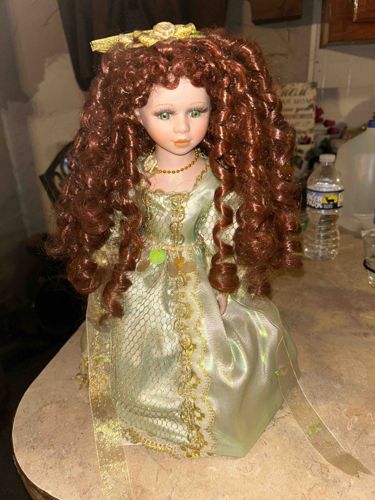
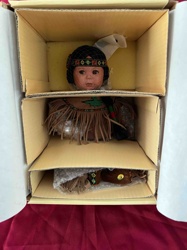
This is a porcelain or bisque doll featuring a youthful female figure with striking reddish-brown, tightly curled hair cascading over her shoulders. The doll's head appears to be crafted from a lighter-toned ceramic material, possibly porcelain, with finely painted facial features including delicate eyebrows, long eyelashes, vibrant green eyes, and light pink lips. Small rosy blush marks are visible on her cheeks. She wears a golden beaded necklace around her neck. Her dress is a light, somewhat iridescent sage green or pale mint color, appearing to be made from a silky or satin-like fabric. The bodice and sleeves of the dress are adorned with intricate golden embroidery and lace overlays, featuring a distinct pattern that includes a net-like texture and ornate metallic threadwork. Small, possibly sequined or beaded, green elements are scattered on the upper part of the dress. A golden bow or hair ornament is visible in her hair on the top of her head. The doll sits upon a textured, possibly laminate or stone, surface. The overall impression is that of a decorative, possibly collectible, doll from the late 20th or early 21st century, designed for display. There are no readily apparent condition issues like chips or cracks visible on the porcelain head, and the clothing appears to be in good condition, though detailed inspection of the fabric for snags or fading is not possible from the image alone. The craftsmanship suggests it is a mass-produced collectible rather than an artisanal one-of-a-kind piece.
AI Appraisal Report
Based on my visual examination of the provided image, this porcelain/bisque collectible doll, featuring a youthful female figure with reddish curly hair and a green dress, appears to be in very good overall condition. The ceramic elements, specifically the head, show no visible chips, cracks, or discoloration. The finely painted facial features are intact. The fabric of the dress, while not fully inspectable for subtle flaws, seems free from major snags, tears, or significant fading. The golden embroidery and lace overlays are also well-preserved.
From the craftsmanship evident, this doll aligns with characteristics of mass-produced collectible dolls, likely from the late 20th or early 21st century, rather than high-end artisan creations. These types of dolls were often marketed as decorative items or limited editions, but typically in large quantities, which impacts their rarity. Market conditions for such collectible porcelain and bisque dolls have been soft in recent years. While they once commanded higher prices, demand has decreased significantly, particularly for more contemporary, mass-produced pieces.
Comparables in online marketplaces and auction results for similar dolls by makers like Ashton-Drake Galleries, Franklin Mint, or similar collectible companies generally fall within the $30 to $75 range for items in good condition. Factors impacting value include the lack of a known artist or specific limited-edition certification, and the general oversupply of these types of dolls in the secondary market.
It is crucial to note that this assessment is based solely on visual inspection of an image. For full authentication and a definitive condition report, an in-person examination would be necessary to check for subtle fabric imperfections, hidden damage to limb joints, or manufacturer's marks. Provenance documentation, such as original boxes or certificates of authenticity, would further confirm the doll's origins and potentially its specific edition details, which could slightly influence its market appeal, though likely not its overall value significantly given current trends.