AI Appraisal Estimate

AI-generated estimates · not official valuations

From the user

What was submitted

Photo and notes provided by the user — not generated by AI

Submitted item photo
Submitted photo · June 8, 2026

User's notes

Capodimonte made in Italy

AI analysis below

AI appraisal

AI analysis & estimate

AI-Generated · Verify before acting

Everything below is generated by AI for informational purposes only. AI can make mistakes — the AI may misidentify items or misattribute them (artist, maker, brand, designer, origin, era). This is not an official valuation and should not be used for insurance, sale, tax, estate, legal, or lending purposes — or any decision requiring a certified appraisal. It is not an authoritative claim about any person, brand, or rights holder — do not share or rely on it as a factual statement about a third party. Always consult qualified professionals before making financial decisions.

Note

This analysis also relies on unverified notes provided by the user, which may be incomplete or inaccurate and could affect the result.

Read the full disclaimer

AI Identification

·Not independently authenticated·Verify before acting

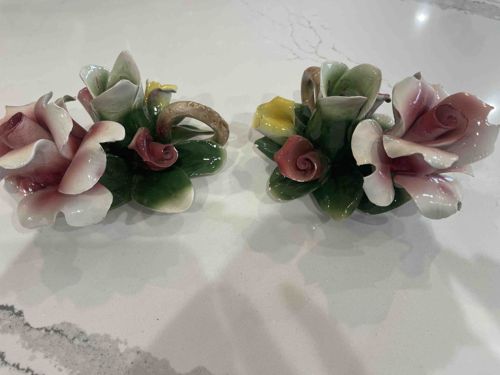
Capodimonte Porcelain Floral Napkin Rings / Decorative Accents

Decorative Art / Porcelain Figurines

AI Estimated Value

·Not an official valuation·Verify before acting

$150-250

As of June 8, 2026

AI Item Analysis

·AI can make mistakes·Verify before acting
This item consists of a pair of detailed Capodimonte porcelain floral arrangements, each designed as a small cluster of roses and other smaller blossoms, likely intended as decorative accents or perhaps napkin rings given the small integrated loops. The primary flowers are large, blush pink roses with multiple layered petals that exhibit a delicate transition from deep pink or fuchsia centers to lighter pink and almost white edges. Accompanying these are smaller, tightly coiled reddish-pink buds and bright yellow calla lily-like flowers, nestled among numerous vibrant green leaves. The porcelain has a glossy glaze, characteristic of Capodimonte pieces, which enhances the colors and depth of the sculpted forms. Each petal and leaf shows fine craftsmanship, with individual shaping to create a naturalistic appearance. A small, earthy brown, textured ring or handle-like element is integrated into each arrangement, suggesting functionality. No obvious chips, cracks, or significant wear are visible from the provided images, indicating good to very good condition. The craftsmanship suggests a mid-20th century to late 20th-century production, typical of Capodimonte's highly detailed and hand-painted floral creations from Italy. The quality is high, reflecting the brand's reputation for intricate, delicate porcelain work.

AI Appraisal Report

·AI can make mistakes·Verify before acting
Based on my visual examination of the provided images, these Capodimonte porcelain floral napkin rings/decorative accents appear to be in good to very good condition. I observe no obvious chips, cracks, or significant wear. The vibrant colors and glossy glaze are well-preserved, indicative of careful handling over time. The craftsmanship, with its intricate layering of petals and individually shaped leaves, aligns well with documented Capodimonte productions, particularly those from the mid to late 20th century known for their detailed floral work. The "Capodimonte made in Italy" marking, as stated by the owner, further supports its authenticity, though a physical inspection would be required to verify the actual mark's quality and style. From a market perspective, Capodimonte floral pieces remain popular, albeit not highly rare. Demand is moderate, driven by collectors of Italian porcelain and those seeking decorative accents for traditional interiors. Similar pieces typically achieve values based on condition, intricacy, and size. The functionality as a napkin ring adds a practical element that can slightly enhance appeal. Comparables on the secondary market suggest a value range for well-preserved, detailed pairs. Key factors impacting value here are the excellent apparent condition and the detailed artistry. However, a significant limitation of this appraisal is the lack of physical inspection. Full authentication would require an in-person examination to assess the porcelain's weight and texture, scrutinize the applied marks for authenticity, and potentially conduct scientific testing to confirm material composition and age if any doubts arose. Without physical handling, I cannot definitively rule out the possibility of well-executed reproductions or repairs that are not visible in photographs.

Get your items appraised

Instant estimates of your treasures with AI-powered appraisals

Browse More Appraisals