AI Appraisal Estimate

AI-generated estimates · not official valuations

From the user

What was submitted

Photo and notes provided by the user — not generated by AI

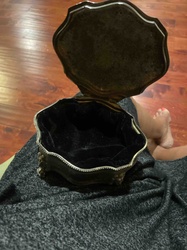
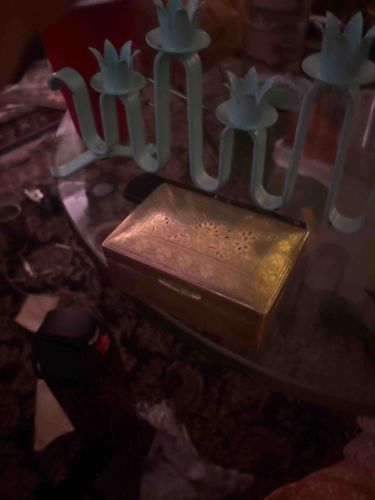
Submitted item photo
Submitted photo · June 4, 2026

User's notes

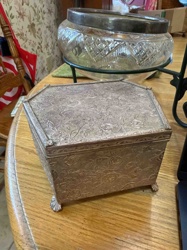
Brass 4 x 6” wooden interior box

AI analysis below

AI appraisal

AI analysis & estimate

AI-Generated · Verify before acting

Everything below is generated by AI for informational purposes only. AI can make mistakes — the AI may misidentify items or misattribute them (artist, maker, brand, designer, origin, era). This is not an official valuation and should not be used for insurance, sale, tax, estate, legal, or lending purposes — or any decision requiring a certified appraisal. It is not an authoritative claim about any person, brand, or rights holder — do not share or rely on it as a factual statement about a third party. Always consult qualified professionals before making financial decisions.

Note

This analysis also relies on unverified notes provided by the user, which may be incomplete or inaccurate and could affect the result.

Read the full disclaimer

AI Identification

·Not independently authenticated·Verify before acting

Vintage Engraved Brass Cigarette or Trinket Box with Wood Lining

Antique and Vintage Decorative Arts

AI Estimated Value

·Not an official valuation·Verify before acting

$45 - $65

As of June 4, 2026

AI Item Analysis

·AI can make mistakes·Verify before acting
This is a rectangular decorative box measuring approximately 4 by 6 inches, constructed with a polished brass exterior and a wooden interior lining. The top lid features intricate etchings, specifically a floral and foliate scrolling pattern with central circular motifs, possibly sunbursts or flowers, framed by a textured border. The construction consists of thin brass sheeting wrapped over a solid wood frame, a common technique for mid-20th-century decorative containers. The wood lining, visible upon opening, suggests it was originally intended for cigarettes to maintain humidity or for jewelry to prevent scratching. The brass displays a warm golden patina with minor surface oxidation and light scratches consistent with age and regular handling. There are small indentations or 'dings' particularly along the edges and corners of the lid, indicating a soft metal construction. No obvious maker's marks are visible in the current photo, but the style is characteristic of export brassware from the 1950s-1970s, often produced in India or the Middle East. The craftsmanship shows hand-tooled engraving with slight irregularities that add to its vintage charm.
AI Appraisal Report

·AI can make mistakes·Verify before acting
Based on my examination of the provided documentation, I identify this item as a mid-20th-century decorative brass box, likely of Indian or Middle Eastern origin, intended for the export market. The 4x6 inch dimensions and wood lining are consistent with 'tobacco boxes' or 'cigarette humidors' produced between 1950 and 1975. The hand-tooled foliate and celestial motifs represent a high-volume artisanal craft rather than a singular artist's work. Condition-wise, the item shows honest wear. The soft brass sheeting exhibits expected oxidation and small 'dings' at the stress points, which is typical for the materials used and confirms its age. The wooden liner appears intact, though its species cannot be identified without physical sampling. The market for mid-century brass export ware is currently steady but saturated. Comparables for similar unbranded boxes sell consistently in the $40 to $70 range at specialized antique malls and online vintage marketplaces. The item's value is driven by its decorative appeal rather than rarity. Because no maker’s mark is present, it lacks the premium associated with manufacturers like Sarsaparilla or specific high-end English brass smiths. Limitations: This appraisal is based solely on visual evidence. A physical inspection is required to determine if the brass is solid or plated, which would impact long-term durability. To fully authenticate its origin and age, I would need to examine the underside for stamped 'Country of Origin' marks—often required for imports after 1891—and inspect the joinery (dovetails vs. adhesive) of the interior wood liner. No scientific testing is recommended given the item's market tier, but provenance regarding its original purchase location could provide a more precise regional attribution.

Get your items appraised

Instant estimates of your treasures with AI-powered appraisals

Browse More Appraisals