AI estimate as of July 25, 2025 · verify with a professional before acting
AI-Generated · Verify before acting
Everything on this page is generated by AI for informational purposes only. AI can make mistakes — the AI may misidentify items or misattribute them (artist, maker, brand, designer, origin, era). This is not an official valuation and should not be used for insurance, sale, tax, estate, legal, or lending purposes — or any decision requiring a certified appraisal. It is not an authoritative claim about any person, brand, or rights holder — do not share or rely on it as a factual statement about a third party. Always consult qualified professionals before making financial decisions.
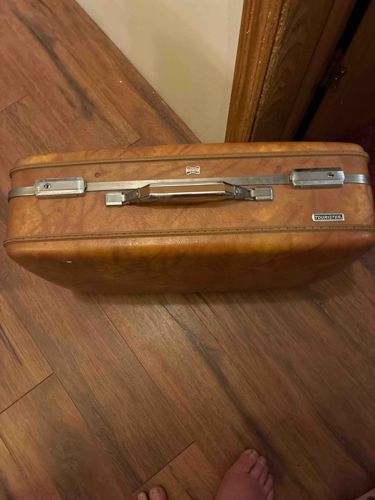
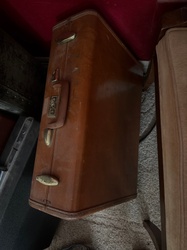
The item is a vintage hard-shell suitcase, likely dating from the mid-20th century, possibly the 1950s or 1960s, given its construction and branding. It features a rich, warm brown color with a textured or patterned surface, mimicking a wood grain or mottled leather appearance, which adds to its retro aesthetic. The primary material appears to be a durable plastic or fiberboard, reinforced with metal trim. The suitcase is rectangular with rounded corners, indicating a classic design.
Its construction includes a strong, continuous metal band running along the perimeter where the two halves of the suitcase meet, providing structural integrity and a seal when closed. The hardware, consisting of latches and a central handle, is made of what appears to be polished or brushed chrome-plated metal. There are two robust latches, one on each side of the central handle, integrated into the metal banding. The handle itself is also metal, with a comfortable, likely plastic or leather-covered grip.
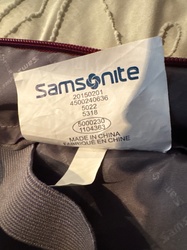
Visible markings include a rectangular metal plaque embedded on the top surface, near the right latch, clearly stating 'TOURISTER' in raised lettering, identifying the manufacturer as American Tourister. Another small, rectangular label, possibly a brand emblem or an airline tag holder, is located centrally above the handle.
In terms of condition, the suitcase exhibits signs of age and use consistent with its vintage nature. There are scuffs and scratches visible on the brown surface, indicating wear from handling and travel. The metal hardware shows some minor tarnishing or surface wear, but appears to be largely intact and functional. The overall patina suggests a well-used but cared-for item, with no obvious signs of major damage like cracks or significant dents. The quality of construction seems robust, designed for durability during travel, which is typical for American Tourister products of that era.
AI Appraisal Report
Upon examining the provided image of this American Tourister vintage hard-shell suitcase, I assess its condition as good, consistent with its age and intended use. The visible scuffs and scratches on the brown surface, along with minor tarnishing on the metal hardware, are expected patination and do not detract significantly from its overall appeal or functionality. The 'TOURISTER' plaque confirms authenticity as an American Tourister product from the mid-20th century. Based on visual cues, the construction appears robust, typical of the brand's quality during that era.
In terms of market conditions, vintage luggage, particularly pieces from well-known manufacturers like American Tourister, sees a steady, albeit niche, demand. These items are often sought after for their aesthetic value, for use as props, or by collectors of mid-century design. Comparables in similar condition typically range from $50 to $150 on online marketplaces and at vintage dealers. This particular piece, while in good shape, is not exceptionally rare, nor does it possess unique features that would elevate its value significantly above this range.
Factors impacting its value include its solid structural integrity, the largely intact and functional hardware, and clear branding. Its appeal lies in its vintage aesthetic rather than its utility for modern travel. While I can confirm its authenticity as an American Tourister piece from the visual assessment, a full authentication, including verification of materials and internal lining condition, would require an in-person examination. This would allow for checking the integrity of all seams, the presence of any hidden damage, and the functionality of moving parts under stress, none of which can be definitively determined from images alone. Further provenance documentation, if available, could also add to its historical value, though it is unlikely to significantly impact the monetary appraisal for this type of item.