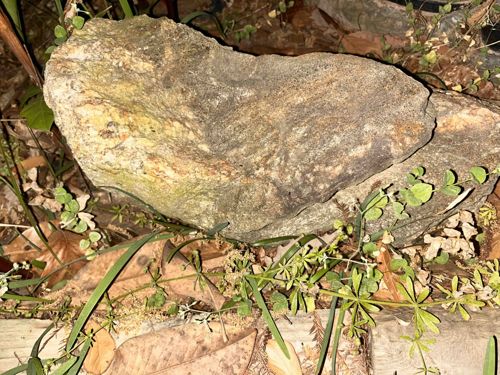
Course-grained Metamorphic or Igneous Rock Fragment
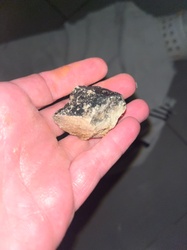
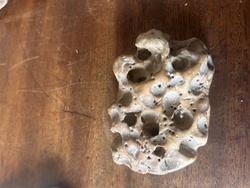
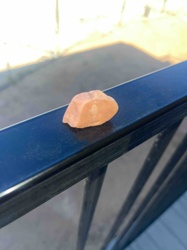
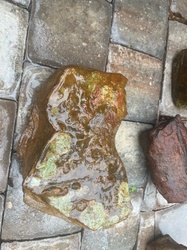
This is a large, irregularly shaped rock fragment exhibiting a medium-to-coarse crystalline texture. The coloration is predominately a mix of earth tones including grey, tan, ochre, and charcoal, which suggests a complex mineral composition typical of metamorphic or igneous formations. A notable feature is the presence of metallic or yellowish mineralization, possibly iron-rich minerals like limonite or goethite, which have oxidized to create a rusty patina across the surface. The rock’s surface is rugged and highly weathered with numerous fractures and indentations, indicating significant exposure to the elements and natural erosion. There are visible deposits of lichen or moss-like growth on the lower left portion, further suggesting it has been situated in its current outdoor environment for an extended period. The specimen is non-man-made and lacks any definitive maker's marks or craftsmanship, instead showing natural geological features such as faint layering or foliation on the right-hand side. While its exact age is indeterminate without chemical analysis, it likely belongs to an ancient geological period. Its value is primarily decorative or landscaping-based rather than gemological.
AI-Generated Appraisal Disclaimer
Estimated Value
$45 - $85
Basic Information
Category
Natural Specimens / Geological Samples
Appraised On
April 5, 2026
Estimated Value
$45 - $85
Item Description
This is a large, irregularly shaped rock fragment exhibiting a medium-to-coarse crystalline texture. The coloration is predominately a mix of earth tones including grey, tan, ochre, and charcoal, which suggests a complex mineral composition typical of metamorphic or igneous formations. A notable feature is the presence of metallic or yellowish mineralization, possibly iron-rich minerals like limonite or goethite, which have oxidized to create a rusty patina across the surface. The rock’s surface is rugged and highly weathered with numerous fractures and indentations, indicating significant exposure to the elements and natural erosion. There are visible deposits of lichen or moss-like growth on the lower left portion, further suggesting it has been situated in its current outdoor environment for an extended period. The specimen is non-man-made and lacks any definitive maker's marks or craftsmanship, instead showing natural geological features such as faint layering or foliation on the right-hand side. While its exact age is indeterminate without chemical analysis, it likely belongs to an ancient geological period. Its value is primarily decorative or landscaping-based rather than gemological.
Get Your Items Appraised
Instant estimates of your treasures with AI-powered instant appraisals