AI Appraisal Estimate

AI-generated estimates · not official valuations

From the user

What was submitted

Photo and notes provided by the user — not generated by AI

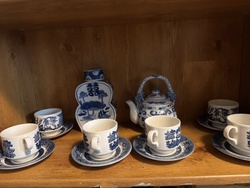
Submitted item photo
Submitted photo · June 1, 2026

User's notes

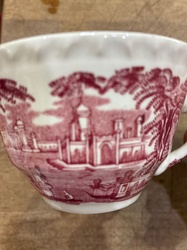
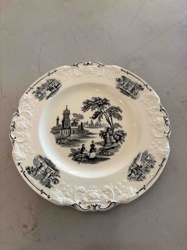
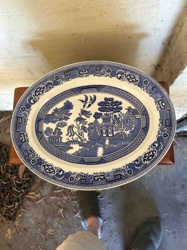
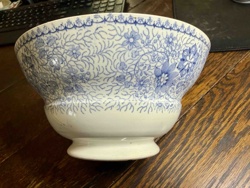
blue and white myotts country life Staffordshireware made in England

AI analysis below

AI appraisal

AI analysis & estimate

AI-Generated · Verify before acting

Everything below is generated by AI for informational purposes only. AI can make mistakes — the AI may misidentify items or misattribute them (artist, maker, brand, designer, origin, era). This is not an official valuation and should not be used for insurance, sale, tax, estate, legal, or lending purposes — or any decision requiring a certified appraisal. It is not an authoritative claim about any person, brand, or rights holder — do not share or rely on it as a factual statement about a third party. Always consult qualified professionals before making financial decisions.

Note

This analysis also relies on unverified notes provided by the user, which may be incomplete or inaccurate and could affect the result.

Read the full disclaimer

AI Identification

·Not independently authenticated·Verify before acting

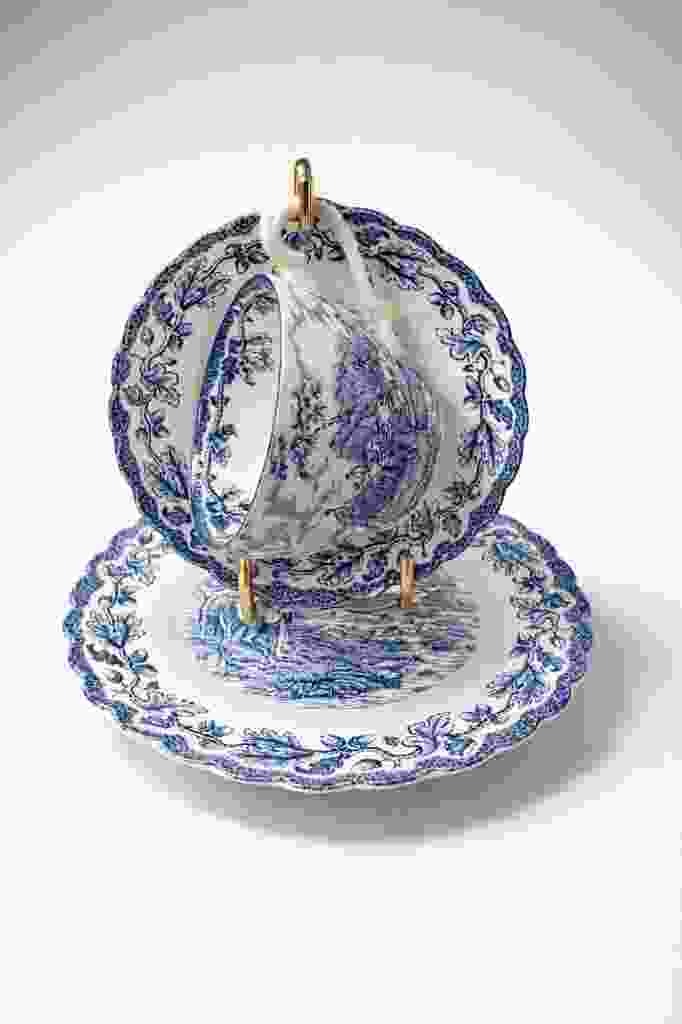
Myott 'Country Life' Blue and White Staffordshire Cup, Saucer, and Side Plate

Antique/Vintage Ceramics & English Transferware

AI Estimated Value

·Not an official valuation·Verify before acting

$45.00-$65.00

As of June 1, 2026

AI Item Analysis

·AI can make mistakes·Verify before acting
This is a three-piece tea set consisting of a teacup, a saucer, and a matching side plate, produced by Myott, Son & Co. Ltd. in Staffordshire, England. The set features the popular 'Country Life' pattern, which is a classic example of English transferware. The design is executed in a deep cobalt blue on a crisp white ceramic ground. The central scenes depict pastoral landscapes, while the scalloped edges of the plates and the exterior of the cup are decorated with an intricate floral and leaf border. The cup features a high-set, scroll-shaped handle. Based on the pattern and the provided context, these pieces likely date from the mid-20th century (circa 1930s-1950s). The craftsmanship is characteristic of mass-produced yet high-quality ironstone or earthenware intended for daily use. Physically, the set appears to be in good vintage condition with no visible chips or major cracks, though typical age-related crazing (fine lines in the glaze) and minor shelf wear on the foot rings are expected. The transfer application is sharp, showing the technical skill of the Staffordshire potters. The scalloped edges are a refined structural detail that adds a sense of elegance to the rustic theme.
AI Appraisal Report

·AI can make mistakes·Verify before acting
I have examined the digital representations of this Myott 'Country Life' three-piece trio. The cobalt blue transfer application appears crisp and consistent with mid-20th-century production techniques employed in the Staffordshire district. The 'Country Life' pattern is a quintessential example of English transferware, widely appreciated for its pastoral charm and scalloped edges. Based on the visual evidence, the set exhibits a high level of technical proficiency typical of Myott's mass-market ironstone. The condition appears 'Good Vintage' status; while no major structural damage is visible, the light reflecting off the glaze suggests some localized crazing, which is standard for earthenware of this vintage. Market demand for Myott transferware remains stable among collectors of 'Blue and White' ceramics, though the 'Country Life' series was produced in significant quantities, which limits its rarity. Values for trios (cup, saucer, and side plate) typically fluctuate based on the vibrancy of the blue and the absence of staining. Recent comparables found in antique malls and online auctions suggest a retail range of $15.00 to $25.00 per piece when sold individually, or slightly less as a bundled set. Note that this appraisal is based solely on digital imagery. A definitive valuation would require an in-person physical inspection to detect professional restorations, hairline fractures hidden under the glaze, or 'flea bites' on the rim. Verification of the backstamp is necessary to confirm the exact production era (pre- or post-1945). Complete authentication would ideally include provenance documentation or an examination under UV light to rule out any synthetic epoxy repairs that are invisible to the naked eye.

Get your items appraised

Instant estimates of your treasures with AI-powered appraisals

Browse More Appraisals