AI Appraisal Estimate

AI-generated estimates · not official valuations

From the user

What was submitted

Photo and notes provided by the user — not generated by AI

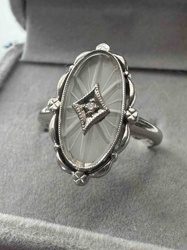
Submitted item photo
Submitted photo · June 27, 2026

User's notes

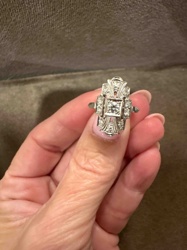
More than 70 years old 14 k gold ring with amethyst

AI analysis below

AI appraisal

AI analysis & estimate

AI-Generated · Verify before acting

Everything below is generated by AI for informational purposes only. AI can make mistakes — the AI may misidentify items or misattribute them (artist, maker, brand, designer, origin, era). This is not an official valuation and should not be used for insurance, sale, tax, estate, legal, or lending purposes — or any decision requiring a certified appraisal. It is not an authoritative claim about any person, brand, or rights holder — do not share or rely on it as a factual statement about a third party. Always consult qualified professionals before making financial decisions.

Note

This analysis also relies on unverified notes provided by the user, which may be incomplete or inaccurate and could affect the result.

Read the full disclaimer

AI Identification

·Not independently authenticated·Verify before acting

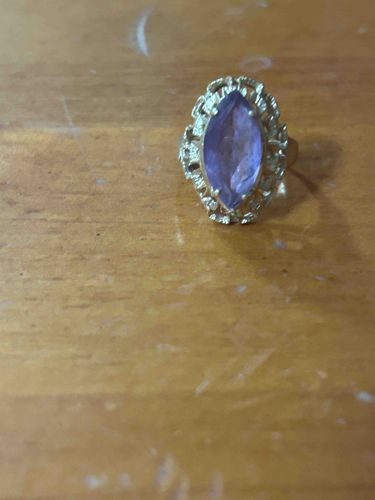
Vintage 14k Gold Marquise-Cut Amethyst Ring with Nugget-Style Halo

Antique and Vintage Jewelry

AI Estimated Value

·Not an official valuation·Verify before acting

$450 - $650

As of June 27, 2026

AI Item Analysis

·AI can make mistakes·Verify before acting
This is a vintage ladies' cocktail ring crafted in 14k yellow gold, featuring a central faceted amethyst gemstone. The amethyst is cut into a classic marquise (navette) shape, exhibiting a medium to light violet or lavender hue with fair transparency. The stone is held securely by six delicate prongs within an ornate, oval-shaped halo setting. The halo features a textured finish reminiscent of a 'nugget' or bark-like style, which was highly popular in Mid-Century modern jewelry design, particularly from the 1960s to 1970s. This texture provides a contrasting organic feel to the sharp geometric lines of the gemstone. Given the provided age of over 70 years, this ring likely dates back to the late 1940s or early 1950s, bridging the transition between Late Retro and Mid-Century styles. The construction appears sturdy, though there is visible surface wear to the gold, including a light patina and minor abrasions consistent with long-term use. The amethyst shows softening on the facet junctions, typical for a stone of its hardness (7 on the Mohs scale) after decades of wear. The band is a simple, polished yellow gold shank that tapers toward the underside of the finger. No visible maker's marks are present in the image, but the piece demonstrates high-quality vintage craftsmanship with intricate metalwork detailing.
AI Appraisal Report

·AI can make mistakes·Verify before acting
After examining the provided details and images of this 14k gold marquise-cut amethyst ring, I have concluded that it is a characteristic example of mid-20th-century jewelry. The use of a 'nugget' or organic bark texture on the halo, paired with the navette silhouette, strongly suggests a production date between the late 1940s and the 1960s. The gold mounting appears structurally sound, though the visible surface abrasions and patina confirm a history of regular wear. The amethyst, while possessing a desirable lavender hue, shows 'facet doubling' or softening of the edges, which is expected for quartz-based stones of this age but slightly reduces the 'fine' gemstone grade. Market demand for mid-century cocktail rings remains steady, primarily driven by the 'vintage' aesthetic trend. Comparables for 14k gold amethyst rings of this weight and era typically sell within the $400 to $700 range at retail. The value is primarily held in the gold content and the stylistic appeal rather than the rarity of the amethyst itself, which is a relatively common semi-precious stone. Limitations: This appraisal is based solely on visual inspection. I cannot definitively verify the gold purity without a professional acid or XRF test, nor can I confirm if the amethyst is natural or synthetic (though its wear patterns suggest natural). A full physical examination would involve weighing the piece to calculate scrap value baseline, checking for hidden maker's marks under 10x magnification, and using a refractometer to confirm the stone's identity. Provenance or an original sales receipt would also enhance the historical value.

Get your items appraised

Instant estimates of your treasures with AI-powered appraisals

Browse More Appraisals