AI identification & appraisal estimate

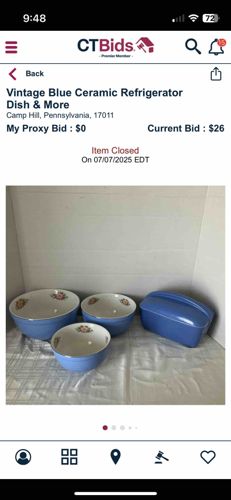
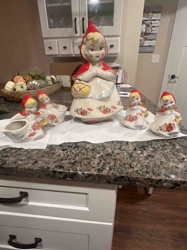
Vintage Blue Ceramic Hall Bowls and Westinghouse Refrigerator Dish

Submitted photo of Vintage Blue Ceramic Hall Bowls and Westinghouse Refrigerator Dish
Photo submitted by the user — not generated by AI

User's notes

Hall bowls and Westinghouse refrigerator dish

These notes were written by the person who submitted this item. Appraiser.AI has not verified them, and the AI's identification and estimate may rely on them.

AI Estimated Value

Not an official valuation

$60-90

AI estimate as of July 8, 2025 · verify with a professional before acting

AI-Generated · Verify before acting

Everything on this page is generated by AI for informational purposes only. AI can make mistakes — the AI may misidentify items or misattribute them (artist, maker, brand, designer, origin, era). This is not an official valuation and should not be used for insurance, sale, tax, estate, legal, or lending purposes — or any decision requiring a certified appraisal. It is not an authoritative claim about any person, brand, or rights holder — do not share or rely on it as a factual statement about a third party. Always consult qualified professionals before making financial decisions.

This analysis also relies on unverified notes provided by the user, which may be incomplete or inaccurate and could affect the result.

Read the full disclaimer

AI Item Analysis

This lot consists of three vintage Hall mixing bowls and one Westinghouse ceramic refrigerator dish, all primarily in a cohesive soft blue color. The three Hall bowls are made of ceramic, featuring a glossy light blue exterior and a contrasting white interior. Each bowl's interior is decorated with a delicate floral motif, appearing to be small pink and possibly purple flowers with green leaves, arranged in a repeating pattern around the rim. The bowls appear to be nesting, indicating varying sizes, likely small, medium, and large, though exact dimensions are not provided. They exhibit classic Hall pottery characteristics known for durability and functionality. The Westinghouse refrigerator dish is also ceramic and matches the light blue color of the bowls. It features a rectangular or oblong shape with rounded corners and a fitted lid, typical of butter or food storage dishes designed for early refrigerators. The lid has a raised, sculpted handle for easy lifting. All items appear to be in good vintage condition, with no immediately visible chips, cracks, or significant wear beyond what might be expected from age and use. The glossy finish on both the bowls and the refrigerator dish suggests a well-maintained surface. The style and construction, especially of the refrigerator dish, point to a mid-20th century origin, likely 1930s-1950s, a period when integrated ceramic refrigerator ware was common. The craftsmanship appears to be of good quality, consistent with well-regarded manufacturers like Hall and Westinghouse for household ceramics, indicating solid construction and thoughtful design.
AI Appraisal Report

Upon examination of the provided images, this lot consists of three vintage Hall ceramic mixing bowls and one Westinghouse ceramic refrigerator dish. The pieces present as a cohesive set due to their shared light blue coloration. The Hall bowls, featuring a white interior decorated with a delicate floral pattern, appear to be authentic examples from the mid-20th century, likely the 1930s-1950s. The Westinghouse refrigerator dish with its fitted lid is a classic example of early refrigerator ware from the same era. All pieces appear to be in good vintage condition, retaining their glossy finish with no major chips, cracks, or crazing visible in the images. The primary value driver for this set is its condition and the desirable 'Rose Parade' or similar floral pattern on the Hall bowls. While individual pieces are relatively common, finding a matched set in this condition increases its appeal. The market for mid-century American kitchenware is steady, with collectors often seeking complete sets. However, it's important to note the limitations of a digital appraisal. A definitive authentication would require in-person inspection to check for maker's marks on the underside of each piece, feel for any hairline cracks not visible in photos, and confirm the pattern's authenticity. Without physical examination, the possibility of reproductions or unverified damage remains.

Keep exploring

More kitchenware appraisals

Get your items appraised

Instant AI-powered appraisal estimates from a photo

Browse More Appraisals