AI estimate as of August 11, 2025 · verify with a professional before acting
AI-Generated · Verify before acting
Everything on this page is generated by AI for informational purposes only. AI can make mistakes — the AI may misidentify items or misattribute them (artist, maker, brand, designer, origin, era). This is not an official valuation and should not be used for insurance, sale, tax, estate, legal, or lending purposes — or any decision requiring a certified appraisal. It is not an authoritative claim about any person, brand, or rights holder — do not share or rely on it as a factual statement about a third party. Always consult qualified professionals before making financial decisions.
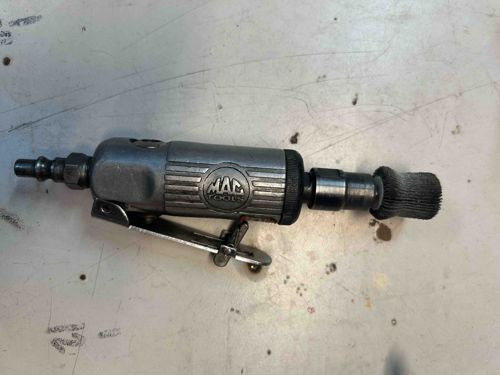
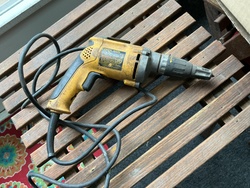
This item is an air-powered die grinder, likely manufactured by MAC Tools, as indicated by the prominent 'MAC TOOLS' logo embossed on the side of the main body. The tool is constructed primarily of metal, likely aluminum or a similar alloy, given its typical use and the visible wear patterns. It features a compact, cylindrical design, measuring approximately 6-8 inches in length, and is finished in a natural, matte silver-gray color, characteristic of cast or machined metal. The main body has horizontal grooves or fins near the logo, which may serve for grip or heat dissipation. At one end, there is a standard pneumatic quick-connect fitting, suggesting it operates with compressed air. On the opposite end, a chuck or collet holds a rotary wire brush attachment, which appears well-used with splayed and matted bristles, indicating prior operation for cleaning, deburring, or surface preparation. A lever-style trigger mechanism with a safety lock is present underneath the body, allowing for control of the tool's operation. The overall condition shows significant signs of use, including surface abrasions, scuffs, and possibly some discoloration or grime on the metal surfaces, consistent with a tool that has been regularly employed in a workshop or industrial setting. There are no obvious signs of major damage or repairs, but the general patina suggests an older, well-maintained tool rather than a brand-new one. The craftsmanship appears robust and functional, designed for durability and repetitive use.
AI Appraisal Report
Based on my visual examination of the provided image, I can confidently assess this MAC Tools Air Die Grinder. The prominent 'MAC TOOLS' logo embossed on the body strongly suggests authenticity, typical of the brand's direct marking practices. The tool's all-metal construction, likely aluminum, indicates a professional-grade item built for durability, a hallmark of MAC Tools. Its compact, robust design, characteristic lever-style trigger with safety, and standard pneumatic fitting are consistent with vocational air die grinders. The significant wear, including surface abrasions, scuffs, and the heavily used wire brush attachment, clearly shows it has been actively utilized in a workshop setting. This wear, while substantial, does not appear to compromise its core functionality; rather, it suggests a tool that has been well-maintained and regularly put to work. There are no visible signs of major damage or repair that would significantly devalue it beyond normal operational wear.
In terms of market conditions, used professional-grade air tools like this MAC die grinder generally hold reasonable value due to their longevity and performance. Comparables on secondary markets (e.g., eBay, specialized tool forums) for similar used MAC Tools die grinders typically range from $75 to $150, depending on condition and specific model. The included well-used wire brush attachment adds minimal value beyond its functional utility. Demand for such tools remains steady among automotive technicians, fabricators, and serious DIY enthusiasts. It is not particularly rare, but the MAC Tools branding does give it a premium over generic alternatives.
My primary limitation in this appraisal is the lack of physical inspection. I cannot definitively verify internal components, test its operational performance (e.g., air leaks, collet concentricity, bearing noise), or confirm the absence of hairline cracks or hidden damage that might alter its value. Provenance documentation (e.g., original purchase receipts, maintenance records) would further solidify authenticity and condition history. Without these, the appraisal relies solely on visible cues. This is a reliable, used professional tool.
Factors significantly impacting value upwards would be proof of recent professional servicing or a rarer, high-performance model. Downwards factors would be if internal components fail upon testing, or if there's significant unseen damage.