AI estimate as of September 5, 2025 · verify with a professional before acting
AI-Generated · Verify before acting
Everything on this page is generated by AI for informational purposes only. AI can make mistakes — the AI may misidentify items or misattribute them (artist, maker, brand, designer, origin, era). This is not an official valuation and should not be used for insurance, sale, tax, estate, legal, or lending purposes — or any decision requiring a certified appraisal. It is not an authoritative claim about any person, brand, or rights holder — do not share or rely on it as a factual statement about a third party. Always consult qualified professionals before making financial decisions.
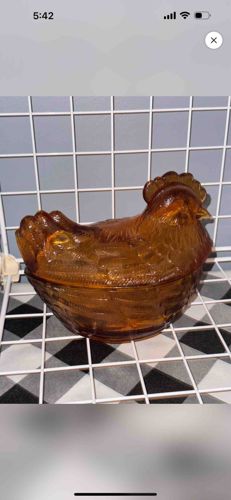
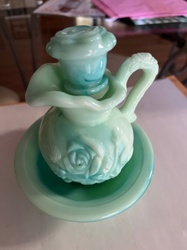
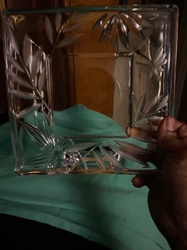
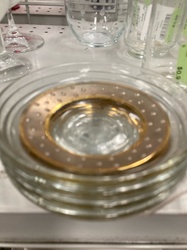
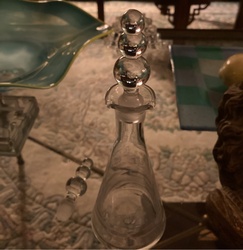
This item is an amber-colored glass hen on a nest covered dish, commonly used as a candy dish, butter dish, or trinket box. It is constructed from a translucent, rich amber-toned pressed glass, exhibiting a warm, brownish-orange hue that allows light to pass through. The piece is composed of two distinct parts: a base shaped like a woven basket or nest, and a lid intricately molded to resemble a hen. The hen's form is highly detailed, showing feathers, a comb, and wattles, with a subtle texture simulating avian plumage. The base features a textured pattern designed to mimic wickerwork or woven straw of a nest. The overall size appears to be suitable for holding small items, likely in the range of 6-8 inches in length. No obvious cracks, chips, or significant damage are visible from the provided image, suggesting good overall condition, though there may be minor manufacturing imperfections typical of pressed glass, such as mold lines or small air bubbles. The glass has a smooth, glossy finish. These types of dishes were popular across several decades, particularly from the early to mid-20th century, and are often associated with collectible depression glass or later reproductions. Without specific maker's marks, it is difficult to ascertain the exact manufacturer or precise age, but the style is characteristic of vintage American glass production. The craftsmanship is indicative of mass-produced yet decorative pressed glass.
AI Appraisal Report
Based on my visual examination of the provided image, this amber-colored glass hen on a nest covered dish appears to be in very good condition. I observe no obvious cracks, chips, or significant damage. The translucent, rich amber hue and detailed molding of the hen and woven basket base are characteristic of pressed glass from the mid-20th century, often associated with collectible Depression-era patterns or later reproductions. The smooth, glossy finish is also consistent with this type of glassware.
Market conditions for such decorative pressed glass pieces are relatively stable, with consistent collector interest but generally modest values. Comparables for similar amber hen on nest dishes, without specific maker's marks, typically range from $30 to $80, depending on condition and pattern originality. While charming, these items are not particularly rare; they were mass-produced. Demand is steady among collectors of vintage kitchenware and decorative glass, but not exceptionally high.
Factors impacting value positively include its apparent excellent condition and appealing amber color. Without maker's marks, however, definitive attribution to a specific manufacturer (e.g., Westmoreland, Imperial, Fostoria) or precise age is impossible. This significantly limits its upper market value, as highly sought-after pieces often derive value from rarity, provenance, or specific manufacturer. For full authentication and to ascertain precise age or manufacturer, I would need an in-person examination to search for subtle mold marks, assess glass quality under magnification, and potentially seek provenance documentation. Scientific testing is generally not applied to this type of collectible unless a significant dispute over material or age arises. My valuation reflects its current status as a well-preserved, attractive vintage decorative item.