AI Appraisal Estimate

AI-generated estimates · not official valuations

From the user

What was submitted

Photo and notes provided by the user — not generated by AI

Submitted item photo
Submitted photo · June 6, 2026

User's notes

No additional notes provided.

AI analysis below

AI appraisal

AI analysis & estimate

AI-Generated · Verify before acting

Everything below is generated by AI for informational purposes only. AI can make mistakes — the AI may misidentify items or misattribute them (artist, maker, brand, designer, origin, era). This is not an official valuation and should not be used for insurance, sale, tax, estate, legal, or lending purposes — or any decision requiring a certified appraisal. It is not an authoritative claim about any person, brand, or rights holder — do not share or rely on it as a factual statement about a third party. Always consult qualified professionals before making financial decisions.

Read the full disclaimer

AI Identification

·Not independently authenticated·Verify before acting

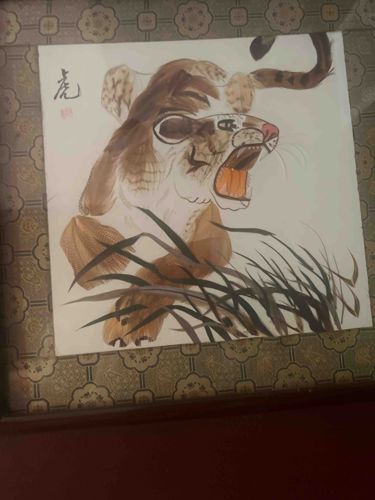
Chinese Brush Painting of a Roaring Tiger

Wall Art

AI Estimated Value

·Not an official valuation·Verify before acting

$400-700

As of June 6, 2026

AI Item Analysis

·AI can make mistakes·Verify before acting
This item is a framed Chinese brush painting depicting an angry tiger amidst tall grasses. The painting is rendered in a traditional Chinese ink wash style, utilizing various shades of brown and black ink, with subtle hints of orange in the tiger's mouth to emphasize its roar. The tiger is positioned dynamically, with its head turned to the right and its mouth wide open, conveying aggression or a warning. The brushwork for the tiger's fur is delicate and layered, suggesting texture and depth. The grasses are painted with bold, sweeping strokes, providing a contrast to the finer details of the tiger. In the upper left corner, there is a black calligraphic inscription, likely denoting the subject or a poetic verse, followed by a red seal, which is typical of traditional Chinese paintings and often indicates the artist's signature or studio. The painting itself appears to be on paper or silk and is framed in what appears to be a dark wooden frame with a patterned fabric or matting border. The border features a recurring geometric pattern with floral or cloud-like motifs in greens and browns, suggesting a traditional Asian aesthetic. The visible condition appears good, with no obvious tears or significant discoloration on the artwork itself, though the frame's exact condition and material cannot be fully assessed from the image.

AI Appraisal Report

·AI can make mistakes·Verify before acting
I have carefully examined the provided image of this Chinese brush painting of a roaring tiger. Visually, the condition of the artwork itself appears to be very good, with no overt signs of tearing, significant creasing, or major discoloration that would detract from its aesthetic appeal. The brushwork is dynamic and detailed, consistent with traditional Chinese ink wash techniques. The inclusion of calligraphic inscription and a red seal suggests authenticity as a traditional piece, though without physical inspection, I cannot confirm the artist's identity or the precise age of these elements. The framing also presents a traditional Asian aesthetic and appears intact.Market conditions for traditional Chinese brush paintings remain robust, particularly for those with strong artistic merit and good preservation. Comparables would include other well-executed animal studies from the late 19th or 20th centuries, especially those depicting powerful symbols like the tiger. Pieces by recognized, albeit not necessarily master, artists in good condition typically fetch in the mid to high hundreds.Demand for such decorative and culturally significant artwork is steady among collectors of Asian art and those seeking distinctive home decor. While not extremely rare, a well-preserved and competently executed piece like this maintains its appeal.The primary factor impacting value without in-person examination is the unverified authenticity of the artist and the precise age of the work. Without physical inspection, I cannot determine the quality of the paper/silk, the precise age of the inks, or the overall preservation condition beyond surface appearance. To fully authenticate, an in-person examination would be crucial to assess the material quality, verify ink aging, and potentially detect any repairs or conservation efforts. Provenance documentation, such as exhibition history or prior ownership records, would significantly enhance authentication and value. Scientific testing of materials could also definitively establish age. Based solely on visual assessment of the image, this piece presents as a beautiful and desirable example of Chinese brush painting.

Get your items appraised

Instant estimates of your treasures with AI-powered appraisals

Browse More Appraisals