AI Appraisal Estimate

AI-generated estimates · not official valuations

From the user

What was submitted

Photo and notes provided by the user — not generated by AI

Submitted item photo
Submitted photo · June 8, 2026

User's notes

No additional notes provided.

AI analysis below

AI appraisal

AI analysis & estimate

AI-Generated · Verify before acting

Everything below is generated by AI for informational purposes only. AI can make mistakes — the AI may misidentify items or misattribute them (artist, maker, brand, designer, origin, era). This is not an official valuation and should not be used for insurance, sale, tax, estate, legal, or lending purposes — or any decision requiring a certified appraisal. It is not an authoritative claim about any person, brand, or rights holder — do not share or rely on it as a factual statement about a third party. Always consult qualified professionals before making financial decisions.

Read the full disclaimer

AI Identification

·Not independently authenticated·Verify before acting

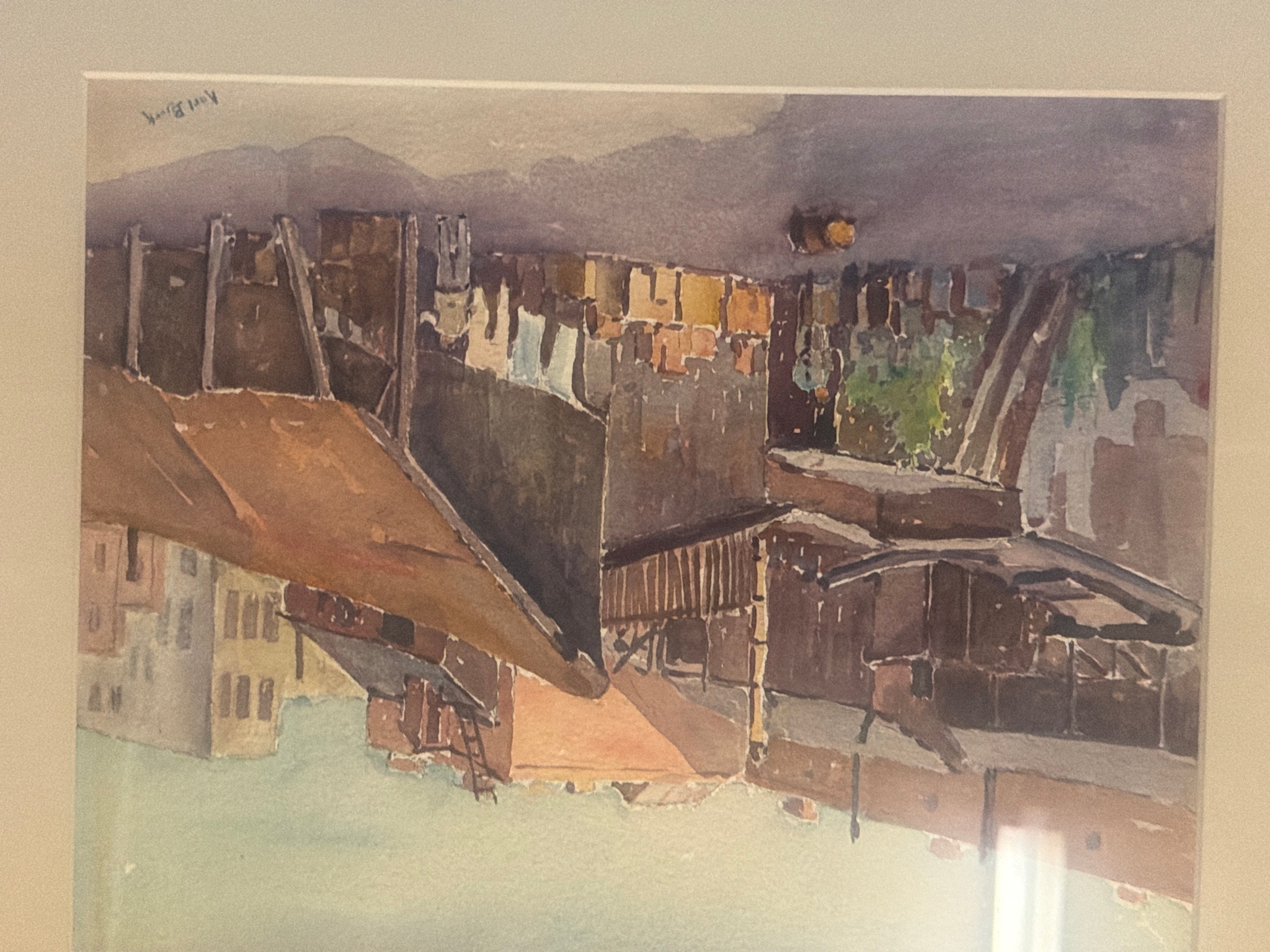
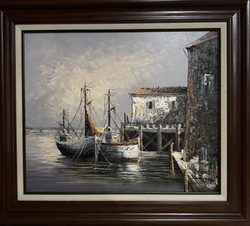
Waterfront landscape painting bearing the signature "Karl Brock"

Paintings

AI Estimated Value

·Not an official valuation·Verify before acting

$400 - $800

As of June 8, 2026

AI Item Analysis

·AI can make mistakes·Verify before acting
This item is a 20th-century style watercolor painting on paper, depicting what appears to be a waterfront scene or industrial harbor with dockside structures and buildings. The composition uses a muted color palette dominated by earth tones, ochre, deep browns, and a dark purple-grey sky, contrasted with a light turquoise or pale blue wash in the foreground representing water. In the upper left corner, the work bears a signature which appears to read "Karl Brock". These markings are consistent with works attributed to mid-century American or European watercolorists, though this attribution remains a hypothesis subject to in-person verification. The application of paint shows a varied technique, including broad wet-on-wet washes in the sky and more structured, dry-brush details on the architectural forms. The paper substrate is visible through the thinner washes, adding to the light-reflective quality characteristic of the medium. The artwork is housed behind glass in a light-colored mat, which obscures the edges of the original paper. Visible condition appears stable, though there is a small dark spot in the upper right sky quadrant which may be a localized stain or a purposeful pigment concentration. Without physical inspection, it is impossible to verify if the signature is contemporary with the painting or applied at a later date.

AI Appraisal Report

·AI can make mistakes·Verify before acting
Based on the image provided, I have examined this 20th-century watercolor depicting an industrial harbor scene. The work bears a signature in the upper left corner consistent with the hand of Karl Brock, though I cannot verifyfrom a photo if this signature is contemporary with the pigment application or added later. This valuation is a hypothesis based on the assumption that the work is by the attributed hand; should it be identified as a work 'in the style of' or an unattributed mid-century piece, the value would likely decrease to the $100–$250 range. The composition shows skilled use of wet-on-wet techniques and a sophisticated muted palette, which are desirable traits for collectors of mid-century American works. However, physical inspection would be required to assess the paper quality, check for light-induced fading (fugitive pigments), and determine if the spot in the upper right is a stain or intentional mark. General market demand for architectural watercolors from this period remains steady, typically appealing to regional collectors and interior designers. To provide a definitive valuation, I would need an in-person examination to confirm the medium's stability and any provenance documentation that supports the attribution. Without such verification, the provided range reflects the typical market behavior for works attributed to Brock in stable condition. The framing and matting appear contemporary to the mid-to-late 20th century, which often suggests the work has been protected, but acid migration from older mats can only be ruled out by removing the work from its frame.

Get your items appraised

Instant estimates of your treasures with AI-powered appraisals

Browse More Appraisals