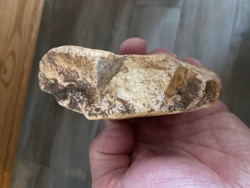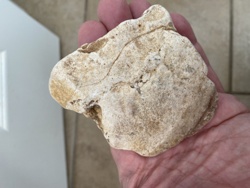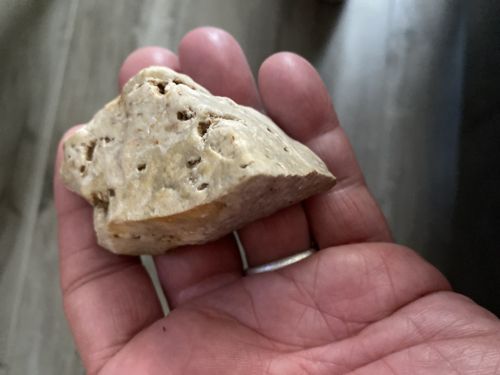
Middle Paleolithic Mousterian Style Double Edge Scraper
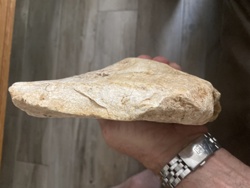
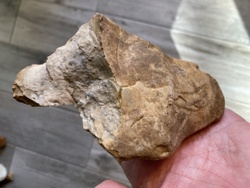
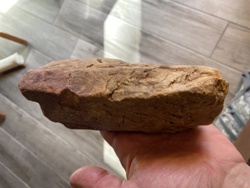
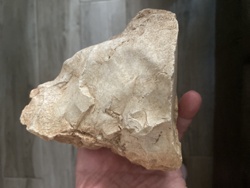
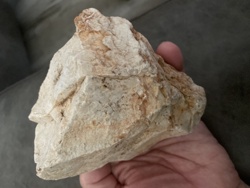
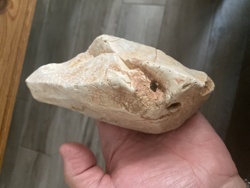
This artifact is a lithic tool measuring approximately 3 inches by 2 inches, discovered in Guthrie, Oklahoma. The item is crafted from a light-colored, opaque lithic material, likely a local variety of chert or flint, characterized by a creamy beige to tan hue with subtle mottled undertones. The surface displays significant pitting and vugs, which are natural inclusions or voids within the stone material. The piece is shaped into a robust scraper with a thick, triangular cross-section. It features evident unifacial retouching along two primary edges, a hallmark of Middle Paleolithic Mousterian-style tool production, used for tasks such as hide scraping or woodworking. The edges show signs of use-wear and step-fractures consistent with heavy-duty labor. The artifact exhibits a heavy patina, reflecting its extreme age, with smoothed edges and a weathered exterior that suggests long-term exposure to the elements or burial in soil. While the 'Mousterian' terminology is typically associated with Eurasian Neanderthal cultures, this find represents a North American lithic tool demonstrating similar morphological and functional characteristics. The craftsmanship indicates a sophisticated understanding of pressure and percussion flaking to achieve a functional, durable sharp edge. There are no modern maker's marks, as the piece is a prehistoric hand tool.
AI-Generated Appraisal Disclaimer
Estimated Value
$45–$85
Basic Information
Category
Prehistoric Lithic Artifacts
Appraised On
March 19, 2026
Estimated Value
$45–$85
Additional Details Provided By Owner
User Provided Information
Middle Paleolithic Mousterian double edge scraper found in Guthrie, OK measuring 3" x 2"
Item Description
This artifact is a lithic tool measuring approximately 3 inches by 2 inches, discovered in Guthrie, Oklahoma. The item is crafted from a light-colored, opaque lithic material, likely a local variety of chert or flint, characterized by a creamy beige to tan hue with subtle mottled undertones. The surface displays significant pitting and vugs, which are natural inclusions or voids within the stone material. The piece is shaped into a robust scraper with a thick, triangular cross-section. It features evident unifacial retouching along two primary edges, a hallmark of Middle Paleolithic Mousterian-style tool production, used for tasks such as hide scraping or woodworking. The edges show signs of use-wear and step-fractures consistent with heavy-duty labor. The artifact exhibits a heavy patina, reflecting its extreme age, with smoothed edges and a weathered exterior that suggests long-term exposure to the elements or burial in soil. While the 'Mousterian' terminology is typically associated with Eurasian Neanderthal cultures, this find represents a North American lithic tool demonstrating similar morphological and functional characteristics. The craftsmanship indicates a sophisticated understanding of pressure and percussion flaking to achieve a functional, durable sharp edge. There are no modern maker's marks, as the piece is a prehistoric hand tool.
Related Tags
Explore similar items and categories:
Get Your Items Appraised
Instant estimates of your treasures with AI-powered instant appraisals