AI Appraisal Estimate

AI-generated estimates · not official valuations

From the user

What was submitted

Photo and notes provided by the user — not generated by AI

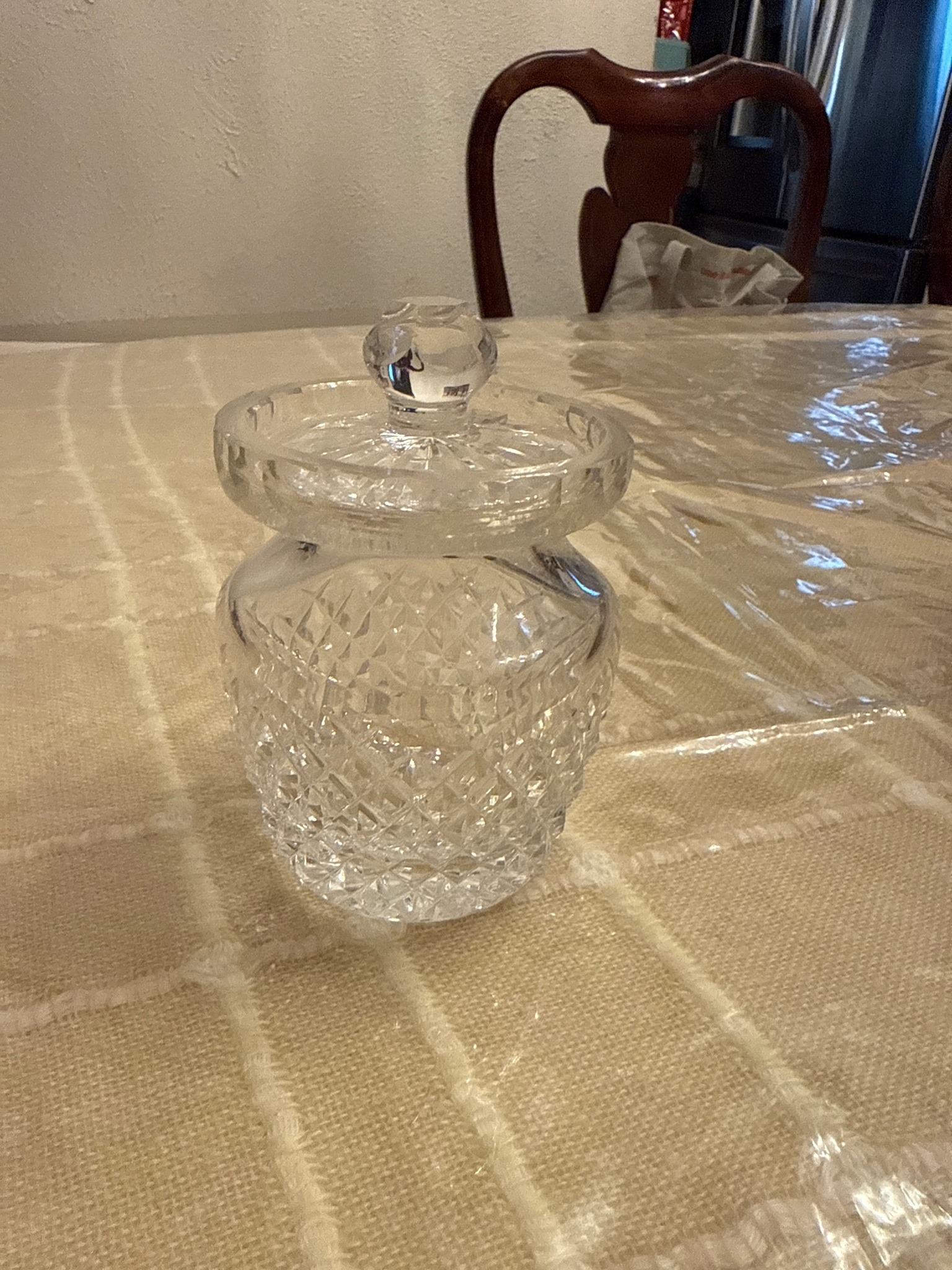
Submitted item photo
Submitted photo · June 23, 2026

User's notes

No additional notes provided.

AI analysis below

AI appraisal

AI analysis & estimate

AI-Generated · Verify before acting

Everything below is generated by AI for informational purposes only. AI can make mistakes — the AI may misidentify items or misattribute them (artist, maker, brand, designer, origin, era). This is not an official valuation and should not be used for insurance, sale, tax, estate, legal, or lending purposes — or any decision requiring a certified appraisal. It is not an authoritative claim about any person, brand, or rights holder — do not share or rely on it as a factual statement about a third party. Always consult qualified professionals before making financial decisions.

Read the full disclaimer

AI Identification

·Not independently authenticated·Verify before acting

Lidded clear glass jar with brilliant-style diamond cutting

Decorative Glassware

AI Estimated Value

·Not an official valuation·Verify before acting

$40-$150

As of June 23, 2026

AI Item Analysis

·AI can make mistakes·Verify before acting
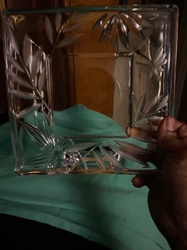
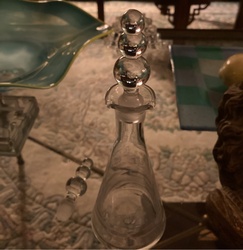
This object is a clear, colorless glass lidded jar or biscuit barrel featuring a high-refraction finish consistent with lead crystal or high-quality pressed glass. The body of the jar is decorated with a diamond-cut pattern (cross-hatching) that covers the lower two-thirds of the vessel, transitioning into a smooth, rounded shoulder. The lid is similarly decorated with radiating incisions around a central faceted finial knob. The glass shows significant light dispersion, suggesting a high mineral content typical of late-19th to mid-20th-century decorative glassware. Measuring approximately 6 to 8 inches in height based on surrounding furniture, the jar appears to be in good condition with no visible chips or clouding in the photograph, though a physical inspection would be required to verify surface scratches or interior residue. The design is stylistically consistent with American Brilliant Period glass or mid-20th-century productions by makers like Waterford or Marquis (subject to in-person verification). Because no maker's mark, etched signature, or foil label is legible in the image, the attribution remains a hypothesis and the piece could be a later reproduction mimicking older styles of cut crystal.
AI Appraisal Report

·AI can make mistakes·Verify before acting
Based on the image provided, I have examined this lidded glass jar featuring a brilliant-style diamond-cut pattern. From what I can see, the piece exhibits high clarity and light dispersion, suggesting a lead crystal composition. However, I cannot verify from a photo whether this is a hand-cut piece from the American Brilliant Period (circa 1876-1917) or a later, mid-20th-century mold-blown or machine-cut production. The lack of a visible etched signature or maker's mark leads me to treat any attribution to a premium manufacturer like Waterford or Hawkes as a hypothesis requiring physical confirmation. My value estimate is based on the item's aesthetic appeal and functional utility as decorative glassware. If this jar is a mid-century production or a high-quality reproduction in the style of earlier cut glass, it would likely sell at the lower end of the $40-$150 range. If an in-person inspection were to reveal a verified maker's mark or specific characteristics of period hand-cutting, the value could exceed the upper end of this estimate. Conversely, if the piece is found to be contemporary pressed glass with mold seams (which are not visible here), the value would decrease significantly to a decorative-only range of $15-$30. To reach a more certain valuation, I would need to perform a physical examination to check for acid marks, evaluate the sharpness of the cut edges, and check for 'shelf wear' on the base. General market demand for unbranded cut crystal remains stable but is currently secondary to the demand for signed or documented period pieces. Authentic provenance documentation would also be required to support a higher valuation.

Get your items appraised

Instant estimates of your treasures with AI-powered appraisals

Browse More Appraisals