AI estimate as of September 1, 2025 · verify with a professional before acting
AI-Generated · Verify before acting
Everything on this page is generated by AI for informational purposes only. AI can make mistakes — the AI may misidentify items or misattribute them (artist, maker, brand, designer, origin, era). This is not an official valuation and should not be used for insurance, sale, tax, estate, legal, or lending purposes — or any decision requiring a certified appraisal. It is not an authoritative claim about any person, brand, or rights holder — do not share or rely on it as a factual statement about a third party. Always consult qualified professionals before making financial decisions.
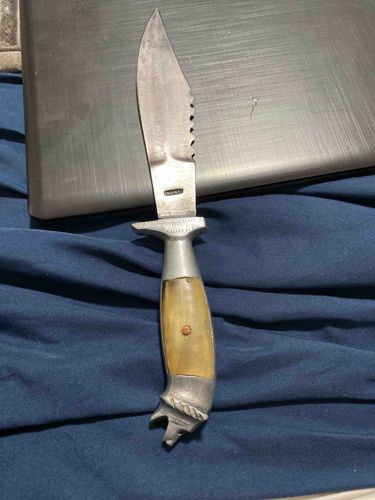
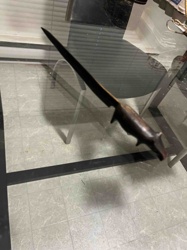
This appears to be a vintage fixed-blade hunting or utility knife, possibly dating from the mid-20th century. The overall length is not precisely discernible from the image, but it appears to be a medium-sized knife, likely between 8 and 12 inches. The blade is made of a silver-toned metal, likely steel, exhibiting a clip-point or Bowie-style profile with a discernible belly towards the tip. The spine of the blade features aggressive serrations, indicative of a saw-back design, which could be used for cutting tougher materials. There is a small, rectangular maker's mark or stamp on the ricasso, just above the guard, though the text is unreadable. The blade shows signs of use, including surface scratching, minor pitting, and some discoloration consistent with age and exposure, suggesting a moderate to well-used condition rather than pristine. The hilt comprises a prominent metal guard with a patterned, possibly cast, texture, followed by a light-colored, possibly bone, antler, or synthetic resin handle. This handle is secured by at least one visible metal rivet. The handle material has a warm, yellowish hue and a smooth, polished appearance, though it may also show minor surface wear or natural imperfections. The pommel is also made of metal, matching the guard, and features a distinctive design resembling a stylized bird's head or an abstract animal motif, complete with an eye and what looks like a coiled rope or textured element wrapping around its base. This decorative pommel adds a unique character to the knife and suggests a degree of artisanal craftsmanship. The overall construction appears robust, indicating it was designed for functional use.
AI Appraisal Report
Based on my visual examination of the provided image, this vintage fixed-blade knife appears to be a functional hunting or utility tool, consistent with designs from the mid-20th century. Its overall condition, exhibiting surface scratching, minor pitting, and discoloration on the steel blade, suggests moderate to well-used wear rather than pristine preservation. The aggressive saw-back design and robust construction indicate its intended purpose. The unique decorative pommel, resembling a stylized bird's head, is a key aesthetic feature, adding character and suggesting a degree of craftsmanship beyond purely utilitarian design. The handle, likely bone, antler, or synthetic, also shows a warm patina consistent with age.
Authenticity of age and material seems credible based on the visual cues, but I must emphasize the limitations of image-only appraisal. Without direct physical inspection, I cannot definitively confirm the blade's steel composition, the exact material of the handle (e.g., distinguishing between natural bone/antler and synthetic resin), or the manufacturing methods. The unreadable maker's mark on the ricasso, if decipherable, could significantly impact value by revealing the manufacturer and potentially its rarity.
In terms of market conditions, vintage fixed-blade knives are generally stable. Comparables would include other well-made, medium-sized hunting knives from the mid-20th century, particularly those with unique decorative elements. While not exceptionally rare, the distinctive pommel adds to its appeal. Demand is moderate, driven by collectors of hunting knives and enthusiasts appreciative of vintage tools. Factors positively impacting value include the unique pommel, functional design, and apparent robust construction despite wear. Negative factors are the signs of use and the unidentifiable maker's mark.
For full authentication and a more precise valuation, a direct in-person examination is crucial. This would allow for tactile assessment of materials, microscopic analysis of wear patterns, and potential reading of the maker's mark. Furthermore, provenance documentation, if available, could confirm its history and origin, significantly enhancing its value.