AI estimate as of July 3, 2025 · verify with a professional before acting
AI-Generated · Verify before acting
Everything on this page is generated by AI for informational purposes only. AI can make mistakes — the AI may misidentify items or misattribute them (artist, maker, brand, designer, origin, era). This is not an official valuation and should not be used for insurance, sale, tax, estate, legal, or lending purposes — or any decision requiring a certified appraisal. It is not an authoritative claim about any person, brand, or rights holder — do not share or rely on it as a factual statement about a third party. Always consult qualified professionals before making financial decisions.
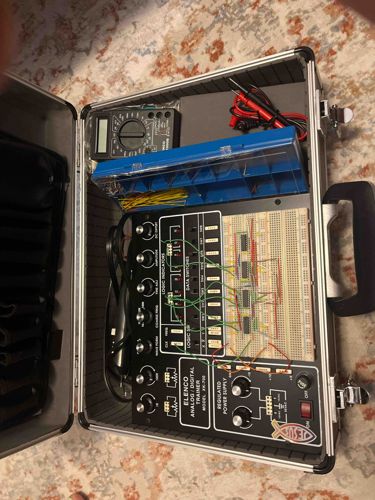
This item is an Elenco Analog/Digital Trainer, model number XK-700, presented within a durable, presumably aluminum or alloy, briefcase-style carrying case with a plastic handle. The case features a silver metallic finish with reinforced black corners, indicating robust construction for portability and protection. The interior of the case is organized to securely hold the training unit, a digital multimeter, and various accessories.
The main training unit, visible in black, features a breadboard for circuit prototyping, along with integrated components such as logic indicators, data switches, and a regulated power supply. Connecting wires, predominantly green and yellow, are visible plugged into the breadboard, suggesting an active or recently used setup. The unit's controls consist of various black rotary knobs and switches, including a prominent red toggle switch for power. The Elenco logo and model number are clearly visible on the front panel. A notable, somewhat personalizing, feature is a fish symbol (ichthys) decal affixed near the power supply section.
Accompanying the main trainer are a basic digital multimeter in black with a grey dial and an LCD screen, and a blue transparent plastic organizer box containing what appear to be small electronic components or more connecting wires. Red and black test leads for the multimeter are also present. The overall condition appears to be good, with no obvious signs of major damage or excessive wear, although some minor scuffs might be expected from use. The components appear clean, and the organization within the case suggests careful handling. This type of kit is typically used for educational purposes in electronics, likely dating from the late 20th to early 21st century, given the design and visible components.
AI Appraisal Report
I have carefully examined the provided image of the Elenco Analog/Digital Trainer Kit, model XK-700. Based on my visual assessment, the kit appears to be in very good, used condition. The outer carrying case shows minor wear consistent with its age and intended portability, but its reinforced corners and overall structure suggest good protection for the contents. The internal components, including the main trainer unit, multimeter, and accessories, appear clean and well-organized, indicating diligent care by the previous owner. The presence of a personalizing decal (fish symbol) suggests it was owned by an individual rather than a large institution. All visible controls, switches, and the breadboard appear intact.
From a market perspective, these educational electronics trainers, while not rare, maintain consistent demand, particularly for hobbyists, students, and educators seeking hands-on learning. New units of comparable quality can range from $200-$400. However, this specific model (XK-700) is an older iteration. Factors impacting value include the comprehensive nature of the kit (trainer, multimeter, components), its robust carrying case, and the apparently good functional condition. The primary limitation of this appraisal is the lack of physical inspection; I cannot verify the operational functionality of the trainer, multimeter, or the integrity of all internal circuits. For full authentication and a definitive appraisal, I would require in-person examination to test all functions, check for internal damage, and verify component completeness against the original manufacturer's specifications. Provenance documentation, such as original purchase receipts or manuals, would also enhance authenticity verification. Without this, I am relying solely on visual cues.