AI Appraisal Estimate

AI-generated estimates · not official valuations

From the user

What was submitted

Photo and notes provided by the user — not generated by AI

Submitted item photo
Submitted photo · May 27, 2026

User's notes

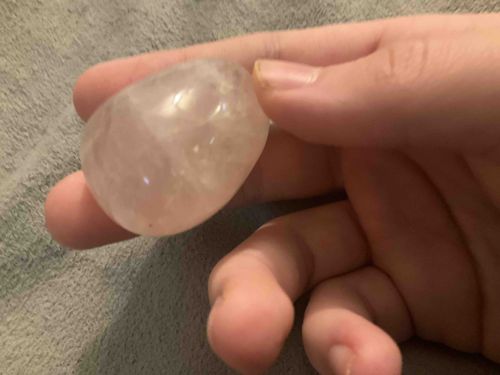
Rose quartz crystal likely put in rock Tumbler

AI analysis below

AI appraisal

AI analysis & estimate

AI-Generated · Verify before acting

Everything below is generated by AI for informational purposes only. AI can make mistakes — the AI may misidentify items or misattribute them (artist, maker, brand, designer, origin, era). This is not an official valuation and should not be used for insurance, sale, tax, estate, legal, or lending purposes — or any decision requiring a certified appraisal. It is not an authoritative claim about any person, brand, or rights holder — do not share or rely on it as a factual statement about a third party. Always consult qualified professionals before making financial decisions.

Note

This analysis also relies on unverified notes provided by the user, which may be incomplete or inaccurate and could affect the result.

Read the full disclaimer

AI Identification

·Not independently authenticated·Verify before acting

Tumbled Rose Quartz Specimen

Minerals & Gemstones

AI Estimated Value

·Not an official valuation·Verify before acting

$5.00 - $12.00

As of May 27, 2026

AI Item Analysis

·AI can make mistakes·Verify before acting
This item is a specimen of rose quartz that has undergone a mechanical tumbling process to achieve a smooth, rounded, and polished aesthetic. Geologically, it is a variety of macrocrystalline quartz characterized by its soft, pale pink hue, which is typically attributed to microscopic inclusions of manganese, titanium, or iron within the mineral's crystal structure. The specimen is roughly ovoid or pebble-shaped, fitting comfortably within the palm of a hand, suggesting a size of approximately 1.5 to 2 inches in length. Its surface exhibits a high-gloss finish typical of a multi-stage rock tumbling process, which involves abrasive grits of increasing fineness. Internally, the stone displays characteristic 'veils' or 'fractures'—white, wispy inclusions that are common in natural quartz and create a degree of translucency rather than total transparency. There are no visible maker's marks or signatures, as this is a natural mineral product. The condition appears excellent with a consistent polish, although some internal natural fractures reach the surface slightly, which is expected for this material. This modern lapidary piece lacks specific historical age but represents a high-quality decorative stone or metaphysical tool, demonstrating uniform color saturation and a pleasing tactile quality.
AI Appraisal Report

·AI can make mistakes·Verify before acting
I have virtually examined this tumbled rose quartz specimen. Based on the provided imagery and description, the item exhibits the characteristic pale pink hue and macrocrystalline structure associated with genuine rose quartz. The surface displays a high-gloss finish indicative of a thorough multi-stage mechanical tumbling process. While the polish is consistent, the internal veils and fractures visible are typical for the species and do not detract from the value of a decorative specimen of this grade. Market conditions for tumbled minerals are currently stable, driven primarily by the high-volume decorative and metaphysical markets. This specific specimen is considered common material; rose quartz is found in abundance globally, particularly in Brazil and Madagascar. Because it lacks rare features such as asterism (the 'star' effect) or 'gem-quality' transparency, its value is determined by weight and surface aesthetic rather than rarity. Comparable specimens of this size (1.5 to 2 inches) typically retail in the $5.00 to $12.00 range at mineral shows or specialty boutiques. Factors impacting value include the saturation of color—deeper pinks command higher premiums—and the absence of deep surface-reaching pits. My assessment is limited by the digital nature of this examination; I cannot perform a Mohs hardness test (to distinguish it from pink glass or dyed calcite) or measure specific gravity. A full authentication would require an in-person inspection to verify the mineral's refractive index and ensure the color is natural and not the result of irradiation or synthetic dyes, though the latter is unlikely for a stone of this market tier.

Get your items appraised

Instant estimates of your treasures with AI-powered appraisals

Browse More Appraisals