AI estimate as of July 18, 2025 · verify with a professional before acting
AI-Generated · Verify before acting
Everything on this page is generated by AI for informational purposes only. AI can make mistakes — the AI may misidentify items or misattribute them (artist, maker, brand, designer, origin, era). This is not an official valuation and should not be used for insurance, sale, tax, estate, legal, or lending purposes — or any decision requiring a certified appraisal. It is not an authoritative claim about any person, brand, or rights holder — do not share or rely on it as a factual statement about a third party. Always consult qualified professionals before making financial decisions.
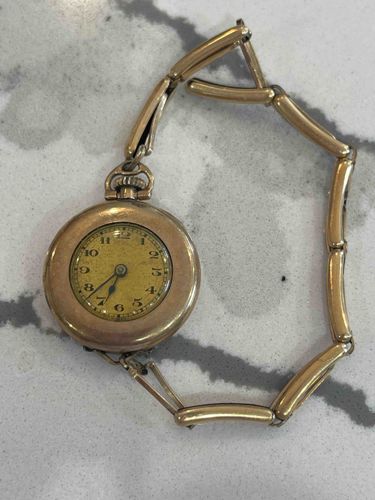
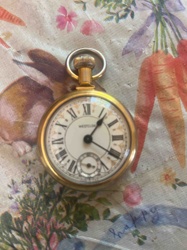
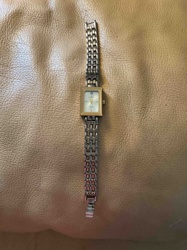
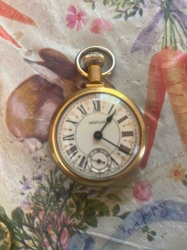
This is an antique or vintage ladies' wrist watch, characterized by its round, pocket watch-style case and integrated flexible bracelet. The watch case appears to be made of gold-toned metal, possibly gold-filled or solid gold, exhibiting a slight reddish patina indicative of age and perhaps a higher copper content in the alloy (rose gold) or general oxidation. The dial is a distinctive faded yellow or ivory color, with black Arabic numerals for hours and a darker inner ring for minute markers. The hands are prominent, possibly spade or Breguet style, and also appear to be dark-toned, providing good contrast against the light dial. The crown is located at the 12 o'clock position (when oriented for wear), typical of watches that transitioned from pocket watch designs to wristwatches. A prominent bail or loop is attached to the watch case near the crown, suggesting it could have also been worn as a pendant watch, or that this design element was carried over from pocket watch aesthetics. The bracelet is of a flexible, articulated link design, constructed from segments of gold-toned metal that appear to be hollow or tubular, connected by smaller, possibly flat or rounded, links. This type of bracelet, often referred to as a 'ladder' or 'flexible bar' style, was popular in the early 20th century. Visible condition issues include a general wear and tear consistent with its age, with some slight discoloration or dirt build-up in the crevices of the bracelet links. The dial shows some signs of age-related discoloration but appears to be largely intact without major cracks. The crystal is clear but might exhibit fine scratches typical of usage. The overall craftsmanship suggests a mass-produced item from the late 19th to early 20th century, likely between 1900 and 1930, during the period when wristwatches gained widespread popularity for women. There are no visible maker's marks or signatures in the provided image.
AI Appraisal Report
I have carefully examined the image of this Antique Ladies' Gold-Toned Wrist Watch with Flexible Bracelet. My assessment of its condition, based solely on visual inspection, suggests it is in fair to good antique condition. There is clear evidence of age-appropriate wear, including discoloration on the gold-toned metal, especially noticeable in the bracelet’s crevices, and fading on the dial. The overall integrity of the watch and bracelet appears sound, with no immediate indications of major damage beyond typical usage over decades. The clear crystal and legible Arabic numerals on the time-faded dial are positive aspects.
Authenticity, when based on images alone, is always limited. While the design elements—such as the 12 o'clock crown, prominent bail, and flexible “ladder” style bracelet—are consistent with ladies' wristwatches from the early 20th century (circa 1900-1930), I cannot definitively authenticate the metal content (solid gold vs. gold-filled), the movement, or rule out later modifications. Without visible maker's marks, determining specific provenance or manufacturer is impossible from the image.
Market conditions for antique ladies' wristwatches from this period are generally moderate. While charming, mass-produced pieces without prominent maker's marks or significant gold content typically command modest prices. Demand exists among collectors of antique jewelry and timepieces, but items of this type are not considered rare. Rarity would be significantly increased by a recognized maker, precious metal content (e.g., higher karat solid gold), or unique design features. This piece is more common.
The main factors impacting its value are its antique charm, general intact condition, and desirable flexible bracelet. However, the lack of a known maker, potentially lower-grade metal (if gold-filled), and absence of complications or precious stones keep its value in a accessible range.
For full authentication, a physical examination is crucial. This would involve inspecting the movement for maker's marks and jewel count, testing the metal for gold purity (if not marked), and assessing the crystal for material and original fitting. Provenance documentation, though unlikely for an item of this type without a known history, would also add value.