AI estimate as of November 20, 2025 · verify with a professional before acting
AI-Generated · Verify before acting
Everything on this page is generated by AI for informational purposes only. AI can make mistakes — the AI may misidentify items or misattribute them (artist, maker, brand, designer, origin, era). This is not an official valuation and should not be used for insurance, sale, tax, estate, legal, or lending purposes — or any decision requiring a certified appraisal. It is not an authoritative claim about any person, brand, or rights holder — do not share or rely on it as a factual statement about a third party. Always consult qualified professionals before making financial decisions.
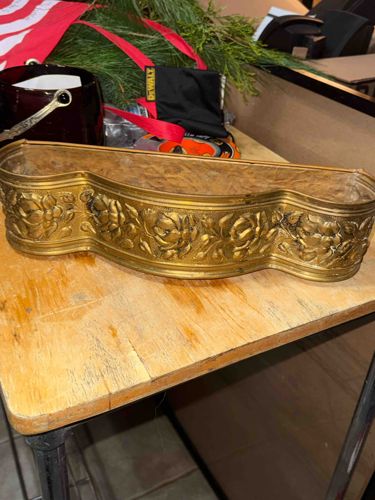
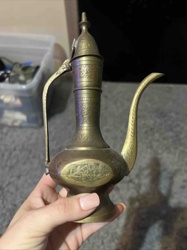
This item is a decorative planter or cachepot crafted from what appears to be gilt metal, likely brass or a brass alloy, given its golden hue and the appearance of some tarnishing or patination. Its most striking feature is its sinuous, undulating shape, which deviates from a simple rectangular form, suggesting an Art Nouveau or Rococo revival influence. The exterior is richly adorned with a continuous high-relief floral motif, primarily depicting roses and their foliage. The roses are rendered with considerable detail, showing individual petals and textured leaves, which adds to the item's ornate aesthetic. The gilt finish exhibits a somewhat aged and worn appearance, with areas of darker discoloration, especially in the recessed portions of the floral carving, indicating natural patination over time. There are no immediate signs of significant damage such as dents or cracks, but the gilting may show some minor abrasion or loss in spots due to handling and age. The interior appears to be unadorned and possibly less finished, as is typical for a planter or cachepot. The material and craftsmanship suggest it is a cast piece, offering durability and intricate detailing. Its estimated age could range from the late 19th century to the mid-20th century, a period known for decorative cast metal items with floral embellishments. The wavy form and detailed floral work are indicative of good quality and a desire for decorative appeal.
AI Appraisal Report
Upon visual examination of the provided image, I assess this gilt metal rose motif planter/cachepot. The overall condition appears good, with expected aging of the gilt finish, indicated by areas of darker discoloration and patination, particularly within the recessed floral carvings. This patination suggests authenticity as an older piece, rather than a modern reproduction. The high-relief floral motifs, featuring detailed roses and foliage, are consistent with decorative styles from the late 19th to mid-20th century, possibly aligning with Art Nouveau or Rococo revival aesthetics. The sinuous, undulating form further supports this period attribution. I observe no obvious signs of significant damage such as major dents, cracks, or repairs. Minor abrasion or loss of gilting in high-contact areas is to be anticipated with age and handling.
Market conditions for decorative gilt metal items of this period are stable, with demand for well-preserved, aesthetically pleasing pieces. Comparables typically include other cast brass or bronze planters and cachepots from the late 19th and early 20th centuries, often featuring similar botanical themes. While not exceedingly rare, the quality of the casting and the intricate detailing contribute to its desirability. The primary factors impacting value are its good condition, detailed craftsmanship, and historical aesthetic appeal. The material itself, likely brass or a brass alloy, is also a positive factor.
It is important to note the limitations of authenticity verification from images alone. A definitive authentication would require an in-person examination to assess the exact metal composition, confirm the manufacturing techniques (e.g., casting method), and thoroughly inspect for any hidden repairs or alterations. Provenance documentation, if available, would significantly enhance authentication. Scientific testing, such as XRF analysis for metal composition, would provide conclusive evidence of the materials used.