AI Appraisal Estimate

AI-generated estimates · not official valuations

From the user

What was submitted

Photo and notes provided by the user — not generated by AI

Submitted item photo
Submitted photo · June 15, 2026

User's notes

Rare porcelain charab gladiator

AI analysis below

AI appraisal

AI analysis & estimate

AI-Generated · Verify before acting

Everything below is generated by AI for informational purposes only. AI can make mistakes — the AI may misidentify items or misattribute them (artist, maker, brand, designer, origin, era). This is not an official valuation and should not be used for insurance, sale, tax, estate, legal, or lending purposes — or any decision requiring a certified appraisal. It is not an authoritative claim about any person, brand, or rights holder — do not share or rely on it as a factual statement about a third party. Always consult qualified professionals before making financial decisions.

Note

This analysis also relies on unverified notes provided by the user, which may be incomplete or inaccurate and could affect the result.

Read the full disclaimer

AI Identification

·Not independently authenticated·Verify before acting

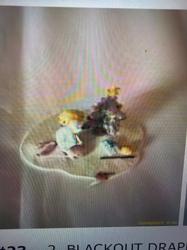
Porcelain Cherub Chariot Figurine

Decorative Figurine

AI Estimated Value

·Not an official valuation·Verify before acting

$40-$65

As of June 15, 2026

AI Item Analysis

·AI can make mistakes·Verify before acting
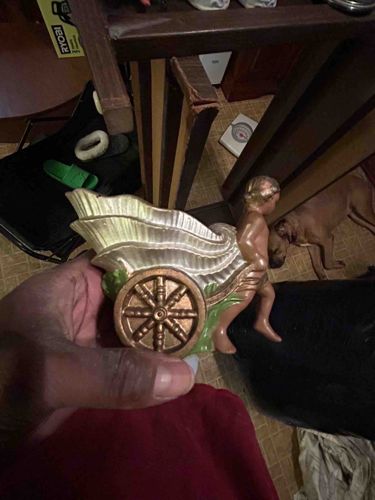
The item appears to be a decorative porcelain figurine depicting a cherub or putto driving a stylized chariot. The cherub figure is rendered in a nude or partially draped form, with a light tan or peach skin tone, and notable rosy cheeks and lips. Its hair is sculpted and appears to be a light blonde or golden color. The cherub sits atop or beside a chariot-like structure, which features prominently sculpted waves or wings in a light, almost iridescent or pearlescent white/silver color, possibly suggestive of a shell or a fantastical vehicle. The base of the chariot is green, mimicking grass or foliage, and it has a single, prominently featured wheel on one side, painted in a metallic gold or bronze hue with intricate spoke details. The overall construction suggests it is made of ceramic or porcelain, possibly with a glazed finish, and likely hand-painted given the visible color variations and detailing. The size, as indicated by its placement in a hand, suggests it is a relatively small collectible, perhaps in the range of 6-8 inches in length. No visible damage such as chips or cracks are immediately apparent; however, a more thorough inspection would be needed to confirm its perfect condition. The style points towards a classical or Rococo revival aesthetic, often popular from the late 19th to mid-20th century, typically used as mantelpieces, shelf decor, or part of a vanity set. The craftsmanship appears to be of decent quality, with attention paid to the sculpting of the cherub and the chariot's details. There are no clear manufacturer marks or signatures visible from the provided image.

AI Appraisal Report

·AI can make mistakes·Verify before acting
Upon examining the provided image and description of this porcelain cherub figurine, I have formed my professional opinion of its value. The piece depicts a cherub in a stylized chariot, executed in a Rococo revival or classical style. The painting and molding appear to be of fair to good quality, characteristic of mid-20th-century decorative items produced in large numbers, possibly in Germany, Italy, or Japan. While the owner mentioned "rare porcelain charab gladiator," the visual evidence does not support this description. The figure is a cherub or putto, not a gladiator, and the style is quite common for this period. Based on its visual characteristics, it aligns with a category of collectibles rather than high-end antique porcelain. The market for such unmarked decorative figurines is generally modest. Comparable items, often sold as part of sets or as individual mantel decor, typically trade in the $30 to $75 range, depending on condition and appeal. This piece's value is placed at the lower to middle end of this range. The most significant factor limiting the value is the lack of a visible manufacturer's mark (such as Meissen, Sèvres, or Capodimonte). The term "rare" is not substantiated without provenance or unique identifying features. Although no damage is immediately visible, its condition cannot be confirmed as mint without a physical inspection. For a definitive authentication and valuation, a hands-on examination would be required to identify any maker's marks, assess for restorations under UV light, and confirm the material composition. Without such marks or documented provenance, its identity remains that of a charming, but mass-produced, decorative collectible.

Get your items appraised

Instant estimates of your treasures with AI-powered appraisals

Browse More Appraisals