AI estimate as of August 10, 2025 · verify with a professional before acting
AI-Generated · Verify before acting
Everything on this page is generated by AI for informational purposes only. AI can make mistakes — the AI may misidentify items or misattribute them (artist, maker, brand, designer, origin, era). This is not an official valuation and should not be used for insurance, sale, tax, estate, legal, or lending purposes — or any decision requiring a certified appraisal. It is not an authoritative claim about any person, brand, or rights holder — do not share or rely on it as a factual statement about a third party. Always consult qualified professionals before making financial decisions.
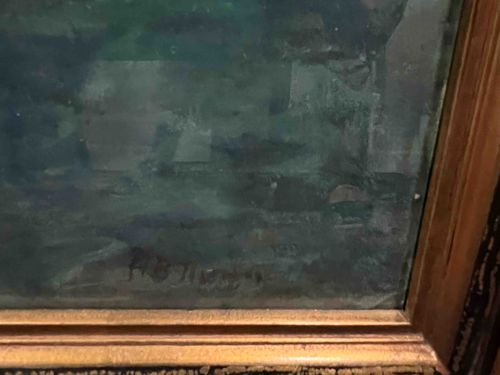
The item appears to be a framed oil painting or print, encased behind glass. The visible portion of the artwork itself is largely obscured by significant surface grime, dust, and potentially mildew or moisture damage, giving it a dull, hazy, and somewhat mottled appearance. The dominant colors within the artwork appear to be deep greens, blues, and grays, suggesting a landscape or possibly a maritime scene, though no definitive subject matter is clearly discernible. The impression is one of a somber or atmospheric setting. The frame surrounding the artwork is made of wood, exhibiting a warm, reddish-brown stain or finish, and features a traditional profile with decorative carving or molding along its inner and outer edges. The golden tone of the inner bevel suggests gesso and gilding, which shows signs of wear, particularly along the bottom edge where the gilt layer is chipped or abraded, revealing a darker underlayer. The craftsmanship of the frame seems to be of a decent quality, though its age and condition are evident. The glass covering the artwork is very dirty, with visible streaks, spots, and a general lack of transparency, which severely impedes a clear view of the art. There are no clear manufacturer's marks or signatures visible through the grime, although a faint, possibly handwritten or painted, signature or inscription might be present in the lower left quadrant of the artwork if it were cleaned. The piece likely dates from the late 19th or early 20th century, consistent with the style of the frame and the apparent aging of the materials. The overall condition of the item is fair to poor due to the extensive surface deterioration and lack of clarity.
AI Appraisal Report
Upon examining the provided image of the 'Obscured Oil Painting with Giltwood Frame,' I observe an item in fair to poor condition. The artwork, likely an oil painting behind glass, is severely obscured by surface grime, dust, and potential moisture damage, making any definitive subject matter or painterly quality indistinguishable. The colors suggest a subdued landscape or maritime theme. The frame is a traditional giltwood type, with a warm reddish-brown stain and decorative molding, showing typical wear with chipping to the gilt layer, exposing the gesso beneath. The excessively dirty glass further hinders viewing. The lack of discernible signatures or clear details due to the poor condition and obscured view prevents any authentication of authorship or precise dating from this image alone. An in-person examination would be crucial to determine if there's a signature, assess the medium with certainty (print vs. painting), and gauge the full extent of the damage.
Market conditions for obscured or heavily damaged artworks are generally low. Without a clear subject, discernible quality, or identifiable artist, demand is minimal. Comparables would typically be decorative, unsigned, late 19th/early 20th-century framed artworks, valued primarily for their decorative potential. The extensive restoration needed to clean and potentially repair the artwork and frame significantly impacts its current value. Rarity is not a factor given the obscured nature. For full authentication and to ascertain actual artistic merit, removal from the frame, professional cleaning, and potentially scientific testing (e.g., pigment analysis) would be essential. Provenance documentation would also be critical if a specific artist were suspected.