AI estimate as of June 14, 2025 · verify with a professional before acting
AI-Generated · Verify before acting
Everything on this page is generated by AI for informational purposes only. AI can make mistakes — the AI may misidentify items or misattribute them (artist, maker, brand, designer, origin, era). This is not an official valuation and should not be used for insurance, sale, tax, estate, legal, or lending purposes — or any decision requiring a certified appraisal. It is not an authoritative claim about any person, brand, or rights holder — do not share or rely on it as a factual statement about a third party. Always consult qualified professionals before making financial decisions.
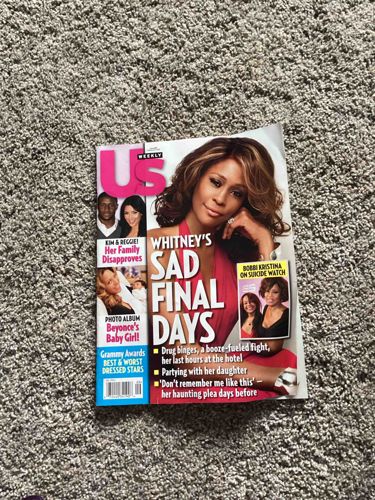
This item is a copy of Us Weekly magazine. The cover features a large portrait of Whitney Houston with the headline "WHITNEY'S SAD FINAL DAYS". Beneath the main headline are bullet points describing the contents of the feature article: "Drug binges, a booze-fueled fight, her last hours at the hotel", "Partying with her daughter", and "'Don't remember me like this' - her haunting plea days before". A smaller inset image shows Bobbi Kristina Brown with the headline "BOBBI KRISTINA ON SUICIDE WATCH". The left side of the cover features smaller headlines and images, including "KIM & REGGIE! Her Family Disapproves", "PHOTO ALBUM Beyonce's Baby Girl!", and "Grammy Awards BEST & WORST DRESSED STARS". The magazine is printed on standard glossy paper and appears to be in good condition with no major tears or creases visible. The colors are vibrant and the text is clear and legible. There are no discernible manufacturing marks or stamps on the cover other than the magazine title and issue information (March 12, 2012, barcode, etc.). The style period is contemporary, reflecting early 2012. The item's quality is consistent with typical mass-market celebrity magazines.
AI Appraisal Report
I have examined the provided image of the Us Weekly Magazine, dated March 12, 2012, featuring Whitney Houston on the cover. Based on the visual evidence, the magazine appears to be in good condition. The colors are vibrant, text is clear, and there are no apparent major rips, tears, or significant creases visible on the cover. There are no obvious manufacturing defects or non-standard markings. Authenticity, based solely on the image, appears to be that of a standard, mass-produced issue of Us Weekly from the specified date. I see no indications of it being a special edition, promotional copy, or having any unique features from the image alone. The value of mass-market magazines such as this, even featuring a significant celebrity like Whitney Houston following her passing, is typically low in the secondary market. Millions of copies were printed and circulated. While there is certainly interest in memorabilia related to Whitney Houston, a standard issue of a weekly celebrity magazine does not represent a rare or highly sought-after collectible in this format unless signed or associated with significant provenance. Market comparables for similar celebrity death-related magazine issues from the period show values generally under $10. Demand for this specific issue is likely moderate, largely driven by fans of Whitney Houston, but the high print run keeps the value suppressed. Factors impacting value positively would be flawless condition, while significant flaws (tears, water damage, heavy creasing, missing pages) would decrease value. A major limitation of appraising solely from an image is the inability to verify the condition of the interior pages, check for complete contents, feel the paper quality, or detect subtle physical damage. A full authentication and precise condition assessment would require in-person examination to inspect all pages, assess spine integrity, and confirm the absence of odors or staining. Provenance documentation (e.g., if this copy belonged to someone notable) or scientific analysis would not typically apply to an item like this unless there were specific claims about its history.