From the user

What was submitted

Photo and notes provided by the user — not generated by AI

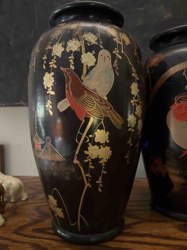
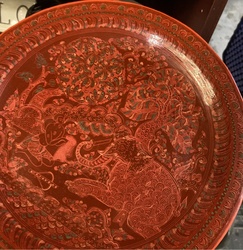
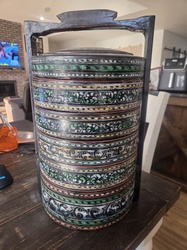
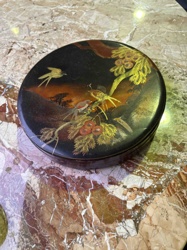
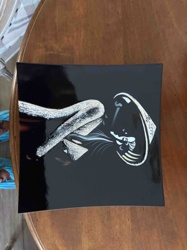
Submitted item photo
Submitted photo · May 15, 2026

User's notes

No additional notes provided.

AI analysis below

AI appraisal

AI analysis & estimate

AI-Generated · Verify before acting

Full Disclaimer

Everything below is generated by AI for informational purposes only. The AI may misidentify items or misattribute them (artist, maker, brand, designer, origin, era). This is not an official valuation and is not an authoritative claim about any person, brand, or rights holder — do not share or rely on it as a factual statement about a third party. Always consult qualified professionals before making financial decisions.

AI identification

·Not independently authenticated

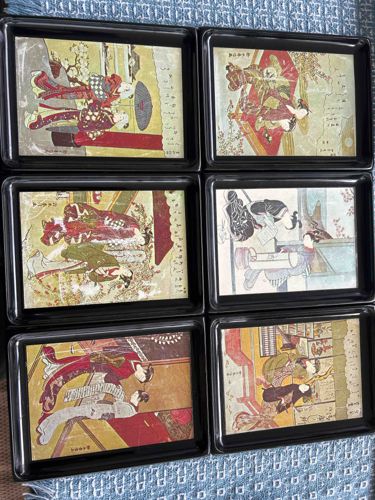
Set of Six Japanese Lacquered Trays with Ukiyo-e Woodblock Print motifs

Asian Decorative Arts / Lacquerware

AI Estimated Value

$150 - $250

As of May 15, 2026

AI Item Analysis

This is a cohesive set of six rectangular Japanese serving trays, likely manufactured in the mid-to-late 20th century as part of the export market or high-end souvenir trade. Each tray features a black lacquer (or high-gloss phenolic resin) finish with a raised rim and a central decorative panel. The central imagery consists of replicated Ukiyo-e woodblock prints, depicting various 'bijin-ga' (pictures of beautiful women) and domestic scenes characteristic of the Edo period. The figures are dressed in traditional patterned kimonos with intricate floral and geometric motifs in shades of red, green, gold, and indigo. The backgrounds include classical elements like sliding shoji screens, cherry blossoms, and calligraphic inscriptions. Physically, the trays appear to be made of a durable composite or wood base coated in a synthetic lacquer, which provides a high-shine, jet-black aesthetic. The print application appears to be a lithographic transfer or high-quality silk screening rather than hand-painted original art. In terms of condition, there is visible surface wear consistent with age and occasional use. Notable scuffs and small scratches are evident on the black borders, and some of the print surfaces show slight fading or minor surface losses (pitting) particularly in the lighter monochromatic areas. There are no signs of structural repair, but the patina suggests they have been displayed or utilized over several decades. The craftsmanship is commercial but reflects a high standard of decorative Japanese lacquerware production from the Showa era.
AI Appraisal Report

I have conducted a visual examination of the set of six Japanese lacquerware trays featuring Ukiyo-e motifs. Based on the high-gloss finish, the uniformity of the raised rims, and the precision of the 'bijin-ga' imagery, I have identified these as mid-to-late 20th-century Showa-era decorative pieces intended for the export or high-end souvenir market. The use of lithographic transfer or silk-screening rather than hand-applied 'maki-e' (sprinkled gold) confirms they are commercial productions rather than antique Edo or Meiji period lacquer. The condition is fair to good; visible surface scuffs on the black phenolic resin and minor pitting in the transfer prints suggest light domestic use. While the set remains cohesive, which is beneficial for value, the synthetic nature of the lacquer and the commercial production method limit its rarity. In the current secondary market for Asian Decorative Arts, such items are frequently traded as functional decorative pieces rather than investment-grade fine art. Comparables for complete sets of Showa-era trays typically fall in the lower hundreds, as modern collectors favor either authentic antique urushi or contemporary minimalist designs. Limitations of this appraisal: This assessment is based solely on digital images. Without a physical inspection, I cannot determine if the base material is solid wood or a composite. In-person examination would be required to verify the specific type of lacquer used (natural 'urushi' versus synthetic resins) through scent or tactile heat-conductivity tests. Additionally, the presence of original 'tomobako' (wooden storage boxes) or maker's marks on the underside—unseen in these images—could potentially increase the valuation by $50–$100.

Get your items appraised

Instant estimates of your treasures with AI-powered appraisals

Browse More Appraisals