AI Appraisal Estimate

AI-generated estimates · not official valuations

From the user

What was submitted

Photo and notes provided by the user — not generated by AI

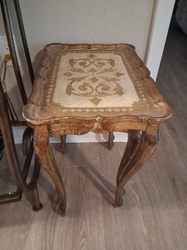
Submitted item photo
Submitted photo · June 13, 2026

User's notes

No additional notes provided.

AI analysis below

AI appraisal

AI analysis & estimate

AI-Generated · Verify before acting

Everything below is generated by AI for informational purposes only. AI can make mistakes — the AI may misidentify items or misattribute them (artist, maker, brand, designer, origin, era). This is not an official valuation and should not be used for insurance, sale, tax, estate, legal, or lending purposes — or any decision requiring a certified appraisal. It is not an authoritative claim about any person, brand, or rights holder — do not share or rely on it as a factual statement about a third party. Always consult qualified professionals before making financial decisions.

Read the full disclaimer

AI Identification

·Not independently authenticated·Verify before acting

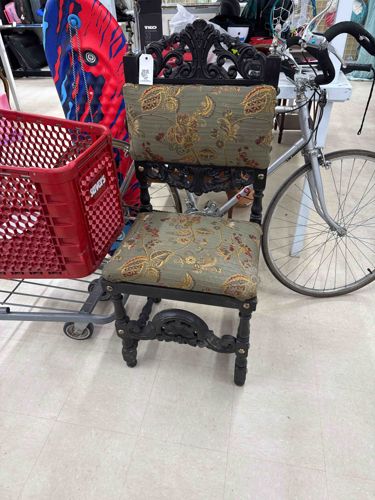
Late Victorian Flemish Revival Carved Side Chair

Antique Furniture

AI Estimated Value

·Not an official valuation·Verify before acting

$250 - $450

As of June 13, 2026

AI Item Analysis

·AI can make mistakes·Verify before acting
This is a Late Victorian side chair, likely dating to the late 19th or early 20th century, designed in the Flemish or Renaissance Revival style. The chair features an elaborate, dark-stained wood frame, possibly oak or mahogany, characterized by heavy, ornate carvings throughout. The crest rail is topped with a prominent, pierced rococo-style scroll and shell motif. The chair's back is divided into an upholstered upper section and a lower pierced-carved splat. The front stretcher is also heavily carved with a central medallion, while the legs and side stretchers show traditional bobbin-style turning. The seat and backrest are upholstered in a later, olives-green brocade fabric with an autumnal floral and paisley pattern in shades of gold and mahogany. Visible condition issues include significant wear to the dark finish on the legs and stretchers, showing the lighter natural wood beneath, and some possible movement in the joints consistent with age. There is a white sales tag attached to the left stiles. No maker's marks are visible in the image, but the craftsmanship reflects the mass-produced yet high-quality furniture style of the 1890s-1910s era. The upholstery appears clean and may be a later 20th-century replacement of the original velvet or leather.
AI Appraisal Report

·AI can make mistakes·Verify before acting
I have conducted a visual examination of this Late Victorian Flemish Revival side chair. The piece displays characteristic hallmarks of the 1890-1910 period, including the high-relief crest carving and bobbin-turned stretchers. The dark-stained wood, likely oak, shows a patina consistent with age, though significant 'thinning' of the finish on the lower extremities suggests heavy past use and potentially a dry environment. The upholstery is clearly a later addition, likely from the late 20th century; while clean, it lacks the historical accuracy of original mohair or leather, slightly suppressing its value for purist collectors. Technically, the craftsmanship is representative of high-quality mass-production from the Victorian era rather than a custom commission. The market for Victorian 'brown furniture' remains soft. Current auction comparables for single chairs of this style typically range between $150 and $300, whereas retail antique gallery pricing can reach the $450 mark. The ornate carving adds aesthetic value, but single chairs are generally less desirable than matched pairs or sets. Limitations of this report: This appraisal is based solely on digital imagery. A physical inspection is required to verify the structural integrity of the joints, specifically to determine if the movement mentioned is due to dried hide glue or more severe structural failure. I cannot definitively identify the secondary woods or check for hidden maker's labels under the seat rail without hands-on access. Historical provenance documentation or a bill of sale would be necessary to elevate its status from a 'style' piece to a documented historical artifact.

Get your items appraised

Instant estimates of your treasures with AI-powered appraisals

Browse More Appraisals