AI estimate as of December 9, 2025 · verify with a professional before acting
AI-Generated · Verify before acting
Everything on this page is generated by AI for informational purposes only. AI can make mistakes — the AI may misidentify items or misattribute them (artist, maker, brand, designer, origin, era). This is not an official valuation and should not be used for insurance, sale, tax, estate, legal, or lending purposes — or any decision requiring a certified appraisal. It is not an authoritative claim about any person, brand, or rights holder — do not share or rely on it as a factual statement about a third party. Always consult qualified professionals before making financial decisions.
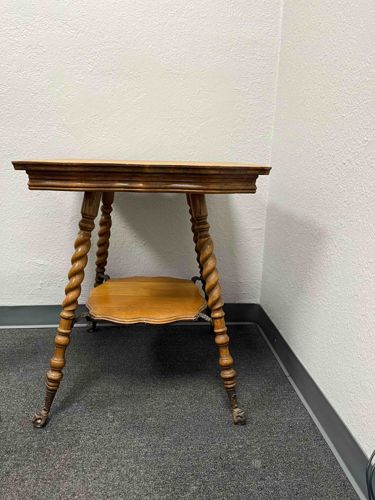
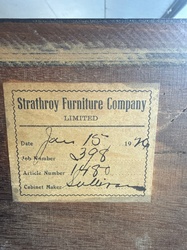
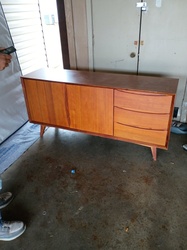
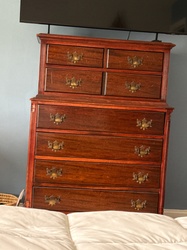
This is a vintage or antique side table, likely dating from the Victorian era or early 20th century, characterized by its distinctive barley twist legs. The table is constructed from wood, exhibiting a warm, medium-brown finish with visible wood grain, suggesting oak or a similar durable hardwood. The rectangular tabletop features a simple, slightly beveled edge, and appears to be a single plank or well-joined planks. A decorative, scalloped-edge lower shelf is positioned between the legs, offering additional storage or display space. The most striking feature of this table is its four turned legs, which display a prominent 'barley twist' design, a popular decorative motif during the Victorian period. The legs terminate in ornate, possibly cast iron or brass, claw-and-ball feet, which show some oxidation or patina consistent with age. Visible condition issues include minor surface wear, scuffs, and possibly some small dents or scratches on the tabletop and lower shelf, indicative of regular use and its age. The finish appears generally intact, but some areas may show slight discoloration or fading. The quality of craftsmanship is good, with well-executed turnings and sturdy construction, typical of furniture from its estimated period. There are no immediately visible maker's marks or signatures, but given its style, it is representative of furniture produced during the late 19th to early 20th century.
AI Appraisal Report
Having carefully examined the provided image of this Victorian Era Barley Twist Side Table, I assess its condition to be good, consistent with its age. The warm, medium-brown finish and visible wood grain suggest a durable hardwood, likely oak. The prominent barley twist legs are a hallmark of the Victorian period, and their craftsmanship appears sound. The ornate, claw-and-ball feet, possibly cast iron or brass, exhibit appropriate patina. Minor surface wear, scuffs, and small dents are visible, which are expected and contribute to its antique character rather than detracting significantly from its value. The overall construction appears sturdy.
Authenticity, based solely on the image, is strongly suggested by the design elements and apparent age. The barley twist legs and claw-and-ball feet are characteristic of late 19th to early 20th-century furniture. Market conditions for such pieces are stable; while not rare, well-preserved examples with desirable features like barley twist maintain good demand. Comparables for similar Victorian side tables in good condition typically fall within the $250-$600 range, with higher values for exceptional condition or provenance. The decorative lower shelf adds to its appeal and functionality. Factors impacting its value positively include its appealing aesthetic and functional design. Factors impacting negatively are the lack of a discernible maker's mark and the visible, yet minor, wear.
It is crucial to note the limitations of authenticating solely from images. A physical examination would allow for definitive identification of wood species, assessment of joinery, and confirmation of material in the feet. I would also look for any repairs, restorations, or evidence of alteration that are not apparent from the image. Further, provenance documentation, if available, could significantly enhance its value. Without these, my authentication is based on stylistic consistency and visual condition alone.