AI estimate as of August 17, 2025 · verify with a professional before acting
AI-Generated · Verify before acting
Everything on this page is generated by AI for informational purposes only. AI can make mistakes — the AI may misidentify items or misattribute them (artist, maker, brand, designer, origin, era). This is not an official valuation and should not be used for insurance, sale, tax, estate, legal, or lending purposes — or any decision requiring a certified appraisal. It is not an authoritative claim about any person, brand, or rights holder — do not share or rely on it as a factual statement about a third party. Always consult qualified professionals before making financial decisions.
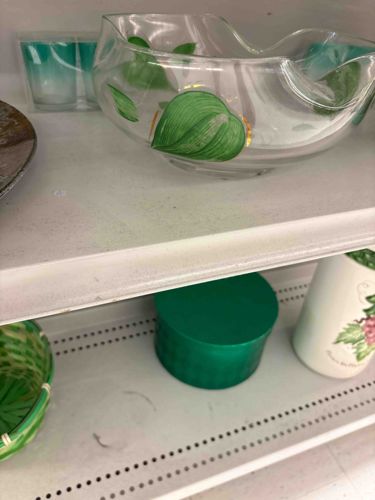
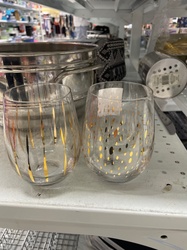
The item is a clear glass bowl, likely intended for serving or decorative purposes, and appears to be made of molded or blown glass. Its physical characteristics include a somewhat irregular, wavy rim, suggesting an organic or free-form design. The sides of the bowl are adorned with hand-painted or silkscreened green leaves, which exhibit visible brushstrokes or print lines, particularly noticeable in the veining of the larger, central leaf. There are also hints of a golden-yellow or orange color beneath some of the leaves, possibly representing a fruit or an accent color within the design. The overall size appears to be medium, suitable for a centerpiece or salad bowl. No specific maker's marks or signatures are visible in the provided image. The style of the decoration suggests a mid-20th century to contemporary period, possibly leaning towards a more casual or cottage aesthetic. In terms of condition, the glass appears clear with no overt cracks or chips visible from this angle, though surface dust or minor scratching is possible given its appearance on a retail shelf, potentially a thrift store. The quality of craftsmanship for the glass itself seems standard, while the painted decoration, although charming, does not suggest extremely fine hand-painting due to the slight variations and visible lines within the green areas.
AI Appraisal Report
Upon my virtual examination of this Clear Glass Serving Bowl with Leaf Design, I've assessed its characteristics and potential market value. The bowl appears to be clear glass, likely molded, with a charming wavy rim and hand-painted or silkscreened green leaf motifs, accented with hints of golden-yellow/orange. The visible brushstrokes or print lines in the leaf veining suggest a decorative rather than fine-art quality to the applied design. Its condition appears good from the image; no immediate cracks or chips are evident, though minor surface wear, common with used glassware, is probable. Without a physical inspection, I cannot confirm the absence of subtle scratches, clouding, or paint loss.
This piece falls into the category of decorative glassware, likely from the mid-20th century to contemporary period, aligning with a casual or 'cottagecore' aesthetic. Authenticity of the decoration as hand-painted versus mass-produced silkscreening would require in-person examination to inspect paint texture and consistency. Lacking any visible maker's marks, attributing it to a specific manufacturer or artist is impossible from images alone. Therefore, verifying provenance documentation would be crucial for establishing any higher-tier artistic value.
Market comparables for unmarked decorative glass bowls of this style, particularly those with applied designs, typically do not command high prices unless associated with a known designer or factory. Demand for such items is generally steady but not robust, catering to those seeking decorative accents rather than collectible investments. Its primary value is utilitarian and aesthetic. Rarity is low; similar decorative glass pieces are commonly found in secondary markets. Factors impacting value are primarily condition and aesthetic appeal, rather than historical significance or scarcity. The limitations of image-based appraisal are significant here: tactile assessment of the glass quality, minute inspection of paint application, and a thorough search for hidden marks are all crucial for a definitive valuation. Without these, full authentication and accurate dating are unattainable. Scientific testing, like material analysis, would only be pursued if there were strong indications of significant historical or artistic value, which is not suggested by this piece.