AI Appraisal Estimate

AI-generated estimates · not official valuations

From the user

What was submitted

Photo and notes provided by the user — not generated by AI

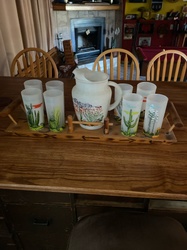
Submitted item photo
Submitted photo · May 27, 2026

User's notes

I’m in in

AI analysis below

AI appraisal

AI analysis & estimate

AI-Generated · Verify before acting

Everything below is generated by AI for informational purposes only. AI can make mistakes — the AI may misidentify items or misattribute them (artist, maker, brand, designer, origin, era). This is not an official valuation and should not be used for insurance, sale, tax, estate, legal, or lending purposes — or any decision requiring a certified appraisal. It is not an authoritative claim about any person, brand, or rights holder — do not share or rely on it as a factual statement about a third party. Always consult qualified professionals before making financial decisions.

Note

This analysis also relies on unverified notes provided by the user, which may be incomplete or inaccurate and could affect the result.

Read the full disclaimer

AI Identification

·Not independently authenticated·Verify before acting

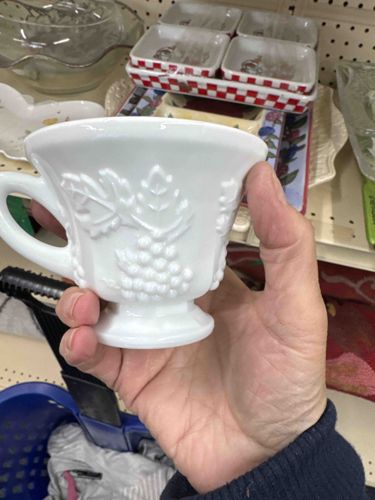
Westmoreland Glass Paneled Grape Milk Glass Punch Cup

Vintage Glassware

AI Estimated Value

·Not an official valuation·Verify before acting

$8.00 - $15.00

As of May 27, 2026

AI Item Analysis

·AI can make mistakes·Verify before acting
This item is a footed punch cup or custard cup crafted in opaque white milk glass, featuring the iconic 'Paneled Grape' pattern. The piece is constructed with a flared rim, a distinctive C-shaped handle, and a short pedestal foot. The exterior surface is ornately decorated with heavy, high-relief molded grape clusters hanging from leafy vines, segmented by vertical panels that give the piece its name. The glass exhibits a bright, uniform white color with a smooth satin-to-glossy finish characteristic of high-quality milk glass Mid-Century production. Based on the silhouette and pattern, it is a product of the Westmoreland Glass Company, likely dating from the 1940s to the 1960s. The craftsmanship is evident in the crispness of the grape bunches and the sturdy, balanced proportions. The condition appears to be excellent with no visible chips, cracks, or discoloration, though close inspection of the inner rim and foot might reveal minor shelf wear or mold lines common in pressed glass. This specific pattern was one of Westmoreland's most successful lines and remains a staple for collectors of American milk glass.

AI Appraisal Report

·AI can make mistakes·Verify before acting
I have carefully examined the provided details for the Westmoreland Glass Paneled Grape Milk Glass Punch Cup. Based on visual analysis, the piece appears to be an authentic example of the #1881 pattern produced by the Westmoreland Glass Company. The molding exhibits the crisp, high-relief characteristic of older 'Paneled Grape' pressings rather than the softened details found in later reproductions or inferior milk glass brands. The uniform translucency and 'fire' at the edges suggest a mid-20th-century production date, likely between 1945 and 1965. The condition is noted as excellent, which is vital for milk glass as it is prone to 'flea bites' along the fragile grape tendrils and rim. The market for Westmoreland Milk Glass is currently stable but highly saturated. Because this pattern was produced in massive quantities for decades, it remains readily available on the secondary market. Current comparables on platforms like eBay and Etsy consistently show individual cups selling in the $8 to $15 range. This piece is valued as a functional replacement item rather than a rare investment-grade specimen. Limitations: This appraisal is based strictly on visual data. I cannot verify the presence of the 'WG' monogram mark often found on the interior base without a physical inspection. A definitive authentication would require checking for mold seam alignment and feeling for the specific 'soapy' texture of genuine Westmoreland glass. While photos show no damage, an in-person examination under a blacklight would be necessary to detect professional repairs or hairline fractures not visible to the naked eye. No scientific testing has been performed on the chemical composition of the glass melt.

Get your items appraised

Instant estimates of your treasures with AI-powered appraisals

Browse More Appraisals