AI estimate as of June 27, 2025 · verify with a professional before acting
AI-Generated · Verify before acting
Everything on this page is generated by AI for informational purposes only. AI can make mistakes — the AI may misidentify items or misattribute them (artist, maker, brand, designer, origin, era). This is not an official valuation and should not be used for insurance, sale, tax, estate, legal, or lending purposes — or any decision requiring a certified appraisal. It is not an authoritative claim about any person, brand, or rights holder — do not share or rely on it as a factual statement about a third party. Always consult qualified professionals before making financial decisions.
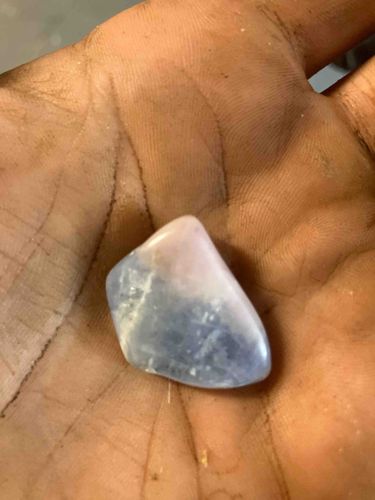
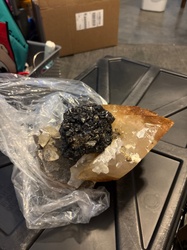
The item is a small, smooth, polished (tumbled) mineral specimen, identified as a variety of calcite, specifically a blue and pink calcite. It is characterized by a striking natural color gradient or banding, transitioning from a delicate, creamy pink or faint lavender hue at one end to a soft, tranquil sky-blue at the other. The stone's form is irregularly shaped, typical of a tumbled piece, with all edges and surfaces being rounded and smooth, indicative of a mechanical polishing process. Its surface possesses a soft, waxy to subtly vitreous luster, reflecting light gently. Internally, the stone shows varying degrees of translucency; some areas are more opaque with diffuse, cloud-like inclusions, while thinner sections allow light to pass through, revealing subtle internal textures. The overall condition appears excellent, with no apparent chips, cracks, scratches, or significant signs of wear visible on its polished surface. As a natural mineral, its geological age is ancient, though as a tumbled stone, it is a product of modern lapidary work, typically created for decorative display, personal collection, or metaphysical use. There are no discernible manufacturer's marks or signatures, which is standard for such naturally processed items. The quality of the tumbling process is evident in the uniformly smooth surface and consistent polish across the entire piece, which effectively highlights its natural beauty and unique bicolored blend.
AI Appraisal Report
As an appraiser, I've virtually examined the 'Blue and Pink Calcite Tumbled Stone' based on the detailed description provided. The item is described as being in 'excellent' condition, free from chips, cracks, or significant wear. The 'uniformly smooth surface and consistent polish' indicate high-quality lapidary work. It is presented as a natural, bicolored calcite, with a striking 'creamy pink or faint lavender hue' transitioning to a 'soft, tranquil sky-blue'. This visual presentation aligns with naturally occurring bicolored calcites, often sought for their aesthetic appeal.
Small, tumbled common minerals like calcite are widely available. Market demand is moderate, primarily from collectors, decorative users, and the metaphysical community. Rarity is low; while this specific color blend is aesthetically pleasing, calcite itself is abundant. Key value factors for such an item include its appealing natural color gradient, excellent polish, and unblemished surface, which maximize its visual appeal. Its inherent characteristics (common mineral type, small size, tumbled form) naturally limit its upper market value compared to rare or high-grade crystal specimens.
My assessment is based solely on the provided descriptive text. Without direct physical examination, I cannot definitively verify the precise mineralogical identity (e.g., through hardness or acid tests), the absolute natural origin of the coloration (though described as natural, some materials can be dyed), or confirm the complete absence of subtle surface imperfections or treatments not detailed. Microscopic examination, specific gravity testing, and, if necessary, basic chemical analysis (e.g., acid reactivity for calcite) would be vital for full authentication and to rule out any synthetic materials or artificial enhancements beyond the stated tumbling process.