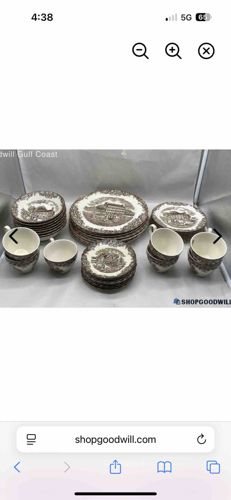
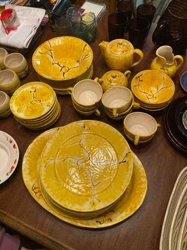
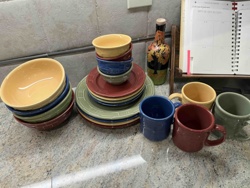
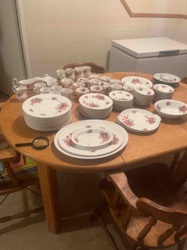
Set of heritage hall Johnson brothers Pennsylvania fieldstone
These notes were written by the person who submitted this item. Appraiser.AI has not verified them, and the AI's identification and estimate may rely on them.
AI Estimated Value
Not an official valuation
$350-550
AI estimate as of August 24, 2025 · verify with a professional before acting
AI-Generated · Verify before acting
Everything on this page is generated by AI for informational purposes only. AI can make mistakes — the AI may misidentify items or misattribute them (artist, maker, brand, designer, origin, era). This is not an official valuation and should not be used for insurance, sale, tax, estate, legal, or lending purposes — or any decision requiring a certified appraisal. It is not an authoritative claim about any person, brand, or rights holder — do not share or rely on it as a factual statement about a third party. Always consult qualified professionals before making financial decisions.
This analysis also relies on unverified notes provided by the user, which may be incomplete or inaccurate and could affect the result.
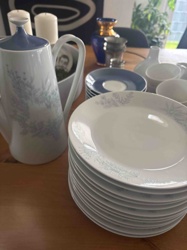
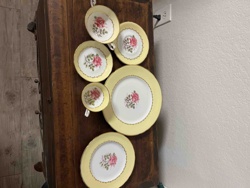
This item is a large set of vintage Johnson Brothers 'Heritage Hall' dinnerware in the 'Pennsylvania Fieldstone' pattern. The set appears to consist of a significant number of pieces, including various sizes of plates and cups/saucers. Physically, the dinnerware is crafted from ceramic, likely earthenware or ironstone, typical of Johnson Brothers' production, and features a distinctive brown transferware design on a creamy white or off-white background. The 'Pennsylvania Fieldstone' pattern showcases detailed pastoral or architectural scenes, specifically depicting a building with traditional elements, surrounded by foliage and landscape details in rich brown tones. The edges of the plates show a decorative border, possibly a floral or geometric motif, also in brown. The cups have a simple, practical form with handles, and match the overall color scheme. From the visible image, the items appear to be in good used condition, showing some surface wear consistent with age and use, but no obvious large chips, cracks, or significant repairs are discernible. There might be minor scuffs or light utensil marks, which is common for used dinnerware. The craftsmanship is indicative of mass-produced yet quality dinnerware from the mid-20th century. The 'Heritage Hall' line suggests a focus on traditional or historical themes, and the 'Pennsylvania Fieldstone' pattern likely evokes the architectural style or landscape of Pennsylvania. The collection's uniformity and comprehensive nature suggest it was originally sold as a complete dinner service. Johnson Brothers is a well-known English ceramics manufacturer, and their products from this era are generally durable and have a characteristic aesthetic.
AI Appraisal Report
I have examined the provided image of the Johnson Brothers 'Heritage Hall' Pennsylvania Fieldstone Dinnerware Set. Based on the visual evidence, the set appears to be authentic Johnson Brothers production, consistent with their well-known transferware aesthetic and the described 'Pennsylvania Fieldstone' pattern. The quantity of pieces observed suggests a substantial service for multiple settings, a factor that generally increases overall value. Visually, the condition appears to be good used, with no obvious major chips, cracks, or repairs. However, without a physical inspection, I cannot confirm the absence of minor flaws such as utensil marks, glaze crazing, or subtle rim chips that are common with vintage dinnerware. These minor imperfections, if present, would slightly depress the value.
From a market perspective, Johnson Brothers 'Heritage Hall' patterns, especially the 'Pennsylvania Fieldstone,' hold a steady demand among collectors of vintage transferware and those seeking period-appropriate decor. While not exceptionally rare, comprehensive sets in good condition are less common. Current market comparables for similar large sets of Johnson Brothers dinnerware, weighing factors like condition and completeness, range from low hundreds to several hundred dollars. Factors significantly impacting value include the precise piece count (e.g., number of serving pieces, additional unique items), the overall consistency of condition across all pieces, and the absence of hidden damage. In-person examination would be required to meticulously inspect each piece for hairline cracks, chips, crazing, losses to the transferware, or signs of repair, which images alone cannot reliably reveal.