AI Appraisal Estimate

AI-generated estimates · not official valuations

From the user

What was submitted

Photo and notes provided by the user — not generated by AI

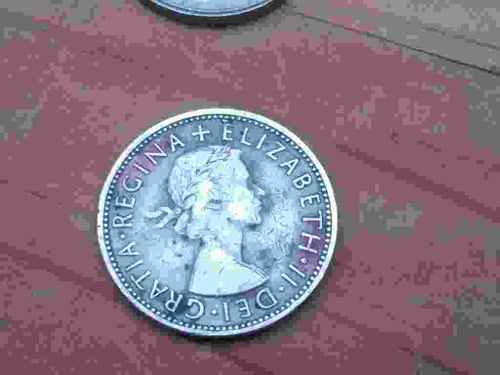
Submitted item photo
Submitted photo · June 6, 2026

User's notes

No additional notes provided.

AI analysis below

AI appraisal

AI analysis & estimate

AI-Generated · Verify before acting

Everything below is generated by AI for informational purposes only. AI can make mistakes — the AI may misidentify items or misattribute them (artist, maker, brand, designer, origin, era). This is not an official valuation and should not be used for insurance, sale, tax, estate, legal, or lending purposes — or any decision requiring a certified appraisal. It is not an authoritative claim about any person, brand, or rights holder — do not share or rely on it as a factual statement about a third party. Always consult qualified professionals before making financial decisions.

Read the full disclaimer

AI Identification

·Not independently authenticated·Verify before acting

British Elizabeth II Laureate Head Circulating Coin (Sixpence or Shilling)

Numismatics / Coins

AI Estimated Value

·Not an official valuation·Verify before acting

$0.50 - $2.50

As of June 6, 2026

AI Item Analysis

·AI can make mistakes·Verify before acting
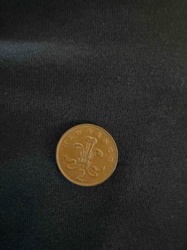
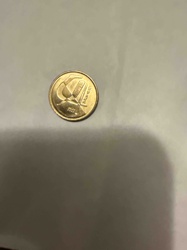
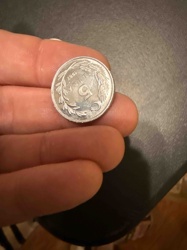
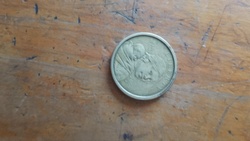
This is a circulating United Kingdom coin featuring the laureate head of Queen Elizabeth II, designed by Mary Gillick. The obverse depicts the young Queen facing right, crowned with a laurel wreath and tied with a ribbon at the back. The Latin inscription encircling the portrait reads 'ELIZABETH II DEI GRATIA REGINA F. D.', though 'F. D.' (Fidei Defensor) is partially obscured or off-frame. Based on the laureate portrait, this coin dates from the early years of her reign, specifically between 1953 and 1970 before decimalization. The coin is composed of cupro-nickel, giving it a silver-toned appearance. Physically, the coin exhibits significant surface wear and circulation marks. The fields show a mottled grey patina with areas of dark toning or grime, particularly near the lettering and the Queen's profile. The raised laurel leaves in the hair and the fine details of the facial features show signs of smoothing consistent with heavy handling. The rim features a beaded border, which remains mostly intact but shows bruising at the edges. There is no visible sign of a mint mark, as is standard for British Royal Mint issues of this period. The overall condition appears to be 'Fine' to 'Very Fine' in numismatic terms, showing clear signs of its history as a functional medium of exchange.
AI Appraisal Report

·AI can make mistakes·Verify before acting
Based on my examination of the Mary Gillick laureate head portrait, this cupro-nickel specimen appears to be an authentic circulating issue from the early Elizabethan era (1953–1970). The coin exhibits 'Fine' to 'Very Fine' numismatic qualities; while the Queen's profile and the legend remain legible, the high points of the laurel wreath and the ear show significant flattening, and the fields display the mottled patina and contact marks characteristic of extensive commercial use. The market for mid-century base-metal British coinage is currently saturated. These coins were minted in the hundreds of millions; for example, the 1953 sixpence had a mintage exceeding 59 million. Consequently, they are traded as 'junk' or bulk coinage unless they are in 'Brilliant Uncirculated' condition or feature rare varieties. Current comparables for circulated cupro-nickel shillings or sixpences range from literal face value to a small premium for those sold as historical curiosities. The primary factors limiting value are the commonness of the issue and the lack of precious metal content (post-1946 UK coins contain no silver). While the piece is a genuine artifact of the pre-decimal system, it lacks the rarity or 'Gem' grade required to interest high-end collectors. Note: This appraisal is based on photographic evidence. A formal authentication would require a physical inspection to verify weight, diameter, and edge reeding to rule out contemporary counterfeits. The absence of provenance documentation is typical for this grade of currency. Scientific testing—such as X-ray fluorescence (XRF) to confirm the 75% copper/25% nickel alloy—could definitively confirm the composition but would exceed the market value of the coin itself.

Get your items appraised

Instant estimates of your treasures with AI-powered appraisals

Browse More Appraisals