AI estimate as of November 23, 2025 · verify with a professional before acting
AI-Generated · Verify before acting
Everything on this page is generated by AI for informational purposes only. AI can make mistakes — the AI may misidentify items or misattribute them (artist, maker, brand, designer, origin, era). This is not an official valuation and should not be used for insurance, sale, tax, estate, legal, or lending purposes — or any decision requiring a certified appraisal. It is not an authoritative claim about any person, brand, or rights holder — do not share or rely on it as a factual statement about a third party. Always consult qualified professionals before making financial decisions.
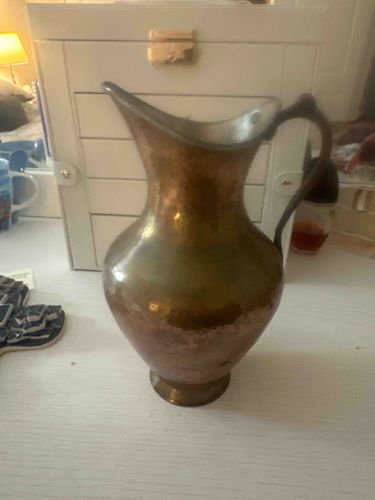
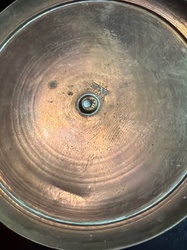
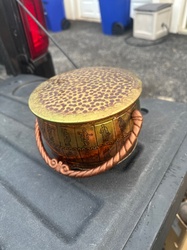
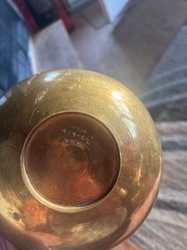
This item is a decorative pitcher, likely crafted from a combination of copper and brass, exhibiting a rustic and antique aesthetic. The main body of the pitcher appears to be copper, characterized by its reddish-brown hue and noticeable hand-hammered texture across its surface. This hammering creates a multitude of small, irregular facets that reflect light, giving the pitcher a shimmering and artisanal quality. The metal shows signs of oxidation and patina, particularly in areas where it has darkened and taken on greenish tones, indicative of age and exposure, common with copper and brass alloys. The rim and spout of the pitcher, as well as the handle, appear to be made of brass or a brass-colored metal, contrasting with the copper body. The rim has an irregular, undulating lip, suggesting a hand-formed design rather than machine-manufactured precision. The handle is C-shaped, robust, and shows similar signs of patina and wear, securely attached to the body. The pitcher has a slender neck that flares out towards the belly and tapers down to a circular footed base, providing stability. Based on its construction and visible patina, it appears to be an older piece, potentially from the early to mid-20th century, or an item designed to replicate that style. There are no discernible maker's marks or signatures visible from the image. The craftsmanship, particularly the hand-hammered finish, suggests it is a unique, handcrafted item, rather than mass-produced. The condition shows general wear consistent with age, including surface scratches and the aforementioned oxidation, contributing to its antique charm rather than detracting significantly from its appeal. The overall impression is one of sturdy, traditional metalwork.
AI Appraisal Report
Based on my examination of the provided image, this Copper and Brass Hand-Hammered Pitcher presents as a decorative piece with an appealing rustic and antique aesthetic. The visible hand-hammered texture across the copper body is a significant detail, indicating artisanal craftsmanship rather than mass production, which typically enhances value. The contrasting brass elements for the rim, spout, and handle further contribute to its visual interest. The presence of natural oxidation and patina, including greenish tones on the metal, is consistent with age and exposure for copper and brass alloys, reinforcing its perceived antiquity and contributing to its charm. The overall condition, including surface scratches and wear, appears consistent with age and use, adding to its character without significantly detracting from its decorative appeal.
From a market perspective, comparable hand-hammered metalware, particularly pitchers or vessels, with discernible age and artisan quality, typically find demand among collectors of antique decorative arts and those seeking rustic home decor. While not exceptionally rare, unique handmade pieces like this generally command more interest than generic mass-produced items. The lack of visible maker's marks or signatures, however, prevents attribution to a specific artisan or workshop, which could significantly increase its value if present and identifiable.
Key factors impacting value include the authentic hand-hammered construction, the attractive patina, and the overall aesthetic appeal. Without physical inspection, I cannot definitively confirm the precise alloy composition, the exact age, or the presence of any hidden repairs or significant damage. A hands-on examination would allow for tactile assessment of the metal, a closer inspection of construction techniques, and identification of any faint marks. Provenance documentation could also support specific dating or artisan attribution. Scientific testing of the metal could confirm composition and aid in dating. However, based solely on visual evidence, I assess its decorative value in the current market to be between $75 and $150.