AI identification & appraisal estimate

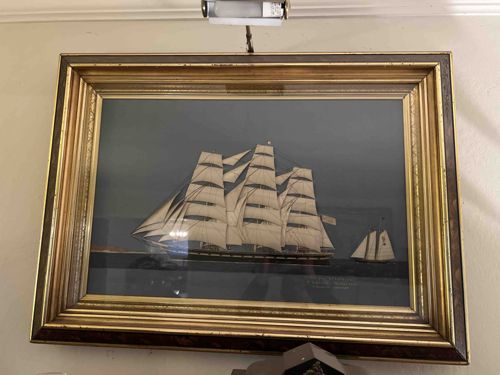
Framed Nautical Shadowbox of a Three-Masted Clipper Ship

Submitted photo of Framed Nautical Shadowbox of a Three-Masted Clipper Ship
Photo submitted by the user — not generated by AI

AI Estimated Value

Not an official valuation

$100 - $250

AI estimate as of February 17, 2026 · verify with a professional before acting

AI-Generated · Verify before acting

Everything on this page is generated by AI for informational purposes only. AI can make mistakes — the AI may misidentify items or misattribute them (artist, maker, brand, designer, origin, era). This is not an official valuation and should not be used for insurance, sale, tax, estate, legal, or lending purposes — or any decision requiring a certified appraisal. It is not an authoritative claim about any person, brand, or rights holder — do not share or rely on it as a factual statement about a third party. Always consult qualified professionals before making financial decisions.

Read the full disclaimer

AI Item Analysis

This item is a detailed maritime shadowbox or 'woolwork' style relief art piece, depicting a large three-masted clipper ship in full sail, accompanied by a smaller schooner to its right. The larger vessel is meticulously constructed with off-white or cream-colored fabric sails, which appear to have a three-dimensional curved form to simulate wind. The rigging is intricate, utilizing fine threads to represent the complex lines of a sailing ship. The hull is dark, likely black or deep brown, featuring a row of white gunports or cabin windows. The background is a muted steel-blue, providing a stark contrast that highlights the white sails. The artwork is housed in a substantial, ornate multi-tiered frame. The frame features an outer band of dark wood with a mottled or burl walnut-style finish, followed by several inner gilded (gold-toned) moldings, including a stepped profile and a decorative beaded or rope-twist border near the glass. There is visible text in the bottom right corner, which likely identifies the vessel or the artist, though it is slightly obscured by glares. The condition of the frame shows some minor surface wear and dust accumulation consistent with age, particularly on the upper edges. The interior art appears well-preserved behind glass, though there may be slight yellowing of the sail material over time. Based on the style and framing, this piece likely dates from the mid-to-late 20th century, drawing inspiration from 19th-century maritime traditions. The craftsmanship displays high attention to nautical detail, particularly in the rigging and sail positioning.

AI Appraisal Report

Based on my visual examination of this maritime shadowbox, I have evaluated it as a decorative, mid-to-late 20th-century piece rather than an antique sailor's woolwork. The craftsmanship is competent, featuring a three-masted clipper and smaller schooner with molded fabric sails that create a pleasing 3D effect. The rigging appears intact and detailed, utilizing fine threads that have held up well. The frame is a substantial multi-tiered molding with a burl finish and gilt accents, which adds decorative value, although I noted minor surface wear and dust typical of pieces from the 1970s or 80s. Authenticity is not a primary concern here as this appears to be a mass-market or hobbyist decorative item rather than a unique historical artifact. Unlike 19th-century sailor's valentines or intricate scrimshaw, these shadowboxes were often produced for nautical-themed decor in the latter half of the 20th century. Market conditions for such decorative maritime art are currently soft. While there is a niche for nautical decor, the value here is driven almost entirely by its visual appeal as a furnishing item rather than collectibility. Recent comparables for similar mid-century shadowboxes generally sell in the $100–$150 range at local auctions, though particularly nice examples in retail settings occasionally reach $250. Limitations of this appraisal include the inability to inspect the back of the frame for maker's marks or labels, which could verify the manufacturer (e.g., specific nautical decor workshops). A physical inspection would also determine if the 'sails' are stiffened fabric or molded plastic, which impacts the quality assessment. However, regardless of materials, the valuation remains firmly in the decorative category.

Keep exploring

More maritime art and collectibles appraisals

Get your items appraised

Instant AI-powered appraisal estimates from a photo

Browse More Appraisals