AI Appraisal Estimate

AI-generated estimates · not official valuations

From the user

What was submitted

Photo and notes provided by the user — not generated by AI

Submitted item photo
Submitted photo · June 12, 2026

User's notes

Postcard

AI analysis below

AI appraisal

AI analysis & estimate

AI-Generated · Verify before acting

Everything below is generated by AI for informational purposes only. AI can make mistakes — the AI may misidentify items or misattribute them (artist, maker, brand, designer, origin, era). This is not an official valuation and should not be used for insurance, sale, tax, estate, legal, or lending purposes — or any decision requiring a certified appraisal. It is not an authoritative claim about any person, brand, or rights holder — do not share or rely on it as a factual statement about a third party. Always consult qualified professionals before making financial decisions.

Note

This analysis also relies on unverified notes provided by the user, which may be incomplete or inaccurate and could affect the result.

Read the full disclaimer

AI Identification

·Not independently authenticated·Verify before acting

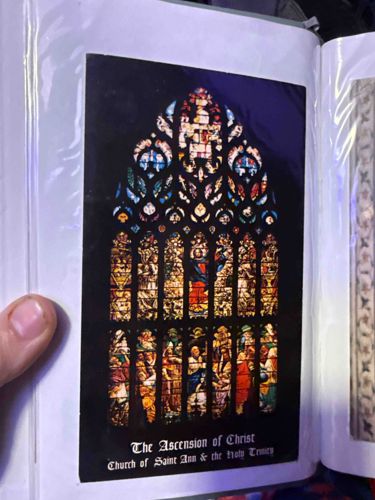
The Ascension of Christ Postcard - Chuch of Saint Ann & the Holy Trinity

Ephemera / Collectible Postcards

AI Estimated Value

·Not an official valuation·Verify before acting

$3 - $8

As of June 12, 2026

AI Item Analysis

·AI can make mistakes·Verify before acting
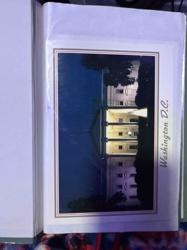
This is a vintage photographic postcard depicting the 'Ascension of Christ' stained glass window located at the Church of Saint Ann & the Holy Trinity in Brooklyn Heights, New York. The postcard features a high-contrast image showing the intricate Gothic Revival tracery and vibrant figurative glass panels against a saturated black background. The stained glass itself is the work of William Jay Bolton, dating back to the 1840s, known as some of the earliest figural stained glass made in the United States. The postcard is printed on a standard rectangular cardstock, likely from the mid-to-late 20th century based on color reproduction quality. Below the image, there is white Gothic-style typography identifying the subject matter and the specific church location. The card appears to be housed within a protected plastic sleeve of a photo album or archival book. Condition-wise, the visible portion of the card looks well-preserved with sharp edges and no obvious surface scuffs, though there is a slight glossy sheen indicating a coated paper finish. The craftsmanship of the original window is evident in the complex arrangement of apostles and celestial figures, which the postcard manages to capture with significant detail despite the scaled-down format.
AI Appraisal Report

·AI can make mistakes·Verify before acting
Based on my visual examination of the digital image provided, this is a modern chrome-era or late mid-century postcard depicting the 'Ascension of Christ' stained glass window by William Jay Bolton at the Church of Saint Ann & the Holy Trinity in Brooklyn Heights. The card appears to be in excellent condition, showing sharp corners and bright color saturation, typical of museum or church souvenir shop stock from the 1970s to the 1990s. The glossy finish and high-contrast black background suggest it was produced as a high-quality keepsake for visitors rather than for mass mail distribution. The market for specific church interior postcards is niche. While the subject matter is significant—William Jay Bolton's windows are historically momentous as some of the first figural stained glass made in the U.S.—the postcard itself is not a rare antique. It falls under the category of modern topographical or architectural ephemera. Comparable sales for similar unposted, modern church souvenir postcards generally hover in the very low single digits. Rarity is low; these were likely printed in large batches for fundraising or tourism. The primary value driver here is the condition; it appears unposted and mint. However, without handling the card, I cannot confirm the absence of minor surface scratches or acidity in the paper stock. To fully authenticate its age, I would need to inspect the card stock weight, the printing matrix under a loupe, and the reverse side for publisher details or zip codes, which help date the item precisely. Ultimately, this is a lovely piece of documentation for a specific architectural historian or local collector, but it holds nominal monetary value.

Get your items appraised

Instant estimates of your treasures with AI-powered appraisals

Browse More Appraisals