AI estimate as of September 29, 2025 · verify with a professional before acting
AI-Generated · Verify before acting
Everything on this page is generated by AI for informational purposes only. AI can make mistakes — the AI may misidentify items or misattribute them (artist, maker, brand, designer, origin, era). This is not an official valuation and should not be used for insurance, sale, tax, estate, legal, or lending purposes — or any decision requiring a certified appraisal. It is not an authoritative claim about any person, brand, or rights holder — do not share or rely on it as a factual statement about a third party. Always consult qualified professionals before making financial decisions.
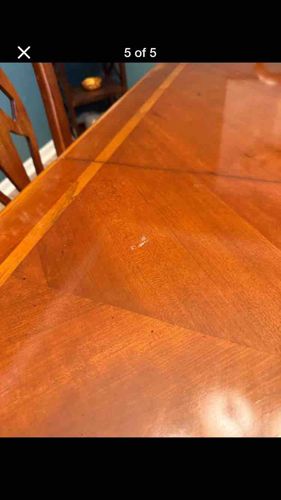
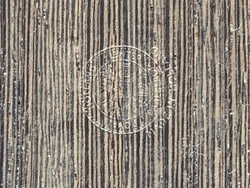
The item depicted is the surface of an inlaid wood dining table, likely a rectangular or oval shape, though only a portion is visible. The predominant material is wood, finished with a rich, warm reddish-brown stain that brings out the natural grain patterns. The finish appears to be a high-gloss lacquer or varnish, reflecting light from the surrounding environment. A distinguishing feature is the geometric inlay pattern on the tabletop. This pattern consists of lighter-toned wooden strips, possibly a contrasting wood species like maple or satinwood, forming a border or central design element. The visible section shows a straight inlay line running diagonally, meeting another lighter line to form an angle, indicative of a larger symmetrical design, possibly a parquetry or marquetry pattern such as a herringbone or diamond motif. The construction appears to be solid wood or a high-quality veneer over a solid core, given the depth and luster of the finish. Visible condition issues include several small, light-colored scuffs or scratches on the glossy surface, particularly noticeable near the center of the visible area. These suggest typical wear and tear from use. There is also a thin, dark line that could indicate a slight separation in the wood or veneer joint, or possibly a deeper scratch within the darker wood. The craftsmanship appears to be of good quality, with precise inlay work and a smooth, even finish, despite the minor surface imperfections. Based on the style of inlay and the color palette, the table could date from the mid-20th century to a more contemporary design that draws inspiration from classic furniture styles.
AI Appraisal Report
I have examined the provided image depicting the surface of an inlaid wood dining table. The rich reddish-brown wood, likely mahogany or walnut, features a high-gloss finish that highlights its natural grain. The geometric inlay, possibly maple or satinwood, indicates quality craftsmanship. The visible pattern suggests a broader symmetrical design, hinting at parquetry or marquetry. The construction appears to be solid wood or a high-quality veneer.
Condition-wise, I note several small scuffs and scratches, particularly near the center, which are consistent with typical use. A thin, dark line could be a surface scratch or a slight wood/veneer separation. These minor imperfections detract slightly from its pristine appearance but are generally addressable.
Authenticity, based solely on this image, seems plausible for a mid-20th century to contemporary piece drawing on classic styles. However, without a physical inspection, I cannot definitively confirm the age, wood species, or construction method (solid vs. veneer). Verification of inlay techniques, wood density, and signs of actual age via in-person examination, or provenance documentation, would be crucial for a full authentication.
Market conditions for quality inlaid dining tables are stable, with demand for well-crafted, versatile pieces. Comparables suggest this type of quality and design typically fetches between $800 and $1,500, factoring in the current condition and assuming solid craftsmanship. If the piece were authenticated as a specific period piece from a renowned maker, or in pristine condition, its value could be significantly higher.