These notes were written by the person who submitted this item. Appraiser.AI has not verified them, and the AI's identification and estimate may rely on them.
AI Estimated Value
Not an official valuation
$1,800-2,500
AI estimate as of September 30, 2025 · verify with a professional before acting
AI-Generated · Verify before acting
Everything on this page is generated by AI for informational purposes only. AI can make mistakes — the AI may misidentify items or misattribute them (artist, maker, brand, designer, origin, era). This is not an official valuation and should not be used for insurance, sale, tax, estate, legal, or lending purposes — or any decision requiring a certified appraisal. It is not an authoritative claim about any person, brand, or rights holder — do not share or rely on it as a factual statement about a third party. Always consult qualified professionals before making financial decisions.
This analysis also relies on unverified notes provided by the user, which may be incomplete or inaccurate and could affect the result.
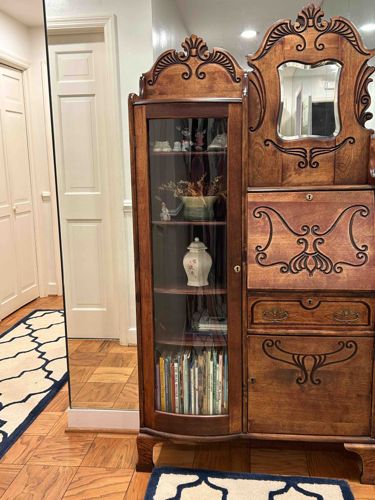
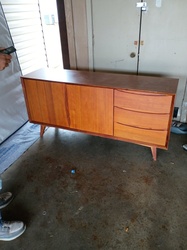
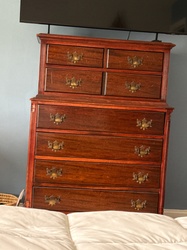
This appears to be an antique Art Nouveau style 'secretary bookcase' or 'display cabinet with writing desk', constructed from what looks like a warm-toned, possibly oak or walnut, hardwood. The piece is characterized by its asymmetric design, featuring a curved glass curio cabinet on the left and a secretary desk section on the right. The curio cabinet has a single glass door, gently curved, with multiple internal shelves for display. The desk portion includes a drop-front or fall-front panel that conceals a writing surface and possibly small compartments, along with at least one drawer visible below it. The upper section of the secretary features an ornate carved cresting with scrollwork and foliage motifs, framing a smaller, shaped mirror. The lower portion of the secretary desk also shows decorative carved or applied elements with organic, flowing lines typical of the Art Nouveau period. The overall finish appears to be stained and varnished, showing a rich, medium-brown hue. While specific dimensions are not provided, it appears to be a substantial piece of furniture, likely standing over 5 feet tall. No obvious major damage like cracks or significant gouges are immediately discernible, although typical wear and tear associated with a piece estimated to be around 90 years old would be expected, such as minor scratches, dings, and patination consistent with age and use. The craftsmanship suggests a factory-made piece from the early 20th century, probably between 1900 and 1920, aligning with the Art Nouveau movement and the provided '90 years' context which places it around 1930s (though the style suggests slightly earlier). The hardware, such as the lock mechanisms and handles, are not clearly visible but would likely be brass or a similar metal, consistent with the era. The carved details are well-executed, indicating a good quality mass-produced item of the period.
AI Appraisal Report
I have examined the provided image and information regarding this Art Nouveau Secretary Bookcase. Visually, the piece presents as an authentic Art Nouveau-period secretary bookcase, likely constructed from oak or walnut, exhibiting the characteristic asymmetry, organic carved elements, and curved glass door. The '90 years' context given, placing it around 1930s, is slightly later than the typical peak of Art Nouveau (1890-1910s), but later interpretations or regional variations are plausible, with the styling certainly indicating early 20th century. Condition appears good for its age, showing a rich patina. I note the absence of obvious major damage, though minor scratches, dings, and expected wear consistent with a piece of this vintage are presumed.
Market conditions for distinctive Art Nouveau furniture are stable but can be niche. While high-end, signed pieces command significant figures, this appears to be a good quality, factory-made item, which still holds strong collector interest. Comparables would include similar period secretary desks or display cabinets from makers known for Art Nouveau interpretations. Its dual functionality as a display cabinet and writing desk, combined with its aesthetic appeal, enhances its demand over single-purpose items. Rarity is moderate; while not unique, well-preserved examples with this level of detailed carving are not commonplace.
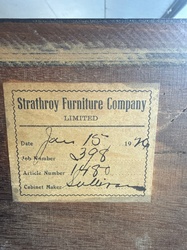
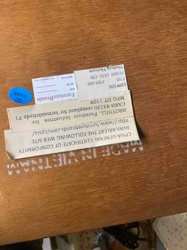
Several factors impact value: its aesthetic integrity, apparent good condition, and the desirable Art Nouveau styling. The craftsmanship suggests a solid, well-made piece. To fully authenticate and refine the valuation, an in-person examination is crucial. This would allow me to verify the wood species, assess internal compartment condition, inspect hardware, stability, and construction methods in detail. I would also look for maker's marks, labels, or historical provenance documentation, all of which could significantly impact the final valuation. Without physical inspection, precise dating and definitive attribution to a specific maker remain speculative.