AI identification & appraisal estimate

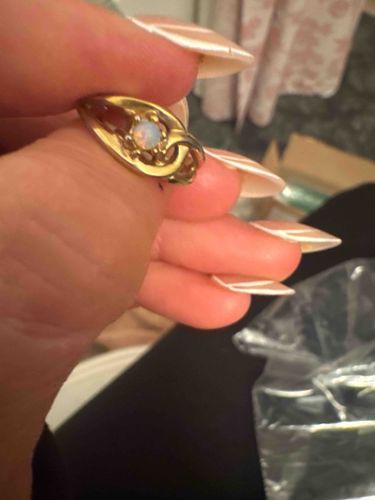
Vintage Opal Solitaire Ring

Submitted photo of Vintage Opal Solitaire Ring
Photo submitted by the user — not generated by AI

AI Estimated Value

Not an official valuation

$150-300

AI estimate as of September 19, 2025 · verify with a professional before acting

AI-Generated · Verify before acting

Everything on this page is generated by AI for informational purposes only. AI can make mistakes — the AI may misidentify items or misattribute them (artist, maker, brand, designer, origin, era). This is not an official valuation and should not be used for insurance, sale, tax, estate, legal, or lending purposes — or any decision requiring a certified appraisal. It is not an authoritative claim about any person, brand, or rights holder — do not share or rely on it as a factual statement about a third party. Always consult qualified professionals before making financial decisions.

Read the full disclaimer

AI Item Analysis

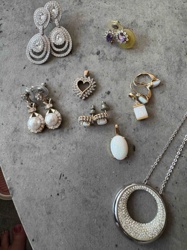
This item is a vintage solitaire ring, likely crafted from yellow gold or a gold-plated base metal, held between the thumb and forefinger of a person. The ring features a single, round cabochon-cut opal set within a decorative bezel. The opal exhibits a milky white body color with subtle play-of-color, though the precise iridescence is difficult to discern due to the image quality and lighting conditions. The setting appears to be a stylized bypass or crossover design, with fluid, organic lines that curve around the central opal, possibly reflecting an Art Nouveau or Mid-Century Modern aesthetic, suggesting an estimated age from the early to mid-20th century. The metal has a polished, bright gold tone. There are no visible maker's marks or stamps in the provided image. The craftsmanship appears to be decent, showcasing a relatively smooth finish and well-formed curves. Condition-wise, the ring shows some minor surface wear consistent with age and use, such as subtle scratches or abrasions on the metal, but no significant damage or repairs are immediately apparent. The opal seems to be securely set, and there are no obvious chips or cracks visible on the stone itself. The overall size of the ring appears to be delicate to medium-sized, designed for a single finger. The unique aspect lies in its possibly handcrafted or artisanal quality, given the irregular, flowing lines of the metalwork surrounding the stone, indicating it might be more than a mass-produced item. This design adds an element of visual interest and distinctiveness, moving beyond a simple prong setting.
AI Appraisal Report

Having visually examined the image of this vintage solitaire ring, I assess its condition as good, displaying minor surface wear consistent with age and use, such as subtle scratches on the metal. The opal appears securely set without visible chips or cracks. Authenticity, based solely on this image, suggests a genuine vintage piece from the early to mid-20th century, possibly reflecting Art Nouveau or Mid-Century Modern aesthetics due to its stylized bypass design. The gold tone metal, while appearing bright, could be yellow gold or gold-plated; definitive material identification is impossible without direct examination. The organic lines suggest a potentially handcrafted or artisanal quality rather than mass production, which adds to its uniqueness. Market conditions for vintage opal solitaire rings with this aesthetic are generally stable, driven by collectors and those appreciating unique historical designs. Comparables in similar condition and design typically range from $100 for gold-plated examples to $400 for solid gold pieces with a modest-sized opal. Demand for vintage opal jewelry remains consistent, often appealing to niche buyers. Rarity is moderately low; while the specific design is distinctive, vintage opal rings are not uncommon. Factors impacting value include the actual metal purity (solid gold vs. plated), the quality and play-of-color of the opal (which is difficult to ascertain from the image), and the absence of maker's marks, which limits traceability and potential premium for a known artisan. For full authentication and a more precise valuation, an in-person examination is crucial to determine metal composition (e.g., using a spectroscope or acid tests), thoroughly assess the opal's quality and iridescence, and search for hidden maker's marks. Provenance documentation would also clarify its history and authenticity.

Keep exploring

More jewelry appraisals

Get your items appraised

Instant AI-powered appraisal estimates from a photo

Browse More Appraisals