AI estimate as of September 6, 2025 · verify with a professional before acting
AI-Generated · Verify before acting
Everything on this page is generated by AI for informational purposes only. AI can make mistakes — the AI may misidentify items or misattribute them (artist, maker, brand, designer, origin, era). This is not an official valuation and should not be used for insurance, sale, tax, estate, legal, or lending purposes — or any decision requiring a certified appraisal. It is not an authoritative claim about any person, brand, or rights holder — do not share or rely on it as a factual statement about a third party. Always consult qualified professionals before making financial decisions.
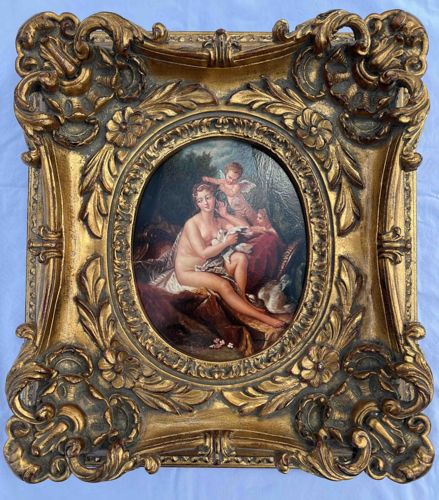
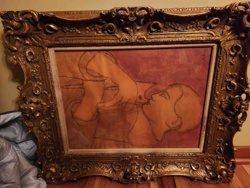
This item is comprised of an ornate, rectangular gilded frame encasing an oval-format painting. The frame is constructed of wood or a similar composite material, heavily carved or molded with intricate Rococo-style scrolling acanthus leaves, C-scrolls, and floral motifs. The gilding appears to be gold leaf or a high-quality gold paint, and shows various levels of wear, revealing some reddish-brown tones underneath in areas, suggesting a bole or primer layer. There is visible patina, particularly in the recesses of the carving, indicating age and adding depth to the finish. Some minor chips or losses to the gesso or gilding may be present, consistent with age and handling. The overall craftsmanship of the frame is robust, suggesting a period piece or a high-quality reproduction. The painting contained within the oval opening depicts a classical or mythological scene, likely Venus and Cupid. A nude or partially draped female figure, presumed to be Venus, is seated with a putto or cherubic figure, presumed to be Cupid, beside her. The painting exhibits characteristics of the Neoclassical or early Romantic period, possibly a 19th-century work or later reproduction/copy in that style. The colors are rich and warm, with a focus on skin tones and drapery. The condition of the painting is good from what is visible, with no obvious major damage, though surface dirt or faint craquelure might be present upon closer inspection. The integration of the painting within the ornate frame suggests they were perhaps intended to be together, enhancing the overall aesthetic.
AI Appraisal Report
Based on my visual examination of the provided image, I assess this Rococo Style Gilded Frame with Oval Neoclassical Painting of Venus and Cupid. The frame itself appears to be of robust construction, likely wood, heavily carved or molded with intricate Rococo motifs. The gilding, while showing wear consistent with age, revealing a bole layer, suggests either gold leaf or high-quality gold paint, adding to its appeal. The patina in the recesses further indicates age and enhances its decorative value. The painting within, depicting Venus and Cupid, exhibits characteristics of the Neoclassical or early Romantic period. Its colors are rich, and it appears to be in good visible condition, though surface dirt or craquelure would need in-person confirmation.
From a market perspective, ornate gilded frames, particularly those housing period-style paintings, have a steady decorative demand. Comparables for similar decorative framed art pieces of this scale and apparent quality typically range from $600 to $1,500, with higher values for documented antique pieces or works by known artists. The integration of the frame and painting seems cohesive, suggesting they were intended as a pair, which enhances overall aesthetic appeal and perceived value. The primary factors impacting value here are the decorative quality of the frame and the visual appeal of the painting. Condition is good for a piece of its apparent age, though minor gesso loss on the frame and any hidden paint issues would affect the final assessment.
It is crucial to note the limitations of appraising from an image alone. While I can assess the visual condition and stylistic attributes, I cannot definitively confirm authenticity, precise age, or artistic origin. A full authentication would require in-person examination to inspect the construction methods of the frame (e.g., joinery, gesso thickness), the painting's medium (oil, canvas type), surface condition (craquelure patterns, varnish), and under-paintings, along with UV light examination for repairs. Provenance documentation, such as past ownership records or exhibition history, would also be vital for a more precise valuation and attribution. Scientific testing of pigments or the wood could also provide definitive dating and material identification.