AI identification & appraisal estimate

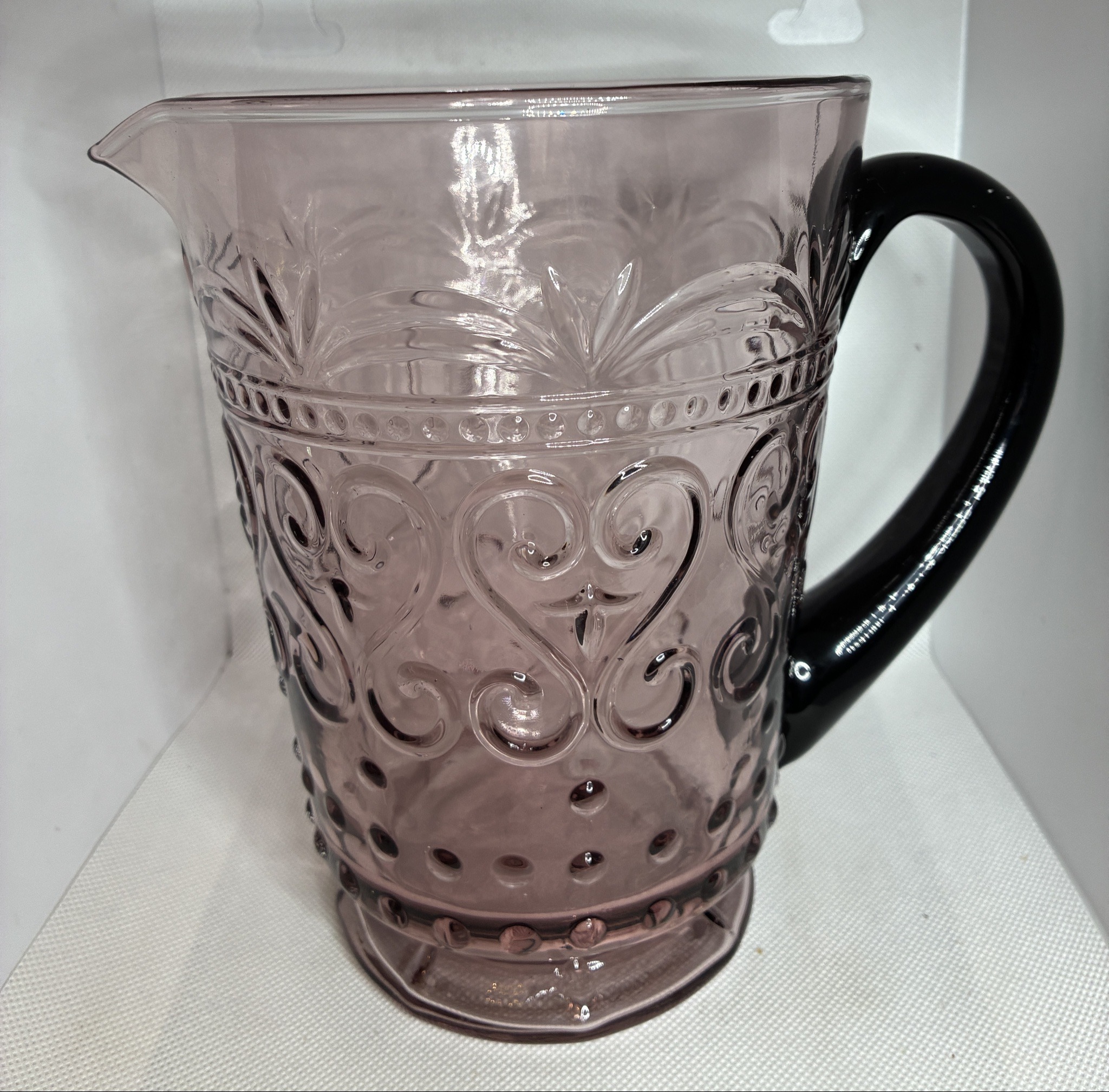
Pressed glass pitcher with purple body and dark handle

Submitted photo of Pressed glass pitcher with purple body and dark handle
Photo submitted by the user — not generated by AI

User's notes

Height 19cm Diameter top 14.3cm Diameter base 10cm Weight 1093 grams . Glows green with 365nm =Manganese on both the deep amethyst handle and purple body.

These notes were written by the person who submitted this item. Appraiser.AI has not verified them, and the AI's identification and estimate may rely on them.

AI Estimated Value

Not an official valuation

$150-$300

AI estimate as of October 22, 2026 · verify with a professional before acting

AI-Generated · Verify before acting

Everything on this page is generated by AI for informational purposes only. AI can make mistakes — the AI may misidentify items or misattribute them (artist, maker, brand, designer, origin, era). This is not an official valuation and should not be used for insurance, sale, tax, estate, legal, or lending purposes — or any decision requiring a certified appraisal. It is not an authoritative claim about any person, brand, or rights holder — do not share or rely on it as a factual statement about a third party. Always consult qualified professionals before making financial decisions.

This analysis also relies on unverified notes provided by the user, which may be incomplete or inaccurate and could affect the result.

Read the full disclaimer

AI Item Analysis

This is a molded or pressed glass pitcher featuring a pale purple or amethyst-tinted translucent body complemented by a heavily contrasting deep amethyst or nearly black applied handle. The vessel exhibits a cylindrical form with a flared rim, a pronounced pouring spout, and a stepped circular footed base. The exterior surface is decorated with a rich pattern of molded motifs, including swirling heart or scroll designs near the upper body, rows of raised dots or bead-like accents, and vertical leaf or palmette elements circling the collar. Based on visual characteristics, the pitcher displays qualities consistent with nineteenth-century or early twentieth-century pressed glassware production styles, though no maker's mark is directly visible in the image to confirm a specific manufacturer or exact period. The attribution of the item relies entirely on visual observation of the molded patterns, glass coloration, and form. The owner provides additional unverified context regarding the physical dimensions, noting a height of 19 centimeters, a top diameter of 14.3 centimeters, a base diameter of 10 centimeters, and a total weight of 1,093 grams. Furthermore, the owner reports that the item glows green under 365nm ultraviolet light, indicating the presence of manganese within both the purple body and the dark handle. The condition appears well-preserved with clear glass surfaces, though minor handling wear cannot be ruled out without a physical inspection. No cracks, chips, or major structural repairs are immediately apparent from the photograph.

AI Appraisal Report

Based on what I can see in the provided image and the unverified details supplied by the owner—including the reported height of 19 cm, weight of 1,093 grams, and the observation that the piece glows green under 365nm ultraviolet light indicating manganese—this pressed glass pitcher displays visual characteristics consistent with nineteenth-century or early twentieth-century production styles. The piece features a pale purple translucent body, a contrasting dark handle, and a rich pattern of molded scrollwork, beads, and palmettes. However, I can't verify from a photo alone whether the piece is a genuine antique, a later reproduction, or a commemorative replica, as no maker's mark is visible to confirm a specific manufacturer. Assuming the visual attributes and the owner's contextual details regarding the manganese content are correct, comparable pressed glassware items of this type typically trade in the $150 to $300 range on the secondary decorative arts market, driven by moderate collector demand for amethyst glass and uranium- or manganese-reactive wares. If the piece were to turn out to be a reproduction, a modern copy, or merely produced in the style of earlier periods, the value would likely decrease significantly, dropping into the $40 to $80 range. To confirm authenticity, exact age, and potential manufacturing attribution, one would need physical inspection by a qualified glass expert, detailed provenance documentation, and potentially advanced material analysis to evaluate the glass composition and manufacturing seams.

Keep exploring

More glassware appraisals

Get your items appraised

Instant AI-powered appraisal estimates from a photo

Browse More Appraisals