AI estimate as of August 4, 2025 · verify with a professional before acting
AI-Generated · Verify before acting
Everything on this page is generated by AI for informational purposes only. AI can make mistakes — the AI may misidentify items or misattribute them (artist, maker, brand, designer, origin, era). This is not an official valuation and should not be used for insurance, sale, tax, estate, legal, or lending purposes — or any decision requiring a certified appraisal. It is not an authoritative claim about any person, brand, or rights holder — do not share or rely on it as a factual statement about a third party. Always consult qualified professionals before making financial decisions.
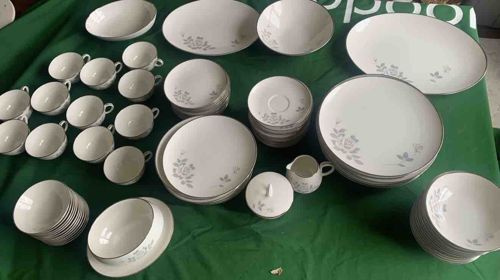
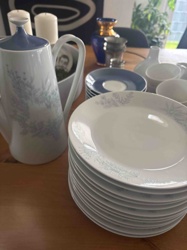
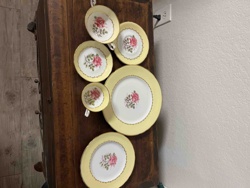
This extensive dinnerware set appears to be made of fine porcelain or bone china, characterized by its bright white base color and delicate decoration. The primary decoration consists of a subtle floral motif, featuring stylized roses and foliage, predominantly in shades of light gray or lavender, possibly with hints of pale blue, creating a muted, elegant aesthetic. Each piece is edged with a thin, metallic band, likely platinum or silver, which adds a touch of sophistication and highlights the rim. The set includes a large variety of pieces, such as numerous dinner plates, salad or luncheon plates (stacked), several bowls of varying sizes (some shallow, some deeper), multiple teacups or coffee cups with their corresponding saucers (stacked), a large oval serving platter, a smaller oval dish (possibly for appetizers or side dishes), a cream pitcher, and a lidded sugar bowl.
The overall condition appears to be very good, with no visible chips, cracks, or significant wear on the surface or gilding from the image provided. The consistency of the design across all pieces suggests it is a complete or nearly complete matching set. The craftsmanship appears to be of high quality, indicated by the smooth finish and precise application of the decorative elements and rim banding. Without a manufacturer's mark, it is difficult to ascertain the exact origin or age, but the style of the floral pattern and the use of metallic banding are consistent with mid-20th century to contemporary elegant dinnerware. The design reflects a timeless quality, often associated with formal dining or special occasions. The sheer volume of pieces suggests a service for at least 8-12 people, making it a comprehensive set for entertaining. The absence of noticeable scratching or fading indicates careful handling and storage.
AI Appraisal Report
Based on my visual examination of the provided image of this White Porcelain Dinnerware Set with Gray Floral Pattern and Platinum Trim, I estimate a retail appraisal value of $500-800. The set appears to be in very good to excellent condition, with no visible chips, cracks, or significant wear to the platinum trim or floral pattern. The consistency in design and apparent volume of pieces suggest a comprehensive service for at least 8-12 settings, along with various serving pieces, which adds to its value. The craftsmanship seems high, indicated by the smooth finish and precise detailing.
Market conditions for vintage or elegant dinnerware sets vary. While individual pieces might command smaller prices, a complete, well-preserved set like this appeals to collectors or those setting up a formal dining space. Comparables for similar large porcelain or bone china sets from reputable manufacturers (even without specific maker's marks) in excellent condition typically range from $400 to $1,000 depending on the brand recognition and scarcity of the pattern. The timeless gray floral and platinum trim design maintains a steady demand for formal or classic aesthetics.
Factors significantly impacting value include the comprehensive nature of the set, its apparent excellent condition, and its elegant, versatile aesthetic. The platinum trim, rather than silver, generally holds value better due to its non-tarnishing properties. Without a manufacturer's mark, however, rarity is difficult to ascertain, and general market appeal becomes more dominant than collector rarity.
Limitations in authenticity verification from an image alone are significant. I cannot definitively confirm the material (porcelain versus bone china), the exact composition of the metallic trim (platinum versus a platinum-look base metal), or the precise age and origin without in-person examination. For full authentication and a more precise valuation, I would need a physical inspection to check for maker's marks on the underside of pieces, assess the weight and translucency of the material, perform a chemical test on the metallic trim if necessary, and evaluate any subtle signs of wear not visible in the photo. Provenance documentation, if available, would also be invaluable.