AI estimate as of December 4, 2025 · verify with a professional before acting
AI-Generated · Verify before acting
Everything on this page is generated by AI for informational purposes only. AI can make mistakes — the AI may misidentify items or misattribute them (artist, maker, brand, designer, origin, era). This is not an official valuation and should not be used for insurance, sale, tax, estate, legal, or lending purposes — or any decision requiring a certified appraisal. It is not an authoritative claim about any person, brand, or rights holder — do not share or rely on it as a factual statement about a third party. Always consult qualified professionals before making financial decisions.
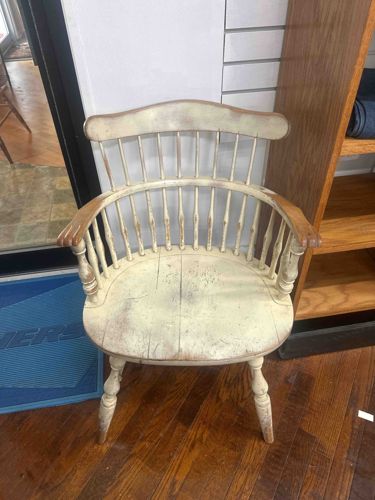
This is a vintage or antique Windsor-style bow-back armchair, featuring a distressed light-colored finish, likely an off-white or very pale cream paint, over what appears to be a light-colored wood. The chair exhibits classic Windsor construction with a curved bow-back crest rail connected to a 'U' shaped armrest, both supported by numerous thin, turned spindles. The armrests show areas where the underlying wood finish, a warm medium-brown tone, is exposed due to wear, particularly on the top surfaces and edges, suggesting frequent use. The contoured, saddle-shaped seat is solid and also displays significant paint loss and wear, revealing the natural wood grain and some discoloration, possibly from age and use. The legs are turned, likely splayed slightly for stability, with the front two legs visible showing a baluster-style turning. These legs also have a heavily distressed painted finish, consistent with the rest of the chair, and terminate in simple round feet. Visible condition issues include extensive paint chipping and abrasion across all painted surfaces, indicating a 'shabby chic' aesthetic or natural wear over many years. There are no obvious signs of recent repairs or structural damage visible in the image, though close inspection would confirm this. The overall appearance suggests a piece from the early to mid-20th century, possibly earlier, given the traditional design and the extent of the natural patina and wear.
AI Appraisal Report
This Vintage Distressed Windsor Bow-Back Armchair presents as a charming example of a classic furniture style. Visually, its condition is consistent with significant age and use, exhibiting extensive paint loss, particularly on the armrests and saddle seat, revealing the underlying lighter wood with a warm medium-brown finish beneath the off-white or pale cream paint. This 'shabby chic' distressed look is a key aesthetic feature, suggesting natural wear rather than intentional distressing for modern reproduction. The construction—curved bow-back, 'U' shaped armrest, turned spindles, and splayed baluster-style turned legs—is emblematic of traditional Windsor chairs. Based purely on the visual examination of the image, the piece appears authentic to the style, likely dating from the early to mid-20th century, possibly earlier. There are no obvious signs of significant structural damage visible, only aesthetic wear which is part of its appeal.
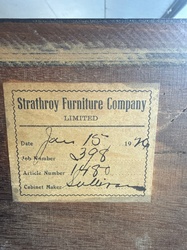
From a market perspective, Windsor chairs, especially bow-backs, maintain consistent demand. However, the distressed finish, while appealing to a niche 'shabby chic' or farmhouse decor market, can limit broader appeal compared to pieces with original, well-preserved finishes or professionally restored ones. Rarity for such a common style is low, though older, hand-crafted examples can fetch higher prices. The value is primarily driven by its traditional design appeal and current decorative trends favoring vintage patinas. Limitations in authentication are significant; without in-person examination, I cannot confirm the wood species, detect repairs under the paint, or assess joint integrity. Provenance, a maker's mark (often absent on such pieces), or carbon dating would be necessary to definitively pinpoint its age or origin beyond visual assessment.