AI estimate as of July 12, 2025 · verify with a professional before acting
AI-Generated · Verify before acting
Everything on this page is generated by AI for informational purposes only. AI can make mistakes — the AI may misidentify items or misattribute them (artist, maker, brand, designer, origin, era). This is not an official valuation and should not be used for insurance, sale, tax, estate, legal, or lending purposes — or any decision requiring a certified appraisal. It is not an authoritative claim about any person, brand, or rights holder — do not share or rely on it as a factual statement about a third party. Always consult qualified professionals before making financial decisions.
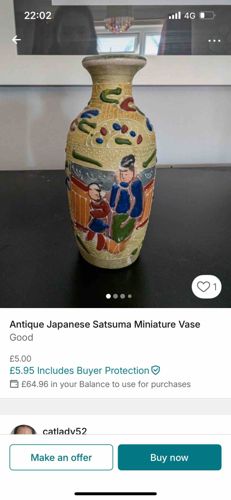
This is an Antique Japanese Satsuma Miniature Vase, characterized by its traditional Satsuma ware style. The vase is relatively small, consistent with a 'miniature' designation, though an exact measurement is not available from the image. Its primary material is ceramic, likely earthenware or stoneware, with a distinctly textured, light-colored, possibly ivory or cream-colored, ground. The surface appears to have a raised, almost moriage-like decorative relief, particularly evident in the background patterns and the outlines of the figures. The prominent decoration features figures dressed in traditional Japanese attire, rendered in vibrant enamels of blue, green, red, and orange, contrasting with the lighter background. There are also smaller, less defined patterns and dots in various colors scattered across the vase. The vessel has a classic vase shape, widening from a narrow neck to a broader body and then tapering slightly towards the base. The rim of the mouth is gently flared. The craftsmanship, while appearing somewhat rustic in the hand-painted details, suggests a folk art or production piece rather than a highly refined Imperial Satsuma piece. There are no clear visible condition issues such as chips or cracks, but the overall patina suggests age. No specific maker's marks or signatures are discernible in the provided image. Given the 'antique' classification in the accompanying text, it is likely from the Meiji period (1868-1912) or early 20th century.
AI Appraisal Report
Upon visual examination of this Antique Japanese Satsuma Miniature Vase, I assess its condition to be good, with no overt chips, cracks, or significant losses evident from the image. The patina suggests appropriate age. Authenticity, based solely on the visual cues, appears consistent with genuine antique Satsuma ware, likely from the Meiji period (1868-1912) or early 20th century. The hand-painted figures and raised relief elements are characteristic of the style.
However, it’s crucial to state the limitations of image-based appraisal. While it presents as authentic, definitive authentication of the period and origin cannot be guaranteed without physical inspection. An in-person examination would allow for tactile assessment of material, closer inspection of brushwork and enamel quality, and the identification of any subtle repairs or overpainting not visible in photographs. The presence or absence of a maker's mark, even if faint, could be crucial. Provenance documentation, such as original sales receipts or family history, would significantly enhance authenticity validation. Scientific testing for material composition or dating is not typically performed for such items but could provide definitive answers if disputes arose.
Regarding market conditions, small, decorative antique Japanese Satsuma vases are generally sought after, albeit not at the same premium as signed, masterwork pieces. The current market for 'folk art' or general production Satsuma remains steady. Demand for miniatures is moderate, often appealing to collectors of smaller-scale decorative arts. Rarity for unsigned pieces like this is not high, as many such items were produced for export during the Meiji era.
Factors impacting value include its miniature size (which can either limit or broaden appeal), the pleasant decorative quality, and good apparent condition. Without a clear signature or exceptional artistic merit, it falls into a broad category of decorative antique Satsuma. Its condition is a positive, but the lack of definitive provenance or a recognized artist limits its top-tier value potential. The primary challenge is differentiating it from later reproductions or lesser-quality pieces without physical examination. Despite the limitations, this piece appears to be a charming and authentic example of its type.