AI Appraisal Estimate

AI-generated estimates · not official valuations

From the user

What was submitted

Photo and notes provided by the user — not generated by AI

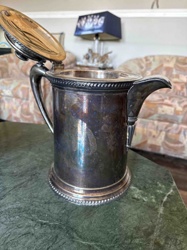
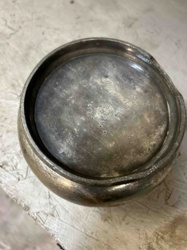
Submitted item photo
Submitted photo · June 3, 2026

User's notes

Sterling silver

AI analysis below

AI appraisal

AI analysis & estimate

AI-Generated · Verify before acting

Everything below is generated by AI for informational purposes only. AI can make mistakes — the AI may misidentify items or misattribute them (artist, maker, brand, designer, origin, era). This is not an official valuation and should not be used for insurance, sale, tax, estate, legal, or lending purposes — or any decision requiring a certified appraisal. It is not an authoritative claim about any person, brand, or rights holder — do not share or rely on it as a factual statement about a third party. Always consult qualified professionals before making financial decisions.

Note

This analysis also relies on unverified notes provided by the user, which may be incomplete or inaccurate and could affect the result.

Read the full disclaimer

AI Identification

·Not independently authenticated·Verify before acting

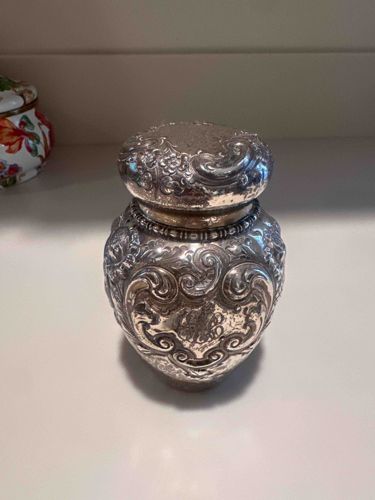
Repoussé Sterling Silver Tea Caddy

Antique Silverware & Hollowware

AI Estimated Value

·Not an official valuation·Verify before acting

$450 - $700

As of June 3, 2026

AI Item Analysis

·AI can make mistakes·Verify before acting
This is a finely crafted sterling silver tea caddy or dresser jar, likely dating from the Victorian or Edwardian eras (late 19th to early 20th century). The piece exhibits high-relief repoussé decoration throughout, a technique where the metal is hammered from the reverse side to create intricate three-dimensional patterns. The ornamentation includes classic rococo-style scrolls, acanthus leaves, and floral motifs. A prominent central cartouche features an engraved monogram, which appears to be 'HB' or 'JB' in a calligraphic script. The jar is of a bulbous, baluster form with an integrated, domed slip-on cover that continues the floral and scroll motif. Physically, the item shows a lustrous silver finish with areas of natural darkening (patina) in the recessed portions of the design, which serves to emphasize the depth of the craftsmanship. There are visible signs of age-appropriate wear, including small surface scratches and minor indentations especially around the base and collar. No major cracks or structural repairs are evident. The weight and substantial look suggest a high-quality sterling silver construction rather than silver plate, consistent with the user's provided context. This style of hollowware was common among elite silversmiths of the period, such as Kirk & Son or Gorham.
AI Appraisal Report

·AI can make mistakes·Verify before acting
I have conducted a visual examination of this sterling silver tea caddy, characterized by its ornate repoussé work and baluster form. The craftsmanship suggests late 19th-century Victorian or early 20th-century Edwardian production. The high-relief floral and scroll motifs are consistent with the Baltimore style popularized by Kirk & Son, though the exact maker remains unverified without clear hallmarking. The condition appears commensurate with age; the natural patina in the recesses enhances the three-dimensional depth, while the minor surface wear and small indentations at the base are expected in hollowware of this era and do not significantly detract from its aesthetic appeal. The market for antique sterling hollowware remains steady for high-quality repoussé pieces, particularly those with substantial weight and fine detailing. Similar comparables from noted American silversmiths typically hammer between $400 and $800 at auction, depending on the weight in troy ounces and the prestige of the maker's mark. The monogram, while beautifully executed, slightly narrows the collector market compared to an unengraved cartouche. Note: This appraisal is based solely on digital images. For definitive authentication, an in-person inspection is required to verify hallmarks (identifying the maker, purity, and date), weigh the item to calculate its intrinsic silver value, and test the metal for sterling (.925) fineness. Scientific testing or provenance documentation would be necessary to confirm the exact origin and historical significance beyond visual stylistic attribution.

Get your items appraised

Instant estimates of your treasures with AI-powered appraisals

Browse More Appraisals