AI estimate as of December 12, 2025 · verify with a professional before acting
AI-Generated · Verify before acting
Everything on this page is generated by AI for informational purposes only. AI can make mistakes — the AI may misidentify items or misattribute them (artist, maker, brand, designer, origin, era). This is not an official valuation and should not be used for insurance, sale, tax, estate, legal, or lending purposes — or any decision requiring a certified appraisal. It is not an authoritative claim about any person, brand, or rights holder — do not share or rely on it as a factual statement about a third party. Always consult qualified professionals before making financial decisions.
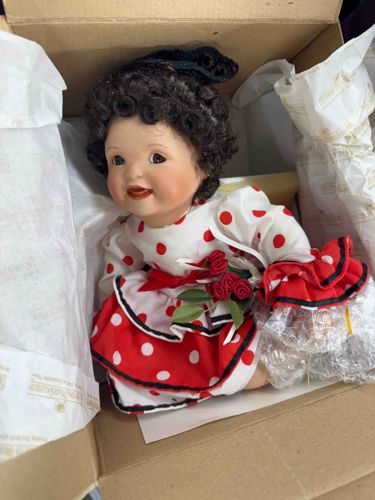
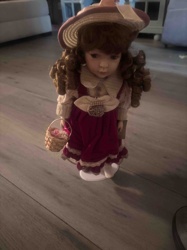
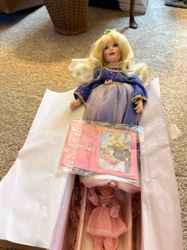
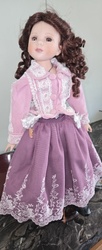
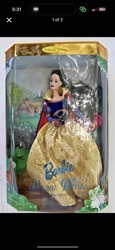
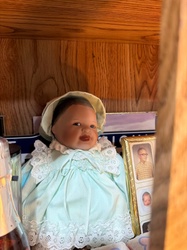
This item is a porcelain collector doll depicting a baby or young child with a lively expression, packaged within a cardboard box lined with tissue paper. The doll features a bisque porcelain head, evident from the smooth, matte finish and subtle blush on the cheeks and lips, characteristic of quality porcelain dolls. Her eyes are brown and appear to be fixed, with painted upper eyelashes, giving a sweet and innocent gaze. The doll has dark, curly hair, likely a synthetic material carefully styled and possibly glued to the head. A black, crocheted or knitted headpiece, possibly a bun cover or small hat, adorns the top of her head.
The doll is dressed in a vibrant, flamenco-style outfit, predominantly white with large red polka dots. The dress features ruffles edged in black, with a layered skirt; the top layer is white with red polka dots, and a lower layer is red with white polka dots. A cluster of three red fabric roses with green leaves is affixed to the bodice or waist of the dress. The sleeves are puffed, and the garment appears to be made of a lightweight fabric, possibly cotton or a synthetic blend, well-suited for a doll's attire. Visible also is a ruffled accessory, possibly a small fan or additional trim, wrapped in plastic bubble wrap, indicating it might be a separable accessory or for protection during transport. The doll appears to be in excellent, possibly new, condition, given its original packaging and lack of visible wear, damage, or repairs. The craftsmanship suggests a manufactured collectible doll, likely from the late 20th or early 21st century, designed as a display piece rather than a play toy, as is common with porcelain collector dolls.
AI Appraisal Report
I have visually examined this porcelain collector doll, which appears to be in excellent, likely new, condition within its original packaging. The bisque porcelain head shows no visible damage, chips, or repairs, and the painted features are intact. The flamenco-style attire is vibrant, well-constructed, and free from apparent wear. The inclusion of bubble wrap for an accessory suggests careful packaging. Authenticity as a collector doll is likely, given the material (bisque porcelain) and detailed costuming, typical of manufactured decorative pieces from the late 20th or early 21st century. These are generally produced in larger quantities, indicating it's not a rare, artisan, or antique piece.
The market for contemporary porcelain collector dolls has seen a significant decline in recent decades. While once a popular collectible, demand has waned considerably. Comparable mass-produced collector dolls, even those in pristine condition and original packaging, typically sell for modest amounts. Factors influencing value include the brand (if a well-known manufacturer like Ashton-Drake or Franklin Mint), the size, and the intricacy of the costume; however, even these rarely command high prices in today's secondary market after their initial retail purchase. The 'baby' or 'young child' aesthetic is fairly common.
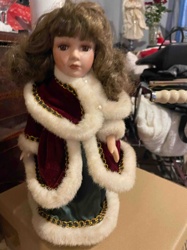
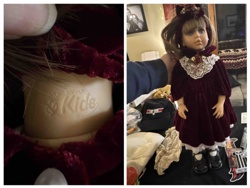
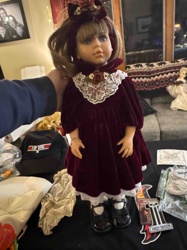
Based on these observations and market conditions, I would estimate the appraisal value of this specific porcelain collector doll to be in the range of $25 to $50. This reflects its condition and collectible category. Limitations in authenticity verification from images alone include the inability to inspect for hidden damage, confirm materials of the hair (synthetic vs. mohair), or identify any manufacturer's marks or signatures that would be present on the doll's body or neck. In-person examination would allow for tactile inspection of materials, confirmation of jointed body parts, assessment of internal integrity, and identification of any specific branding or artist marks, which could slightly refine the valuation.