AI estimate as of September 23, 2025 · verify with a professional before acting
AI-Generated · Verify before acting
Everything on this page is generated by AI for informational purposes only. AI can make mistakes — the AI may misidentify items or misattribute them (artist, maker, brand, designer, origin, era). This is not an official valuation and should not be used for insurance, sale, tax, estate, legal, or lending purposes — or any decision requiring a certified appraisal. It is not an authoritative claim about any person, brand, or rights holder — do not share or rely on it as a factual statement about a third party. Always consult qualified professionals before making financial decisions.
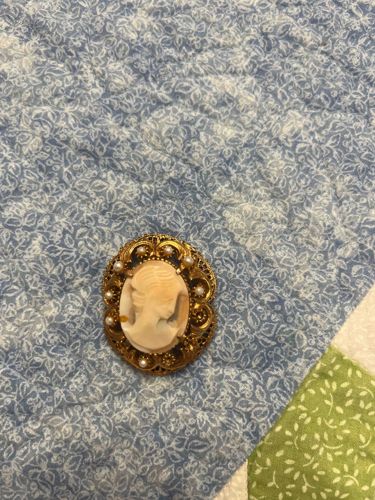
This item is a vintage cameo brooch, featuring a classic left-facing female profile carved into a light, yellowish-beige shell or similar material, set against a slightly darker, peach-toned background. The cameo itself appears to be oval-shaped, with the carving exhibiting fine detail in the hair, neck, and facial features of the depicted woman, typical of traditional cameo artistry. The cameo is encased within an ornate, gold-toned metal frame. This frame has a Florentine or filigree-style design, characterized by intricate scrollwork and textured surfaces, suggesting a handcrafted or period aesthetic. Further enhancing its decorative appeal are small, white, seemingly faux pearls, which are strategically placed around the outer edge of the cameo within the frame's design. These pearls provide a contrasting texture and a touch of elegance. The metalwork shows signs of age, including a visible patina and possibly some minor discoloration or wear, particularly within the deeper recesses of the filigree. One notable condition issue is a small yellowish mark or anomaly on the surface of the cameo itself, located near the woman's bust or neck area, which could be a stain, a natural inclusion in the material, or a minor imperfection. While no specific maker's marks or signatures are visible from this image, the overall style points to an antique or vintage piece, likely from the early to mid-20th century. The craftsmanship, though not fully discernible in terms of precision, appears to be of a reasonable quality, focusing on aesthetic appeal and traditional design elements. The brooch's clasp mechanism is not visible in this view.
AI Appraisal Report
Upon examining the provided image of this vintage cameo brooch, I observe a classic design featuring a left-facing female profile carved into what appears to be a conch shell or similar material, set against a peach background. The carving exhibits good detail in the hair and facial features. The cameo is set within an ornate, gold-toned filigree frame, embellished with small faux pearls around its edge. The metalwork shows a visible patina consistent with age, suggesting a vintage piece likely from the early to mid-20th century.
The condition is generally good for its age, though I note a small yellowish mark near the woman's bust/neck area on the cameo. This could be a stain, a natural inclusion, or an imperfection. The faux pearls appear intact. The primary value drivers are the aesthetic appeal, classic vintage style, and the market for costume or lower-end antique jewelry. Demand for vintage cameos remains steady, but the presence of faux pearls and the likelihood of a base metal setting (given the patina) place it outside the realm of high-value antique jewelry. Rarity is not a significant factor here; similar pieces are regularly found in the vintage market.
Comparables for vintage shell cameos with faux pearl embellishments in base metal settings typically range from $50 to $200. The craftsmanship appears competent but not exceptional. My appraisal is limited by the visual nature of this examination; I cannot definitively determine the exact material of the cameo (e.g., conch vs. plastic), the metal composition, or the quality of the pearl simulation without physical inspection. An in-person examination would allow for tactile assessment of the cameo material, testing of the metal, and closer inspection of the overall construction and hidden details like the clasp mechanism. Provenance documentation could also enhance authenticity and value, but is not typically available for such items.