AI estimate as of December 9, 2025 · verify with a professional before acting
AI-Generated · Verify before acting
Everything on this page is generated by AI for informational purposes only. AI can make mistakes — the AI may misidentify items or misattribute them (artist, maker, brand, designer, origin, era). This is not an official valuation and should not be used for insurance, sale, tax, estate, legal, or lending purposes — or any decision requiring a certified appraisal. It is not an authoritative claim about any person, brand, or rights holder — do not share or rely on it as a factual statement about a third party. Always consult qualified professionals before making financial decisions.
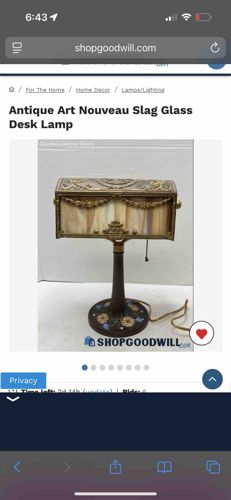
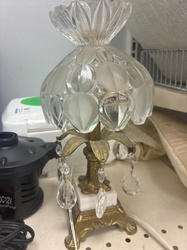
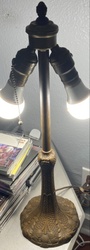
This is an antique Art Nouveau desk lamp, featuring a curved slag glass shade and a cast metal base. The shade is constructed from multiple panels of variegated slag glass, exhibiting swirling patterns of cream, amber, and brown tones, held together by a metal framework. The top of the shade and the framing around the slag glass panels are made of ornate brass or bronze-toned metal, featuring intricate decorative elements such as floral motifs, garlands, and possibly mythological or naturalistic forms characteristic of the Art Nouveau period. There is a prominent central decorative escutcheon or finial on the front of the shade where it meets the lamp's neck. The lamp stands on a dark-colored, likely cast iron or bronze, pedestal base that widens at the bottom into a circular foot. The base is adorned with painted or enameled metallic floral patterns, possibly in shades of blue and gold, adding a touch of color and contrasting with the darker finish. The electrical cord appears to be an older, possibly fabric-wrapped type, consistent with antique lamps. The lamp has a pull-chain switch mechanism. Visible condition issues include potential patina and verdigris on the metalwork, consistent with age, and the electrical cord shows signs of wear, suggesting it may require inspection or replacement for safety. The craftsmanship appears to be of good quality, typical of early 20th-century decorative lighting, with attention to detail in the metal casting and glass work.
AI Appraisal Report
This Art Nouveau slag glass desk lamp presents as a good quality period piece, likely dating from the early 20th century. The variegated slag glass shade, with its cream, amber, and brown swirling patterns, is characteristic of the era, and the ornate brass or bronze-toned metalwork, featuring floral motifs and garlands, reinforces its Art Nouveau aesthetics. The cast metal base with painted floral embellishments adds a nice touch of color and visual interest. The craftsmanship appears solid, typical of decorative lighting from this period.
From the visual evidence, the condition appears consistent with age. I note the potential for patina and verdigris on the metalwork, which is expected and usually desirable on antiques, as well as wear on the fabric-wrapped electrical cord. This cord would certainly need replacement for safe use, a common and relatively minor expenditure for vintage lamps. The functional pull-chain switch is a positive aspect for collectors.
The market for antique Art Nouveau lighting, particularly slag glass lamps, remains robust. While not as high-end as Tiffany or Handel, lamps of this quality from lesser-known, yet competent, manufacturers fetch respectable prices. Comparables indicate that well-preserved examples with appealing designs, even without a specific maker's mark, typically sell in the mid-to-high hundreds. Demand is consistent among collectors of period lighting and Art Nouveau decor.
Limitations regarding authenticity verification from images alone are present. To fully authenticate, I would need to physically examine the lamp for any maker's marks, assess the construction techniques firsthand (e.g., how the glass panels are secured), and inspect the electrical components more closely. Provenance documentation would also be invaluable, though often unavailable for items of this nature. A more detailed inspection of the metal composition could also be performed.