Tumbled Yellow Jasper or Chalcedony Stone
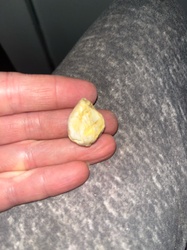
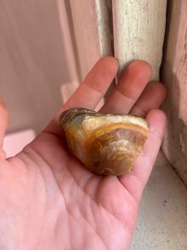
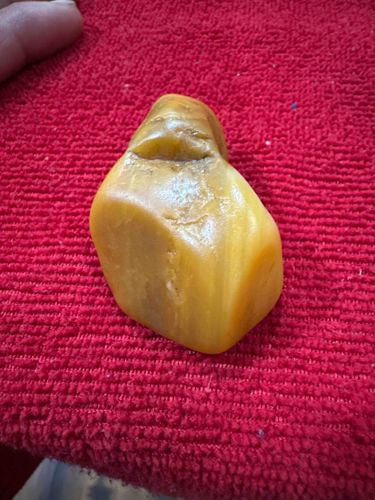
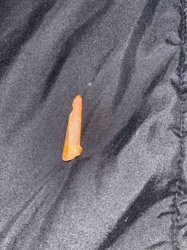
This item is a small, hand-sized specimen of a yellow cryptocrystalline quartz, likely yellow jasper or honey chalcedony. The stone exhibits a dense, opaque to semi-translucent structure with a rich, buttery yellow to mustard coloration. Its physical form is asymmetrical and irregular, having been tumbled or water-worn to a smooth, waxy luster. Visible on the surface are several distinguishing geological features, including subtle linear banding or inclusions that suggest a sedimentary or microcrystalline formation process. There are notable surface indentations, small pits, and a distinct horizontal cleft near the apex of the stone which may contain trace mineral oxidations, appearing as darker brown or greyish patches. The condition is generally good as a natural specimen, though it shows surface abrasions, minor 'flea bites' or percussion marks typical of fluvial transport or mechanical tumbling. There are no man-made markings, signatures, or stamps, indicating this is a natural earth-mined material rather than a synthetic product. The craftsmanship is limited to the polishing process, which has successfully highlighted the stone's inherent saturation and smooth texture, making it suitable for lapidary use, a pocket stone, or a decorative collection piece. The age is geological, though the polishing treatment appears modern.
AI-Generated Appraisal Disclaimer
Estimated Value
$5.00 - $12.00
Basic Information
Category
Rocks, Fossils & Minerals
Appraised On
January 11, 2026
Estimated Value
$5.00 - $12.00
Item Description
This item is a small, hand-sized specimen of a yellow cryptocrystalline quartz, likely yellow jasper or honey chalcedony. The stone exhibits a dense, opaque to semi-translucent structure with a rich, buttery yellow to mustard coloration. Its physical form is asymmetrical and irregular, having been tumbled or water-worn to a smooth, waxy luster. Visible on the surface are several distinguishing geological features, including subtle linear banding or inclusions that suggest a sedimentary or microcrystalline formation process. There are notable surface indentations, small pits, and a distinct horizontal cleft near the apex of the stone which may contain trace mineral oxidations, appearing as darker brown or greyish patches. The condition is generally good as a natural specimen, though it shows surface abrasions, minor 'flea bites' or percussion marks typical of fluvial transport or mechanical tumbling. There are no man-made markings, signatures, or stamps, indicating this is a natural earth-mined material rather than a synthetic product. The craftsmanship is limited to the polishing process, which has successfully highlighted the stone's inherent saturation and smooth texture, making it suitable for lapidary use, a pocket stone, or a decorative collection piece. The age is geological, though the polishing treatment appears modern.
Related Tags
Explore similar items and categories:
Get Your Items Appraised
Instant estimates of your treasures with AI-powered instant appraisals