AI estimate as of October 14, 2026 · verify with a professional before acting
AI-Generated · Verify before acting
Everything on this page is generated by AI for informational purposes only. AI can make mistakes — the AI may misidentify items or misattribute them (artist, maker, brand, designer, origin, era). This is not an official valuation and should not be used for insurance, sale, tax, estate, legal, or lending purposes — or any decision requiring a certified appraisal. It is not an authoritative claim about any person, brand, or rights holder — do not share or rely on it as a factual statement about a third party. Always consult qualified professionals before making financial decisions.
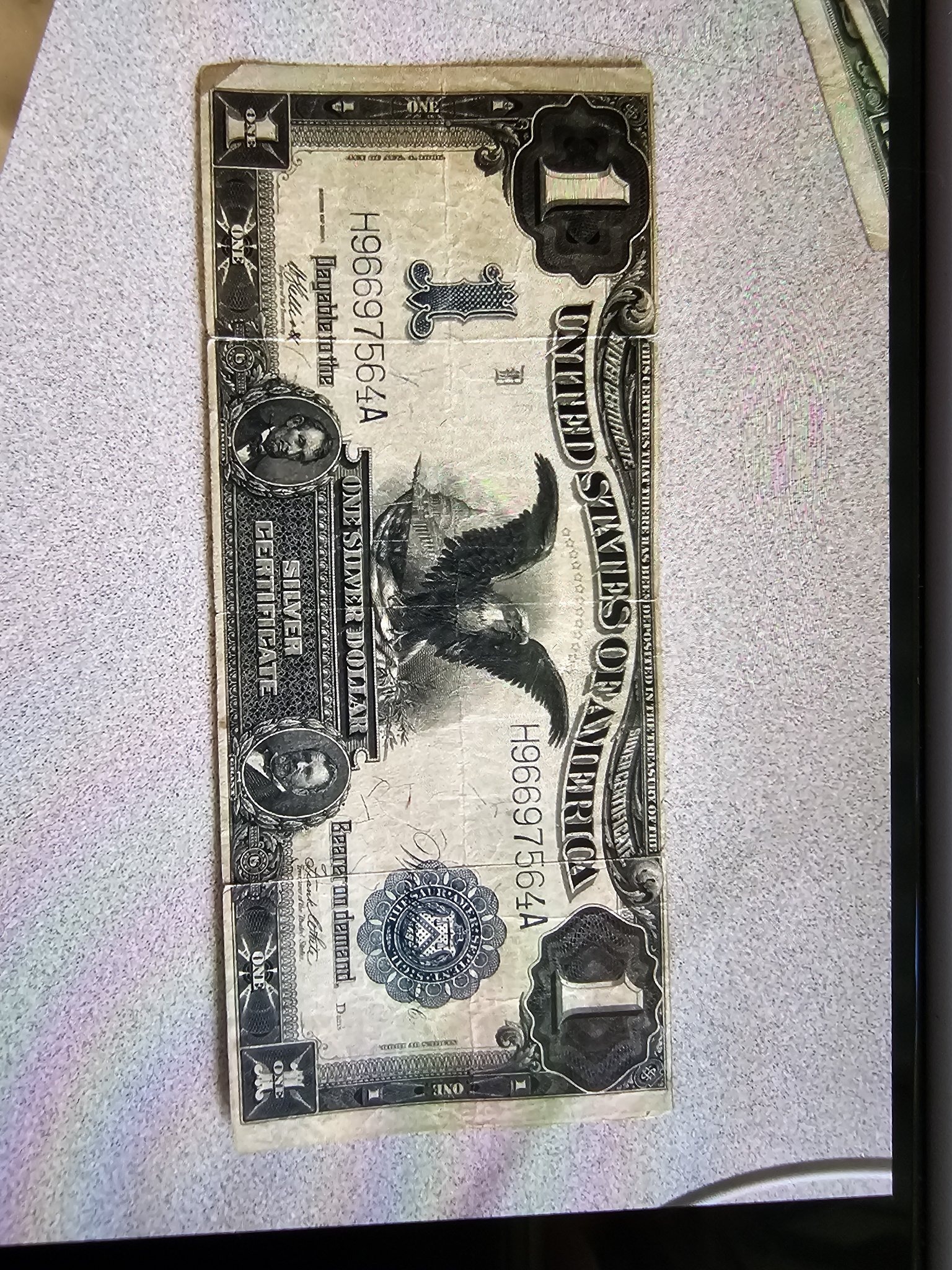
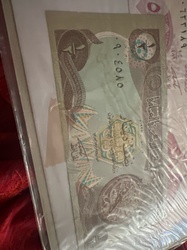
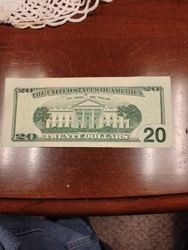
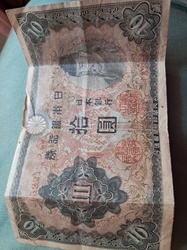
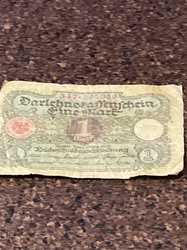
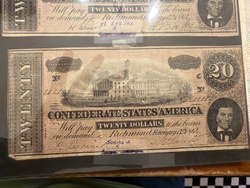
This physical item is a United States paper currency note, specifically a one-dollar silver certificate. The banknote is printed in black and grey ink on cotton-linen paper with a distinctive blue treasury seal located near the bottom center. The design features a prominent central vignette of an American bald eagle resting upon a U.S. flag with a military background, giving the note its popular moniker. To the left side of the note, there are two small oval portraits depicting prominent historical figures, which appear to be Abraham Lincoln and Ulysses S. Grant based on standard series characteristics. The serial number 'H96697564A' appears twice in distinctive font styles, once vertically oriented on the left and once vertically oriented on the right. Additional visible text includes 'UNITED STATES OF AMERICA', 'ONE SILVER DOLLAR', 'SILVER CERTIFICATE', and various signatures of treasury officials which are printed rather than hand-signed. The condition shows heavy signs of circulation and age, including multiple horizontal folds and vertical creases, edge wear, rounding of corners, toning, staining, and surface soil consistent with a well-handled vintage banknote. The identification rests upon the highly distinctive layout, the central American eagle motif, and the legible text matching known designs from the 1899 series, though the note itself remains unauthenticated and ungraded by a professional currency grading service.
AI Appraisal Report
Based on what I can see in the provided image, this paper currency note appears to present features consistent with a United States 1899 one-dollar silver certificate, featuring the popular 'Black Eagle' design, a blue treasury seal, and portraits resembling Lincoln and Grant. However, I cannot verify from a photo whether the note is an unaltered, period-correct piece or a later facsimile, reproduction, or counterfeit. Physical inspection and expert analysis would be needed to confirm authenticity, paper composition, and the absence of alterations. Assuming the attribution is correct and the note is what it appears to be, the heavy signs of circulation—including multiple horizontal and vertical folds, creases, edge wear, corner rounding, toning, and surface soil—significantly impact its grade and market value. Generally, well-worn examples of this type trade at lower tiers because collectors heavily penalize heavy handling and environmental damage. In contrast, if this item were to turn out to be a modern replica, copy, or reproduction rather than a vintage issue, its value would drop precipitously to a nominal novelty price of under $10. Demand for early large-size U.S. currency remains steady among collectors, but condition and grading are paramount. An unauthenticated piece of this type typically sells for less than certified examples because buyers factor in the risk of condition-hiding restoration or lack of professional grading. To establish a more precise valuation and verify its status, an in-person examination by a professional currency grading service is recommended.