AI estimate as of June 22, 2025 · verify with a professional before acting
AI-Generated · Verify before acting
Everything on this page is generated by AI for informational purposes only. AI can make mistakes — the AI may misidentify items or misattribute them (artist, maker, brand, designer, origin, era). This is not an official valuation and should not be used for insurance, sale, tax, estate, legal, or lending purposes — or any decision requiring a certified appraisal. It is not an authoritative claim about any person, brand, or rights holder — do not share or rely on it as a factual statement about a third party. Always consult qualified professionals before making financial decisions.
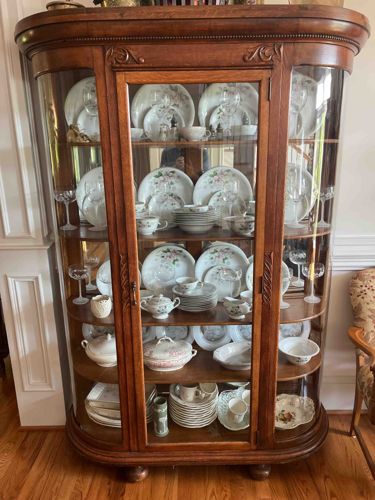
The item is a large, ornate curio cabinet, likely crafted from a medium-toned hardwood such as oak or mahogany, exhibiting a rich, warm brown finish. It features a prominent curved glass design on its sides, which are often referred to as 'bow front' or 'bombay' style, allowing for maximum visibility of the contents. The front of the cabinet is divided into three vertical sections: a central rectangular door framed by two narrower, curved glass panels on either side. The top of the cabinet has a rounded, slightly protruding cornice, adorned with carved, traditional decorative motifs, possibly acanthus leaves or floral scrolls, indicative of an Art Nouveau or early 20th-century aesthetic. The central door itself is a single panel of glass, offering a clear view into the interior display space. The interior is fitted with multiple wooden shelves, which appear to be permanent, showcasing a collection of what looks like porcelain or ceramic dinnerware and glassware. The shelves are tiered, providing ample space for display. The base of the cabinet is substantial, featuring a carved apron that echoes the decorative elements of the cornice and rests on four bun feet, suggesting stability and a classic design. The wood grain is visible throughout, showing natural variations and a polished surface. There are no immediate signs of significant damage like cracks or deep scratches on the wood, and the glass appears intact. The overall condition suggests good preservation, possibly with minor wear consistent with age and use, such as a gentle patina on the wood. The craftsmanship appears to be of high quality, with attention to detail in the carving and joinery. The design hints at an age of late 19th to early 20th century. Visible hardware, if present, is minimal, likely integrated into the wood or small, inconspicuous handles.
AI Appraisal Report
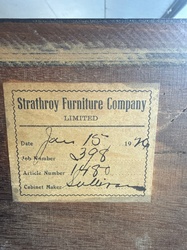
Based on my visual examination of the provided image, this Bow Front Curio Cabinet appears to be in good to very good condition for its presumed age. The rich, warm brown finish, likely oak or mahogany, shows good preservation with no prominent damage, cracks, or deep scratches visible. The curved glass panels, a defining 'bow front' or 'bombay' feature, appear intact, and the ornate carved motifs on the cornice and apron suggest quality craftsmanship from the late 19th or early 20th century, possibly Art Nouveau. The bun feet and sturdy base indicate stability. The interior shelves are consistent with display functionality. Authenticity, based solely on visual inspection, points towards a period piece rather than a modern reproduction, given the style, joinery quality suggested by the seamless appearance, and decorative elements.However, a definitive authentication would require in-person examination to check for construction methods (e.g., dovetail joints, hand-carved elements), wood species verification, and hardware analysis. Provenance documentation, such as original sales receipts or family history, would significantly aid in dating and value assessment. Scientific testing, like carbon dating for extreme cases, is generally not needed for furniture of this period but could provide definitive age if authenticity were heavily contested.The market for antique curio cabinets like this is steady but not experiencing rapid growth. Demand is typically from collectors seeking period-specific pieces or homeowners desiring decorative storage. While not exceedingly rare, a well-preserved example with intricate carving and original glass adds to its desirability. Comparables for such pieces range widely based on condition, wood type, and provenance, but I assess this as a solid mid-range antique example. Factors impacting value positively include its good condition, ornate carvings, and the popular bow-front design. Lack of provenance and inability to conduct a physical inspection are limitations.