These notes were written by the person who submitted this item. Appraiser.AI has not verified them, and the AI's identification and estimate may rely on them.
AI Estimated Value
Not an official valuation
$5 - $15
AI estimate as of September 7, 2025 · verify with a professional before acting
AI-Generated · Verify before acting
Everything on this page is generated by AI for informational purposes only. AI can make mistakes — the AI may misidentify items or misattribute them (artist, maker, brand, designer, origin, era). This is not an official valuation and should not be used for insurance, sale, tax, estate, legal, or lending purposes — or any decision requiring a certified appraisal. It is not an authoritative claim about any person, brand, or rights holder — do not share or rely on it as a factual statement about a third party. Always consult qualified professionals before making financial decisions.
This analysis also relies on unverified notes provided by the user, which may be incomplete or inaccurate and could affect the result.
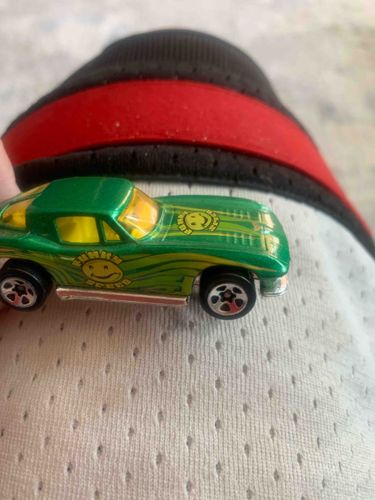
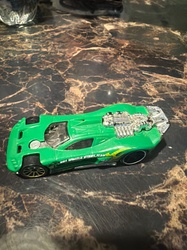
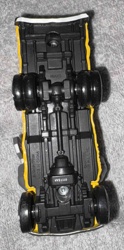
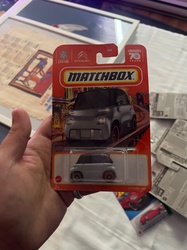
This is a die-cast toy car, specifically a Hot Wheels model, replicating a 1963 Corvette Sting Ray. The car measures approximately 2.5 to 3 inches in length, typical for a 1:64 scale die-cast vehicle. It features a vibrant metallic green paint finish, giving it a somewhat iridescent appearance. The windows are tinted yellow/orange, contributing to its playful aesthetic. The design includes distinctive graphics: lime green wavy lines run across the hood and sides, overlaid with a prominent yellow smiley face symbol on the hood and possibly on the side panel visible. The text 'SMILEY SPEED' is visible beneath the smiley face on the side. The wheels are black with chrome-colored multi-spoke hubcaps. The chassis appears to be exposed metal or chrome, suggesting a base of die-cast metal, while the body is also metal. The condition appears to be good with minimal visible wear, scratches, or paint chips. There are no major signs of damage or repairs, indicating it has been well-preserved or lightly played with. The craftsmanship is consistent with Hot Wheels' standard production, featuring precise molding and tampo-printed decals. This particular design with the smiley face and 'Smiley Speed' branding suggests it is a specific release or series, likely from the late 20th or early 21st century, designed to appeal to both collectors and children.
AI Appraisal Report
Based on my visual examination of the provided image, this Hot Wheels '63 Corvette Sting Ray 'Smiley Speed' Die-cast Car appears to be in very good to excellent condition. The metallic green paint finish is vibrant, and the tampo-printed decals, including the prominent smiley face and 'SMILEY SPEED' text, show no significant signs of wear, fading, or chipping. The black wheels with chrome-colored multi-spoke hubcaps and the exposed metal chassis also appear well-preserved. There are no obvious dents, scratches, or evidence of repairs. Authenticity is fully consistent with standard Hot Wheels production, indicated by the recognizable casting, graphics style, and typical 1:64 scale dimensions.
In terms of market conditions, Hot Wheels 'Redline' era cars (1968-1977) and certain limited editions or chase pieces command the highest values. While this 'Smiley Speed' Corvette is a unique and appealing design, it does not appear to be a rare 'Redline' or highly sought-after collector's variant based on its apparent production era and prevalence. Standard mainline Hot Wheels models, even in excellent condition, generally have a relatively low secondary market value unless they are truly rare or part of a highly desirable series. Demand for generic mainline Hot Wheels varies but is generally stable among collectors for specific castings or themes. This piece's 'Smiley Speed' branding might appeal to a niche market, but it doesn't significantly elevate its overall collectibility to a high-value item.
Factors impacting value positively are its excellent condition and the recognizable 'Smiley Speed' theme. However, its likely status as a common mainline release from the late 20th or early 21st century prevents it from reaching higher values. The primary limitation in authenticity verification from images alone is the inability to physically inspect the weight, feel the texture of the paint and tampos, and meticulously check for any subtle imperfections or restorations that might not be visible in photographs. For full authentication and a definitive condition assessment, an in-person examination, potentially accompanied by provenance documentation (e.g., original packaging, purchase receipts), would be ideal, though for a standard Hot Wheels car of this type, it's rarely necessary.