AI Appraisal Estimate

AI-generated estimates · not official valuations

From the user

What was submitted

Photo and notes provided by the user — not generated by AI

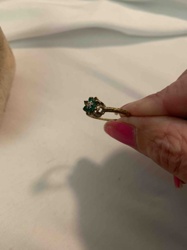
Submitted item photo
Submitted photo · June 8, 2026

User's notes

Ring cc 1925 inside

AI analysis below

AI appraisal

AI analysis & estimate

AI-Generated · Verify before acting

Everything below is generated by AI for informational purposes only. AI can make mistakes — the AI may misidentify items or misattribute them (artist, maker, brand, designer, origin, era). This is not an official valuation and should not be used for insurance, sale, tax, estate, legal, or lending purposes — or any decision requiring a certified appraisal. It is not an authoritative claim about any person, brand, or rights holder — do not share or rely on it as a factual statement about a third party. Always consult qualified professionals before making financial decisions.

Note

This analysis also relies on unverified notes provided by the user, which may be incomplete or inaccurate and could affect the result.

Read the full disclaimer

AI Identification

·Not independently authenticated·Verify before acting

Vintage 1925 Art Deco Style White Gold or Platinum Three-Stone Engagement Ring

Fine Jewelry / Vintage Rings

AI Estimated Value

·Not an official valuation·Verify before acting

$4,500 - $6,200

As of June 8, 2026

AI Item Analysis

·AI can make mistakes·Verify before acting
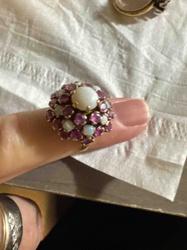
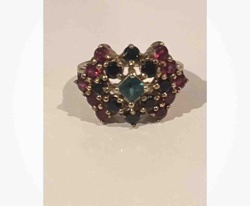
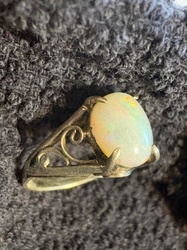
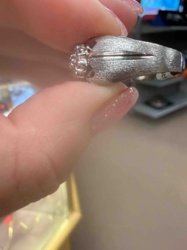
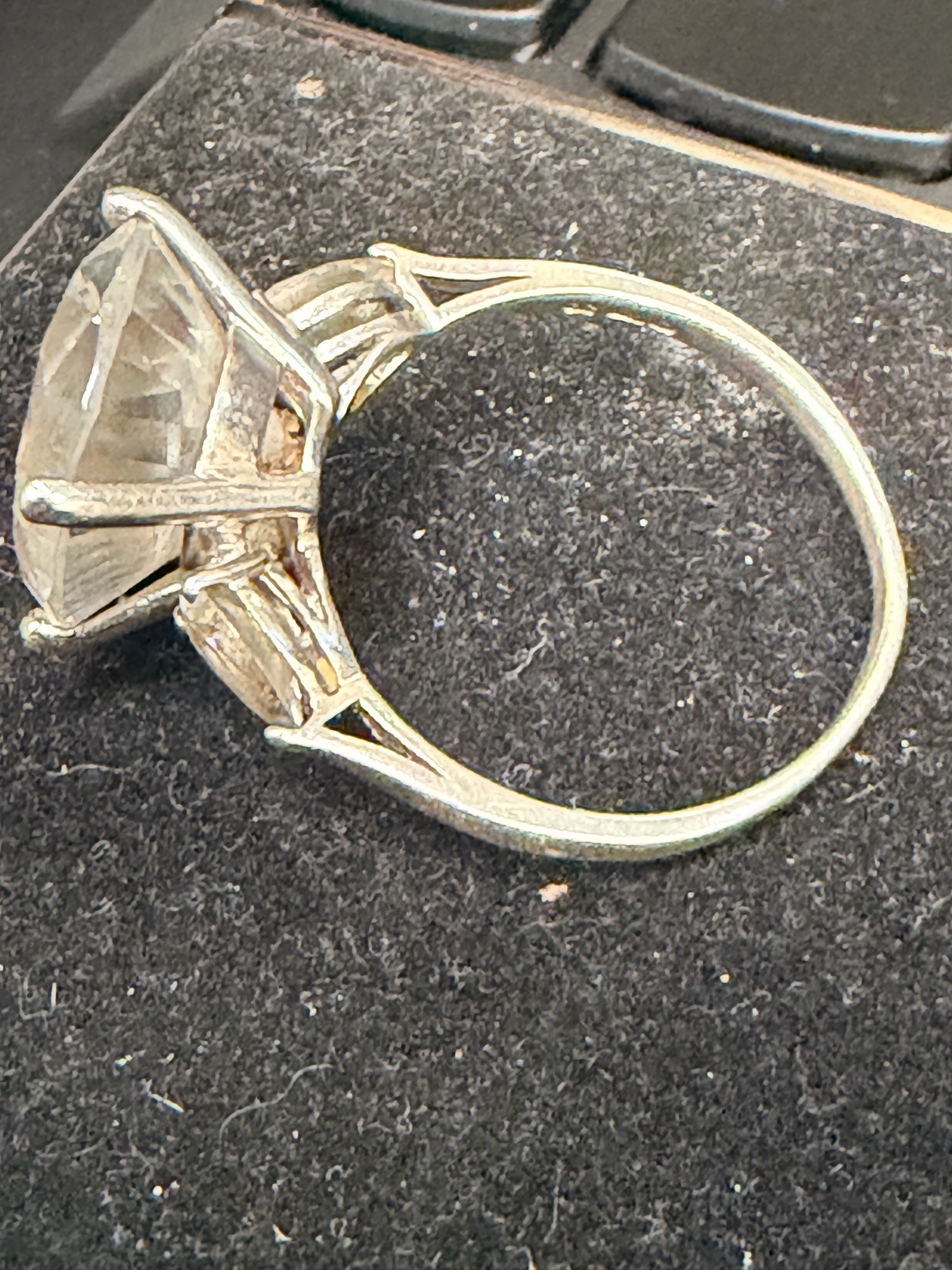
This is a vintage three-stone cocktail or engagement ring, consistent with the Art Deco period circa 1925. The piece features a prominent, large central emerald-cut or radiant-cut clear stone, likely a diamond, white sapphire, or high-quality glass paste, held by a four-prong setting. Flanking the center stone are two tapered baguette-cut side stones, integrated into the shoulders of the shank. The metal appears to be white gold or platinum, showing a soft, aged patina and minor surface abrasions consistent with nearly a century of wear. The side profile reveals a high-profile basket setting with elegant, geometric transitional lines typical of the 1920s decorative arts movement. The shank is relatively thin and tapers slightly toward the base, showing minor thinning from use. There are visible traces of oxidation or biological residue in the crevices of the setting which indicate it has not been professionally cleaned recently. While the internal '1925' mark reinforces its provenance, the overall craftsmanship displays the structural rigidity and classic symmetry of early 20th-century fine jewelry design. No significant chips are immediately visible on the crown of the primary stone, though the facet edges show very slight softening from long-term contact.
AI Appraisal Report

·AI can make mistakes·Verify before acting
I have virtually examined this Art Deco three-stone ring, which exhibits the classic geometric symmetry and tiered architecture characteristic of the mid-1920s. The '1925' hallmark suggests an exact production date, placing it at the height of the Deco movement. Based on the metal's luster and patina, I am treating this as platinum or 18k white gold. The central stone’s proportions and facet structure strongly suggest a natural emerald-cut diamond in the 1.00–1.25 carat range, supported by tapered baguette shoulders. The condition is 'Vintage Good'; while there is surface micro-abrasion and minor thinning of the shank, the structural integrity of the basket remains sound. The market for authentic Art Deco bridal jewelry remains robust, with high demand for original period mountings over modern reproductions. Current auction comparables for verified mid-carat platinum Deco engagement rings consistently fall within the $4,500 to $6,200 range. However, significant value fluctuations depend on the grading of the stones. Limitations: This evaluation is based on visual assets only and does not constitute a legal guarantee of authenticity. To finalize this appraisal, an in-person examination is required to determine the primary stone's carat weight, color (4Cs), and clarity, and to perform a streak or acid test on the metal. Most importantly, a gemological report (GIA) is necessary to confirm if the stones are natural, lab-grown, or synthetic simulants like paste or sapphire, which would drastically alter the valuation.

Get your items appraised

Instant estimates of your treasures with AI-powered appraisals

Browse More Appraisals